










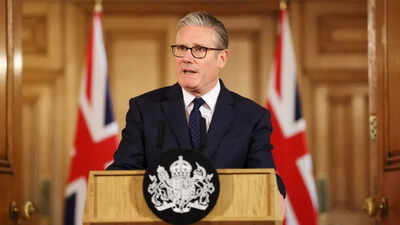
The United Kingdom will lead a new European initiative to develop advanced long-range precision strike weapons, with around a dozen NATO allies expected to invest more than $50 billion (£37 billion) over the next decade to bolster the alliance’s defence and deterrence capabilities.The Deep Precision Strike project, unveiled by Downing Street ahead of the NATO summit in Ankara, is expected to be a key focus of discussions among around a dozen European leaders convened by British Prime Minister Keir Starmer.The initiative aims to accelerate the development of next-generation long-range weapons capable of striking targets at least 300 kilometres away, with some systems expected to have ranges exceeding 2,000 kilometres, while maintaining high levels of precision, BBC reported.Initially focused on ground-launched weapons, the programme is also expected to explore air- and sea-based capabilities.The announcement comes as European NATO members step up defence cooperation amid continued concerns over Russia’s military posture and growing pressure from the United States for allies to shoulder a greater share of the alliance’s security burden.Calling for a “stronger, more European NATO,” Starmer said the initiative would bring allies together to develop the capabilities needed to safeguard the alliance in the decades ahead.He said the UK was already investing heavily in advanced long-range weapons and that the broader European partnership would accelerate technological collaboration and industrial cooperation.The UK has already committed £3 billion by 2030 towards developing its own deep precision strike capabilities under its Defence Investment Plan.The wider European programme is expected to complement existing British projects with Germany, France and Italy, while placing long-range strike systems at the centre of NATO’s defence agenda over the coming year.Among the key projects is a joint UK-Germany programme to develop stealth and hypersonic weapons with ranges exceeding 2,000 kilometres, which are expected to enter service in the 2030s.Britain is also working with France and Italy on Stratus, the successor to the Storm Shadow cruise missile, featuring both stealth and high-speed variants designed to target critical military infrastructure, enemy ships and air defence systems.Separately, the UK is joining the Precision Strike Missile programme alongside the United States and Australia, a move that will equip the British Army with a supersonic ballistic missile capable of striking targets up to 500 kilometres away.Together, these programmes are intended to provide Britain with a family of long-range strike capabilities deployable from land, sea and air.The initiative draws heavily on lessons from the war in Ukraine, where long-range precision strikes on logistics hubs and military infrastructure have significantly disrupted Russian operations.British officials believe similar capabilities will play a central role in future conflicts and strengthen NATO’s deterrence posture.The announcement comes as NATO members continue to increase defence spending following last year’s agreement to work towards spending 5 per cent of GDP on defence and security by 2035.Starmer, however, is expected to face scrutiny over the UK’s timetable for meeting NATO’s target of allocating 3.5% of GDP to core defence spending by the same deadline.At the summit, the British prime minister is also expected to highlight what London describes as an increasing Russian threat, pointing to more than 700 interceptions of Russian aircraft approaching NATO airspace in the past two years and a 30 per cent rise in Russian military activity around UK waters.Foreign Secretary Yvette Cooper said the new capability would enable the UK and its allies to strike high-value military targets and critical logistics deep behind enemy lines, strengthening collective security and sending a clear message that NATO remained prepared to deter future aggression.