








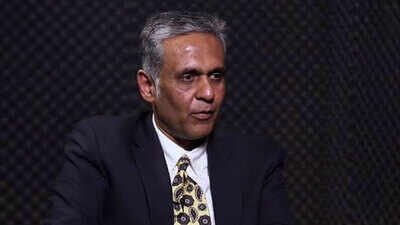

Most people never think twice before swallowing a medicine prescribed by their doctor. There is an unspoken assumption behind every tablet and capsule—that someone has tested it, verified it and ensured it is safe. Dinesh Thakuronce believed the same. Then his job forced him to look behind the curtain. What he found would trigger one of the biggest pharmaceutical scandals in modern history, lead to a record-breaking penalty against an Indian drug manufacturer, and permanently change how regulators around the world scrutinise generic medicines. It would also cost him the career he had spent years building.
The discovery that changed everything
Trained as a chemical engineer, Dinesh Thakur had built an impressive career in the pharmaceutical industry, including several years in the United States before returning to India. He joined Ranbaxy Laboratories, then India’s largest generic drug manufacturer, in a senior leadership role. The company was a source of national pride. Its affordable medicines reached millions of patients across India and dozens of countries worldwide. Soon after joining, Thakur was assigned a seemingly routine responsibility—to review drug quality and research data. Instead, he uncovered something deeply disturbing. According to later court proceedings, laboratory results had been manipulated. Critical testing data had been fabricated. In several cases, medicines were allegedly approved and sold without proper scientific validation. These were not products that consumers could simply return if defective. They were medicines taken by people fighting infections, chronic illnesses and life-threatening diseases.
Choosing conscience over comfort
Thakur first raised his concerns within the company. Nothing changed. At that point, he faced a decision that many professionals hope they never have to make. Protect his career—or protect patients he would never meet. He resigned. Then he approached the United States Food and Drug Administration and provided extensive evidence supporting his allegations. What followed was not a quick victory. For nearly eight years, investigations continued while Thakur lived with the uncertainty that accompanies every whistleblower’s journey. Taking on one of the world’s largest generic pharmaceutical companies meant enormous professional, financial and personal risk.
A case that reshaped global drug regulation
The investigation culminated in 2013. Ranbaxy pleaded guilty in a US federal court to seven criminal charges related to manufacturing and distributing adulterated drugs and making false statements to regulators. The company agreed to pay 500 million US dollars in fines and settlements—one of the largest penalties ever imposed on a generic drug manufacturer. Thakur later received a whistleblower award under US law. But for him, the case was never simply about money. It was about restoring trust in medicines that millions of patients rely upon every day. The case also prompted regulators across several countries to adopt stricter oversight of manufacturing practices, data integrity and quality assurance.
The fight did not end there
Many assumed the story ended after the landmark judgment. For Thakur, it was only the beginning. Returning his attention to India, he argued that the country’s drug regulatory framework continued to suffer from serious structural weaknesses. He filed public interest litigations seeking stronger mechanisms for recalling substandard medicines and greater accountability within the regulatory system. Using more than 100 Right to Information applications, he documented how poor-quality medicines often attracted only minor administrative penalties instead of criminal prosecution. Although his petitions did not achieve the legal outcome he sought, they helped ignite a wider public conversation about drug safety and regulatory reform. He later co-founded Citizens for Affordable, Safe & Effective Medicine (CASEM) and co-authored The Truth Pill, examining systemic weaknesses in India’s pharmaceutical regulation.
A lesson beyond pharmaceuticals
Students often imagine success as a steady climb—a prestigious degree, a well-paying job and a comfortable life. Dinesh Thakur’s journey reminds us that there is another measure of success. Sometimes the defining moment of a career is not accepting a promotion. It is refusing to ignore something that is wrong. He walked away from security, challenged one of the industry’s most powerful companies and spent years fighting a battle whose outcome was uncertain. In doing so, he helped strengthen public confidence in medicines used by millions of people across the world. His story is ultimately not about pharmaceuticals. It is about professional ethics. It asks a question every future engineer, scientist, doctor and corporate leader may someday face: When doing the right thing comes at a personal cost, what would you choose? Disclaimer: This article is based on publicly available court records, published reports and information about Dinesh Thakur’s work and public advocacy. It is intended for educational and informational purposes and should not be interpreted as legal or medical advice.