








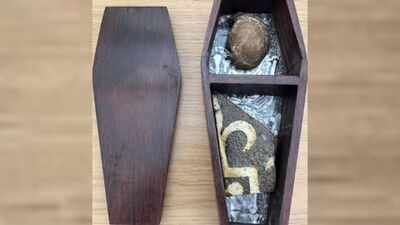
A kneecap believed to have belonged to a medieval abbot has been returned to Glastonbury Abbey in Somerset, England, more than 70 years after it was taken by an 11-year-old schoolboy during an archaeological dig.The bone was taken in 1956 by George Box, who slipped under the ropes at the excavation and picked it up from an open tomb. Along with the kneecap, he also took a fragment of a medieval floor tile. The items remained with him for decades, including after he moved to Australia in the 1970s.Following George Box’s death in 2025, his widow brought both artefacts back to Somerset this summer while visiting to scatter his ashes near Brent Knoll, where he had grown up. The kneecap and the tile are now back at Glastonbury Abbey and have gone on display in the abbey’s museum.Abbey staff said the unusual return began with an unexpected email received late last year. Lucy Newman, from Glastonbury Abbey, said the message stood out from the many enquiries they usually receive.“We get all sorts of weird and wonderful requests via email, but this was quite a standout one,” she said as quoted by BBC.George’s widow explained that she planned to return to Somerset to scatter his ashes and also wanted to return the kneecap and tile that her husband had taken as a child.
Taken during school trip
The date mentioned by the family matched a major archaeological excavation carried out at Glastonbury Abbey in 1956. During that dig, the tombs of several medieval abbots had been opened.According to Newman, George, then an 11-year-old schoolboy, slipped into the excavation when no one was looking and picked up both the kneecap and a piece of medieval floor tile.“Both things are very easy to pick up and put in a pair of schoolboy shorts. As a child he never told anyone what he had done,” she said.George later emigrated to Australia in 1970, taking the two objects with him. At his home, the kneecap and tile were displayed in a small glass cabinet alongside fossils and other objects.The abbey said George only later admitted to his wife how he had obtained the items. Before he died, he agreed they should be returned to Glastonbury Abbey, although he wanted that to happen only after his death.“He didn’t want it to happen until he’d passed away. I think maybe it was embarrassment,” Newman said.Before his death, George also built a special wooden box so the artefacts could make the journey back to Somerset.
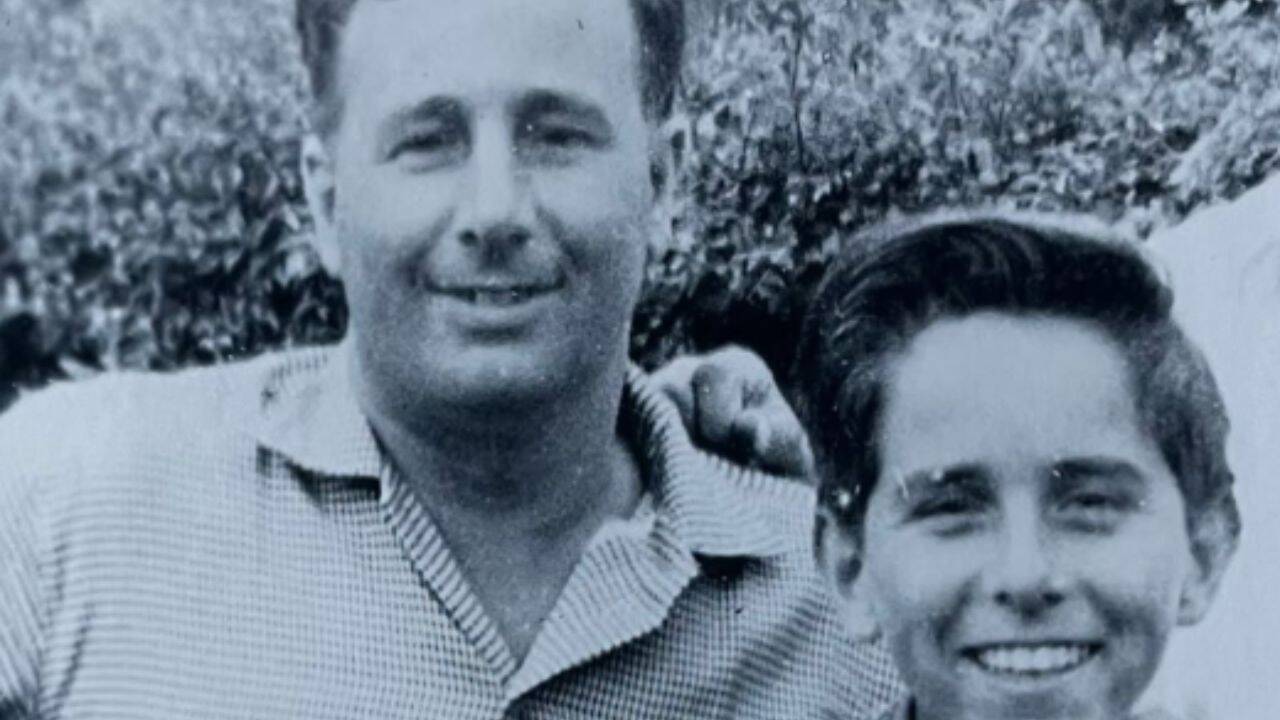
George aged 13 with his father in 1958, just a few years after he took the items. (Facebook/Glastonbury Abbey)
Mystery over abbot
Although the kneecap is believed to have belonged to one of Glastonbury Abbey’s medieval abbots, staff cannot say exactly whose it is.Based on records from the 1956 excavation, they believe it could belong to one of three abbots who died between 1250 and 1290. However, identifying the exact owner would require reopening the graves.But Newman says reopening the graves would disturb valuable archaeology. “An excavation could disturb more archaeology than would benefit from an abbot being reunited with his kneecap,” she says.
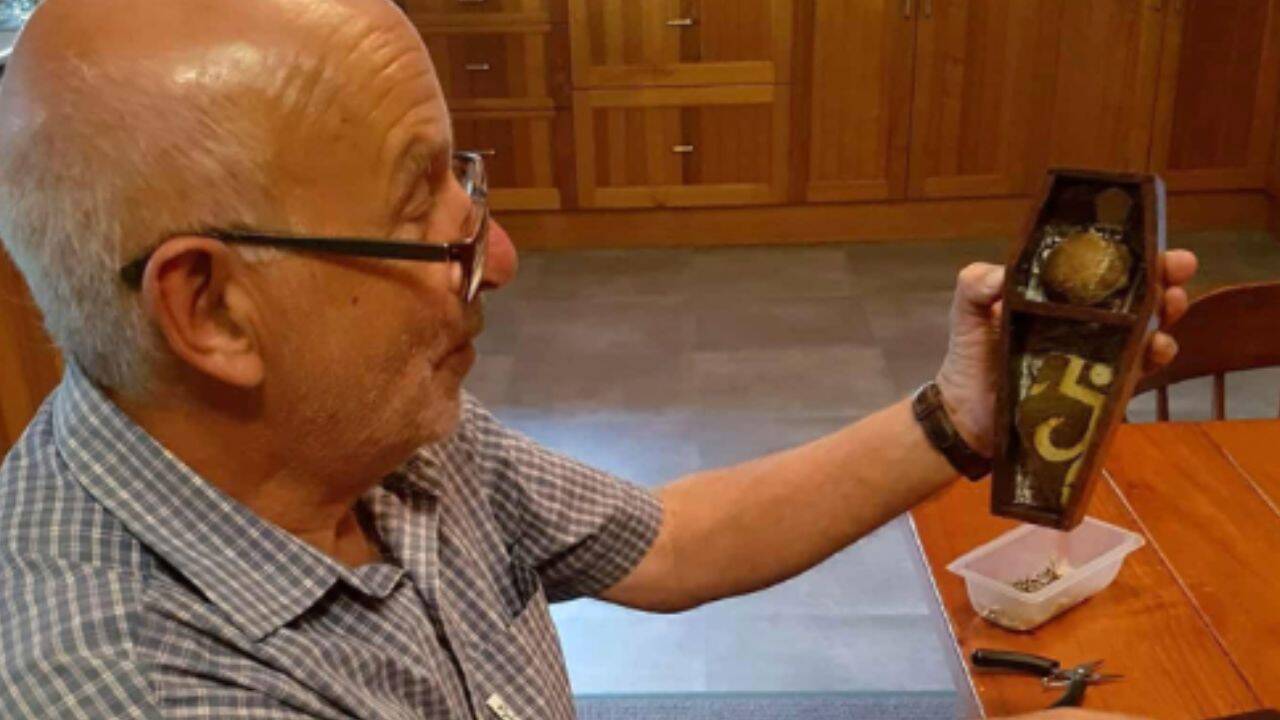
George wanted the items should be returned after his death. (Picture: Lucy Newman via Glastonbury Abbey)
Travelling across world
Glastonbury Abbey said it appreciates that the items have been returned after spending decades in Australia. The abbey does not support people removing archaeological objects from the site, but Newman said that after so many years there is a bit of an amnesty.She also reflected on the unusual journey the kneecap had made. “It’s also quite nice that the knee bone has been all the way to a country that 13th Century abbots had absolutely no idea existed,” she said.She noted that many of Glastonbury’s abbots travelled across Europe, visiting places such as Rome, but none would have imagined travelling as far as Australia.“Lots of our abbots travelled extensively in Europe, they would go to Rome and places like that, but he’s certainly now the most travelled,” she said.