








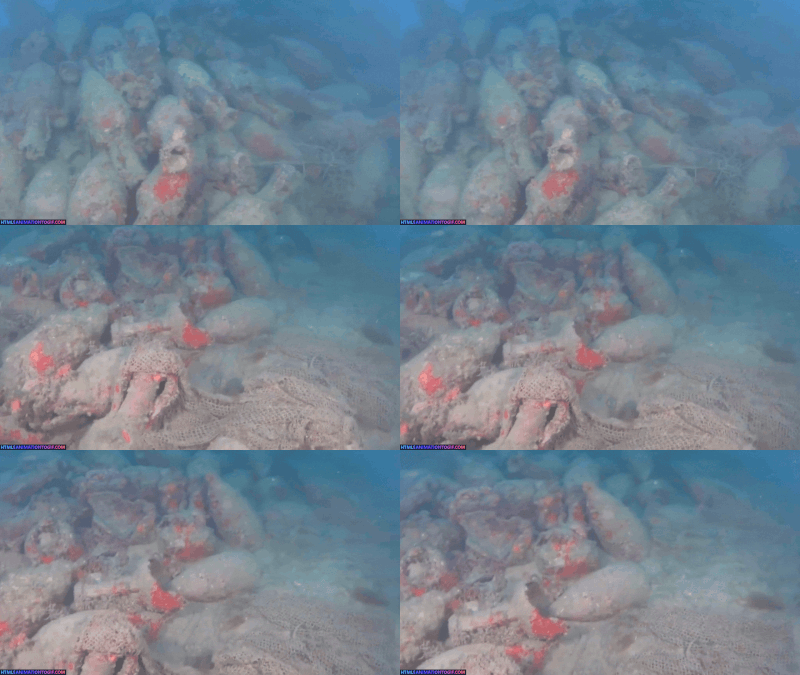
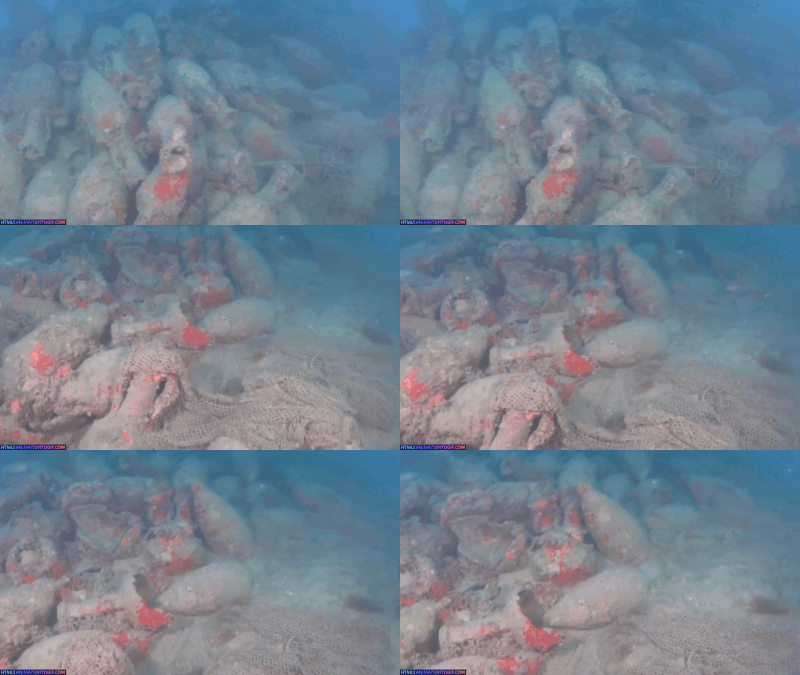
What first appeared to be a large rock on the seabed near Mazara del Vallo turned out to be an ancient Roman shipwreck believed to be more than 2,000 years old. The vessel was discovered with hundreds of amphorae, tall ceramic jars used in ancient times to transport goods including wine, olive oil and grain.Italy’s culture ministry said the wreck dates to the second or first century BC. It lies around 46 metres below the surface, while local media reports put its dimensions at about 21 metres long and six metres wide. Culture Minister Alessandro Giuli called it “one of the most important underwater archaeological discoveries of recent years”.
From seabed scan to historic find
According to theBBC, specialist police divers found the wreck after a tip-off from fishermen. Fisherman and free-diver Giacomo De Mola said he had been surveying the seabed when his scanner picked up what appeared to be a large rock, prompting him to dive for a closer look.“I get closer. And my heart stops. It wasn’t a rock,” De Mola said. Instead, he came across hundreds of amphorae at the site. He described it as “the most incredible discovery of my life” and said it was difficult to describe the feeling of being among the first people in nearly 20 centuries to see the place again.Video shared by De Mola showed eels, snappers and other marine life among the ancient jars. “This time we didn’t just find a wreck, we found a piece of our history,” he said.
What happens to the wreck now?
Italy’s Carabinieri Art Squad, a police unit specialising in the protection of cultural heritage, subsequently sent divers to the site. Officials said measures would be taken to safeguard the wreck as experts investigate the vessel and learn more about its cargo.The Mediterranean seabed is thought to contain similar ancient wrecks. In 2023, another vessel dating to the first or second century BC was found north-west of Rome carrying hundreds of amphorae. Five years earlier, a Greek merchant ship more than 2,400 years old was discovered off the Bulgarian coast and was described at the time as the world’s oldest-known intact shipwreck.