








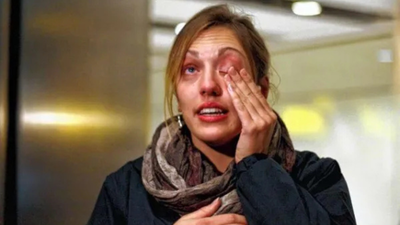
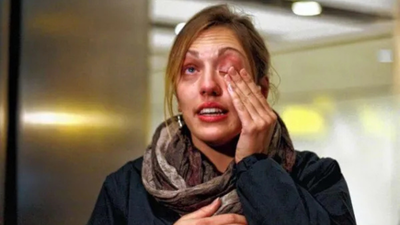
Rose Metcalf was just 23 and starting her first day as a professional dancer aboard the Costa Concordia when the cruise ship struck a reef near Italy’s Giglio Island on January 13, 2012. As the vessel began taking on water and listing heavily, Metcalf found herself helping organise hundreds of people in a rapidly deteriorating situation. She said she was one of only about 12 fluent English speakers among the crew and eventually became responsible for around 400 people. She helped organise a human chain inside the tilted ship and later improvised a way to signal rescuers. Her story has resurfaced in 2026 through a Good Morning Britain interview and the Netflix documentary Shipwrecked: Nightmare at Sea.
How a 23-year-old dancer helped save around 400 people
Metcalf joined the Costa Concordia as a professional dancer, expecting her first day aboard the cruise ship to be the beginning of a new job. Instead, she found herself in the middle of one of the worst maritime disasters of recent decades.According to her 2026 account, her ability to speak fluent English quickly made her useful during the emergency. She was initially asked to carry out a roll call involving around 30 crew members. As the situation deteriorated, however, she said she ended up taking responsibility for roughly 400 people because other crew members were not stepping forward.It is important to note that the 400 figure comes from Metcalf’s own account. It describes the number of people she said she became responsible for, rather than an independently verified count of lives personally saved by her.
When the Costa Concordia struck a reef
The Costa Concordia was sailing close to the Italian island of Giglio on the night of January 13, 2012, when it struck underwater rocks at about 9:45 p.m. local time.The impact damaged the vessel’s hull and caused water to enter the ship. The cruise liner developed an increasingly severe list before eventually coming to rest on its side close to the island.There were 3,229 passengers and 1,023 crew members aboard. The Italian Civil Protection Department records that 32 people died during the disaster.The subsequent rescue operation involved the Italian Coast Guard, firefighters, police, Navy divers and other emergency personnel.
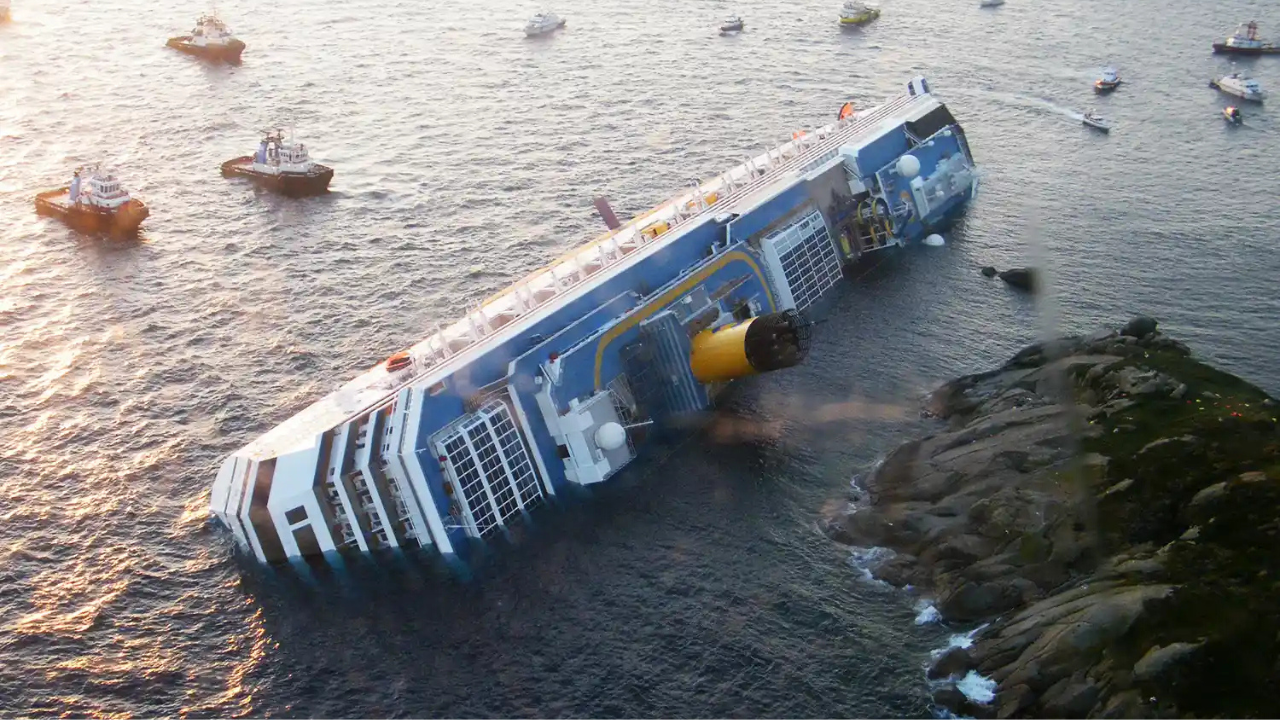
The ship’s steep angle made escape difficult
As the vessel tilted, normal movement through its corridors became increasingly difficult.Metcalf recalled that one hallway had effectively turned into something resembling an elevator shaft. She initially suggested throwing people across towards a banister but quickly recognised the danger.Instead, she proposed that people hold onto the banister and link arms, forming a human chain. This allowed people to move through the steeply angled section while remaining connected to one another.Metcalf later explained that the ship’s angle created a dangerous illusion. Although people could see the water outside, simply stepping or jumping from the vessel could result in a potentially fatal impact.
She helped organise a human chain
The human chain became an improvised method of moving people through parts of the ship where conventional routes had become difficult to use.People held onto the ship’s structure and one another as they moved towards safer areas. Metcalf was among those trying to keep people organised while the vessel continued to shift.Her actions were not part of a formal emergency procedure. They were an improvised response to a rapidly changing situation in which some of the ship’s normal evacuation arrangements were no longer practical.That is also why Metcalf’s account is particularly striking. She was not a trained emergency commander. She was a young dancer who had only just started working aboard the ship.
Metcalf was also trapped inside the ship
Helping others did not mean Metcalf was out of danger herself.She said she eventually became trapped with four other people as the Costa Concordia continued to turn. The group feared that the vessel could overturn completely.Metcalf recalled thinking they might go down like the Titanic. She also described mentally preparing herself to enter the water if there was no other way out.In a 2012 interview reported by The Guardian, Metcalf said she had written a note to her mother in case she did not survive. Contemporary reporting also identified her as one of the people eventually rescued by helicopter.Metcalf’s account also includes an unusual attempt to attract the attention of rescuers.She said she removed a light and worked on it so that it could be used to signal a helicopter. An earring was reportedly involved in the improvised setup.The aim was simple: make the trapped group visible from above.According to her account, the signal helped draw attention towards their position and contributed to rescuers locating them.
She was eventually rescued by helicopter
Metcalf remained aboard the stricken ship for hours before she was rescued.Contemporary reports from January 2012 described her as being among the British crew members who were eventually evacuated by helicopter. Her experience was particularly traumatic because she had spent a prolonged period inside the increasingly tilted vessel before reaching safety.Her survival came after a night in which the ship’s interior had been transformed by the extreme angle and confusion surrounding the evacuation.
The disaster killed 32 people
Although most people aboard the Costa Concordia survived, the disaster claimed 32 lives.The Italian Civil Protection Department describes the incident as a major emergency that required a large-scale response involving maritime rescue services, firefighters, police and military personnel.The evacuation was complicated by the ship’s list, the loss of normal access routes and the difficulties passengers and crew faced in understanding the rapidly changing situation.The disaster also triggered a major investigation into the ship’s navigation and the actions of its captain, Francesco Schettino.
Captain Francesco Schettino was later convicted
Schettino became one of the most prominent figures associated with the disaster.Italian prosecutors and investigators examined the circumstances surrounding the collision, the ship’s route, the evacuation and Schettino’s actions after the vessel struck the reef.He was eventually convicted and sentenced to 16 years in prison for his role in the disaster.The case became a major focus of international attention and raised questions about cruise-ship safety, emergency procedures and the responsibilities of ship officers during a crisis.Despite the attention surrounding her story, Metcalf has not portrayed herself as the sole person responsible for saving hundreds of people.The Costa Concordia evacuation involved many crew members, passengers and professional rescuers. Italian emergency services played a major role in getting people away from the damaged vessel and searching for those who remained aboard.Metcalf’s contribution is therefore best understood as one remarkable example of individual initiative during a much larger rescue operation.Her own description of the night is especially powerful because she was simultaneously trying to help others and confronting the possibility that she might not survive.
Her story has returned to the spotlight in 2026
More than 14 years after the disaster, Metcalf’s story has attracted renewed attention.She discussed her experience on Good Morning Britain in July 2026 and also appears in the Netflix documentary Shipwrecked: Nightmare at Sea, which revisits the Costa Concordia disaster through survivor accounts and other material.Her story offers a different perspective on the disaster. Rather than focusing only on the ship’s captain, the collision or the official investigation, it shows what the catastrophe looked like from inside the vessel for one young crew member.Metcalf went aboard the Costa Concordia expecting to begin her first day as a dancer. Within hours, she was helping organise hundreds of people, improvising an escape method and trying to attract rescuers while the ship lay heavily on its side.