







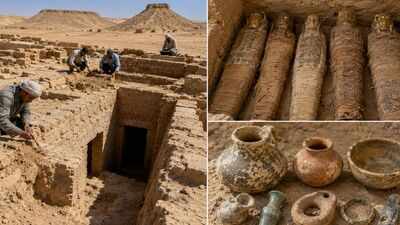
An Egyptian archaeological mission has uncovered three tombs from different periods at the Sheikh Sobi archaeological site in the Bahariya Oasis. The discovery adds new evidence to the long history of the desert region, where archaeologists have already found tombs linked to rulers and priests from ancient Egypt’s Late Period. The newly uncovered burials include mummies, limestone sarcophagi, pottery remains, and terracotta votive figurines. One tomb contains five mummies and is dated to the Late Period, while the other two are believed to date to the Roman period.Together, the three burials represent different stages in the history of the Bahariya Oasis. According to Arab News, the findings were made during the mission’s current excavation season after a 40-member team spent three months working at the site. Archaeologists will continue excavating in future seasons. According to the Egyptian State Information Service, the discovery could help researchers better understand the communities that lived in the Bahariya Oasis across different periods of Egyptian history.
3 tombs discovered in Egypt’s Bahariya Oasis reveal burials from different periods
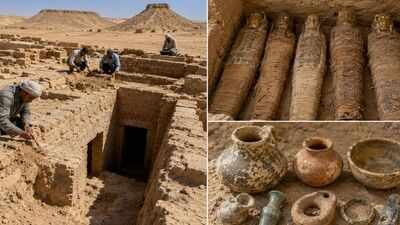
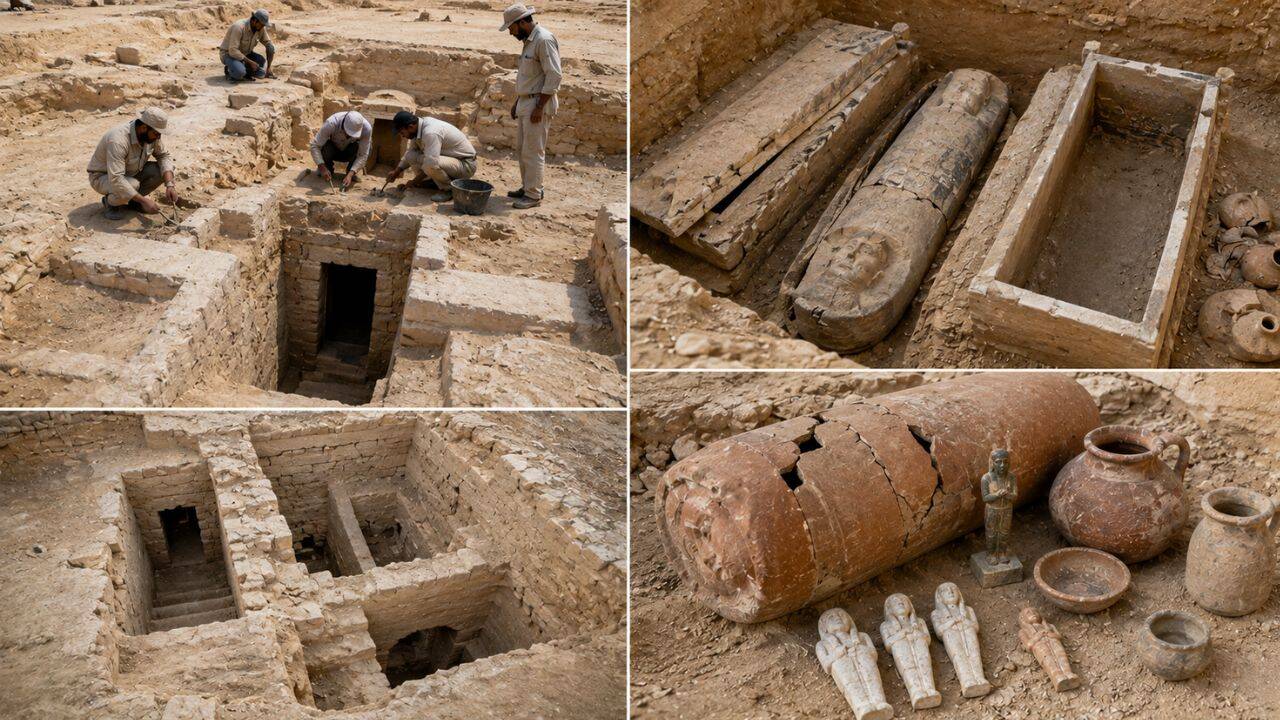
Minister of Tourism and Antiquities Sherif Fathy said that the discoveries helped to shed light on aspects of Egyptian civilisation and its secrets. The three tombs were found at the Sheikh Sobi archaeological site in the Bahariya Oasis. The site contains a cemetery associated with rulers and priests from the Late Period of ancient Egypt. The first tomb is a collective sandstone tomb containing five Late Period mummies. It has a square shaft about three metres deep that leads to two burial chambers. Archaeologists found five mummies inside limestone sarcophagi.The second tomb is believed to date to the Roman period. It has a small shaft, a three-step staircase and a burial chamber. Archaeological evidence suggests that this tomb was never used for burial. The third tomb is also believed to date to the Roman period and contains a rectangular shaft leading to a hall and two burial chambers. Archaeologists also recovered pottery vessels, small bottles, and dishes. The team found limestone and sandstone offering tables along with small terracotta votive figurines showing human and animal forms.
3 tombs discovered in Egypt’s Bahariya Oasis reveal burials from different periods (PC: AI Generated)
Five mummies found inside a late period family tomb
The first tomb provides some of the clearest details from the discovery. One chamber contains a limestone sarcophagus holding a mummy wrapped in linen bandages. Archaeologists found four more limestone sarcophagi with mummies in the second chamber. The tomb is believed to date to the Late Period, and its layout is consistent with other tombs from the 26th Dynasty found at the site. The collective nature of the burial suggests that a family used the tomb. The discovery therefore offers archaeologists material from several individuals within the same burial complex. It also adds another Late Period burial to an area already known for tombs connected with important people from the Bahariya Oasis.
Roman-era tombs show different burial structures with pottery, sarcophagi and figurines
Egypt’s Minister of Tourism and Antiquities, Sherif Fathy, said the discovery provides further evidence of the history of the Bahariya Oasis. The other two tombs are believed to date to the Roman period and show different layouts from the Late Period burial. The second tomb has a small shaft followed by a three-step staircase and a burial chamber. Archaeological evidence suggests that people never used it for a burial. The third tomb has a rectangular shaft that opens into a small hall and two burial chambers.Excavations there uncovered parts of a pottery coffin, a limestone sarcophagus, and a side burial containing a broken cylindrical pottery coffin. The lid carries a human face in relief. The finds add archaeological evidence from the Roman period alongside the Late Period burial discovered at the site. The presence of Roman-period structures alongside the Late Period family burial also gives archaeologists material from different stages of the region’s history within the same archaeological area.