









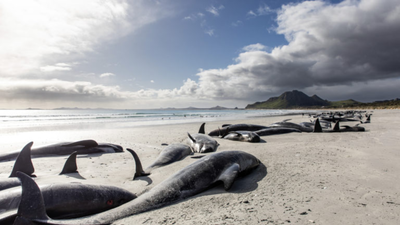
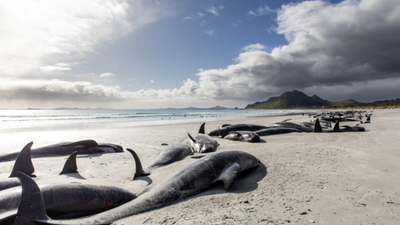
Massive tangles of discarded fishing lines, ropes and plastic bags are harming marine life in the Pacific, with deep-diving whales swallowing thousands of plastic pieces in Hawaiian waters. A 13-year study of stranded short-finned pilot whales around the main Hawaiian Islands found that nearly 23 per cent of the animals examined had swallowed synthetic waste. Researchers at the Health and Stranding Lab at the University of Hawaiʻi at Mānoa found that three adult males had each swallowed up to 12 pounds (5.4 kilograms) of ocean debris. The findings, published in the scientific journal Marine Pollution Bulletin, offer detailed evidence of how plastic pollution is entering the digestive systems of deep-sea predators. Full necropsies of the three whales revealed huge amounts of synthetic waste packed inside their stomachs. Tests showed that the whales had swallowed between 6,283 and 35,543 separate pieces of plastic larger than 5 millimetres, about the width of a standard pencil eraser.“The presence of human-made materials in the stomachs of these ocean sentinels serves as a stark reminder of the impact of global plastic pollution,” said Kristi West, director of the UH Health and Stranding Lab and corresponding author on the study. “It is a clear message of the importance of keeping these materials out of our ocean.”
Fishing waste is the biggest threat
Most of the waste found inside the whales came from abandoned, lost or discarded fishing gear, often known as ghost gear. Strong monofilament fishing lines, synthetic ropes and pieces of fishing nets made up most of the material recovered from the animals. The second-largest group was flexible plastic sheets, including carrier bags, household rubbish sacks and industrial packaging. Although small pieces were much more common, larger objects accounted for most of the total weight. Items longer than 200 millimetres, or about 8 inches, made up more than 70 per cent of the total weight of the plastic recovered from the three whales.
Deep-sea hunting increases the risk
Short-finned pilot whales (Globicephala macrorhynchus) are large marine mammals found in tropical and warm temperate oceans around the world. They are capable of deep dives and can travel hundreds of metres below the surface while hunting prey with echolocation. Researchers said the whales may be especially vulnerable to plastic because of their diet. Pilot whales mainly eat squid, which can move and feel similar to floating plastic sheets, submerged bags and fishing lines drifting through the water. The location of the Hawaiian Islands may also increase the danger. The islands are downwind and downstream from the Great Pacific Garbage Patch, a large area of floating marine waste northeast of Hawaii. Ocean currents can carry fishing gear and other plastic waste towards Hawaiian waters, where pilot whales feed.
Plastic can cause long-term harm
Despite carrying large amounts of plastic, all three adult males were in normal physical condition before they stranded. Researchers did not identify the debris as the main or immediate cause of death. However, scientists warned that this does not mean the whales were unharmed. Large amounts of plastic can take up valuable space in the stomach, leaving less room for food and potentially causing long-term nutritional stress. Over time, this could weaken the immune system of marine mammals. Plastic can also create chemical risks. Synthetic materials in the ocean can absorb pollutants, including polychlorinated biphenyls and heavy metals, and can release chemicals from the plastic itself. As plastic breaks down inside an animal, some of these substances can enter surrounding tissues and build up in organs and blubber, potentially affecting health and reproduction.
Years of research
The study’s findings came from more than seven years of field collection, laboratory work and tissue preparation. A team of 25 researchers, graduate students and field technicians helped recover the stranded whales, carry out necropsies and sort thousands of pieces of plastic. The project received financial support from the Environmental Readiness Division of the Commander, United States Pacific Fleet, as well as the National Oceanic and Atmospheric Administration (NOAA) Fisheries John H. Prescott Marine Mammal Rescue Assistance Grant programme. Researchers at the University of Hawaiʻi said stranded whales can provide important information about the health of remote marine ecosystems that are otherwise difficult to study. The large amounts of plastic found in Hawaiian pilot whales underline the need for stronger international action on discarded fishing gear and single-use plastics before pollution causes further damage to marine food webs.