






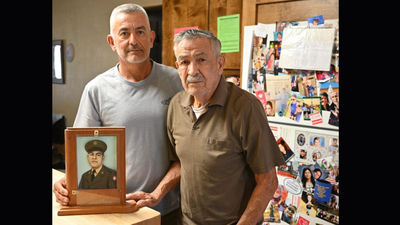
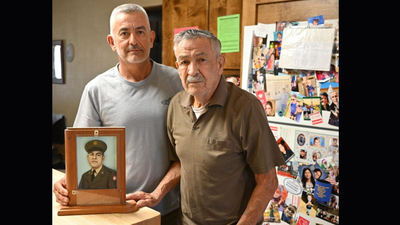
Nearly 74 years after Sergeant Willie Noriega Estrada died while protecting his tank crew during the Korean War, his family is still working to have his military award upgraded to the Medal of Honor. The New Mexico native was 23 when he was killed in action on 22 September 1952 near Bongowol, North Korea. He became the first draftee from Otero County to receive the Distinguished Service Cross, the US Army’s second-highest award for extraordinary heroism. According to reporting by the Carlsbad Current-Argus, his brothers Mario Estrada and Pete Estrada remain determined to make sure his actions receive the country’s highest military honour.
Last stand at Hill 223
In September 1952, Sergeant Estrada was a tank commander with Company C of the 245th Medium Tank Battalion, attached to the 45th Infantry Division. During a fierce overnight battle involving an estimated 2,000 enemy troops, his unit came under heavy artillery and anti-tank fire. Military records and historical accounts preserved by Honor States describe how Estrada’s tank crew fought enemy forces for 15 hours to protect nearby infantry positions. As enemy bazooka rounds began hitting and penetrating the tanks, Estrada ordered a second tank nearby to pull back to safety while he stayed behind to cover its retreat. Estrada suffered terrible injuries, including losing an arm after a shaped-charge round pierced his tank turret. Despite his wounds, he continued firing his machine gun to slow the advancing enemy forces. When friendly troops reached the hill the next morning, they found Estrada alive inside the damaged tank. He died from severe blood loss shortly after rescue teams arrived. Soldiers approaching the position also found Chinese graffiti written on the tank’s steel hull that read “Brave Fighter”. It had been left by enemy troops who had passed the position.
Legacy and decorations in New Mexico
Estrada remains the most decorated military service member in Otero County’s history. In addition to the Distinguished Service Cross, his awards include the Silver Star with Oak Leaf Cluster, the Purple Heart, the Air Medal with Oak Leaf Cluster and the Republic of Korea Presidential Unit Citation. His hometown of Alamogordo honoured him on 3 June 2004 by naming its municipal facility the Willie Estrada Memorial Civic Center. His name has also been given to military sites outside New Mexico, including a street at Fort Knox, Kentucky, and an Army training camp in South Korea. Despite these honours, his family believes his actions deserve the Medal of Honor. Because many decades have passed since the war, securing an upgrade requires congressional action or presidential approval.
The legal path to an award upgrade
Upgrading a military award for bravery many decades after a war involves a detailed review by the US Department of Defense and Congress. Under federal military rules, requests to upgrade awards must provide new and previously unavailable historical evidence or show that an administrative error stopped the original recommendation from being properly considered.The process usually involves:
- Congressional sponsorship: A member of Congress must introduce special waiver legislation to get around the normal time limits set under Title 10 of the United States Code.
- Service branch review: The Senior Army Board for Correction of Military Records examines battle reports, statements from surviving crew members and recommendations from commanders.
- Department approval: The Secretary of the Army and Secretary of Defense must formally support the upgraded award.
- Presidential authorisation: The Medal of Honor is ultimately presented by the President of the United States on behalf of Congress.
Mario and Pete Estrada continue to collect military records and work with veterans’ advocacy groups as they seek support from lawmakers for a formal congressional review. The family says its campaign is not about adding another decoration, but about completing the official record of a soldier who gave his life to protect his fellow crew members on a remote Korean ridge.