








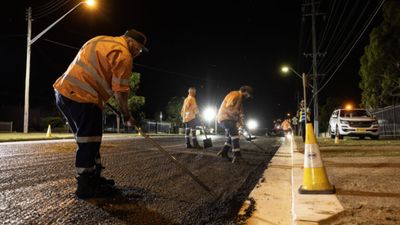
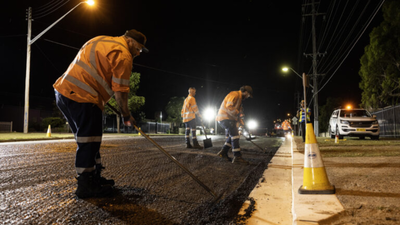
What happens to a takeaway coffee cup after the last sip? In most cases, it ends up in landfill because the thin waterproof lining inside the cup makes conventional recycling difficult. In Australia, however, thousands of these discarded cups have found a very different second life: as part of the material used to build roads.In Penrith, New South Wales, two suburban roads were resurfaced using an asphalt mixture containing recycled coffee cups, crushed glass and other recovered materials. The project used about 135,000 discarded coffee cups and the equivalent of 1.2 million glass bottles. According to Closed Loop, the recycled-content asphalt reduced the road surface’s carbon footprint by about 24%.The roads, covering nearly 750 metres in total, included about 400 metres of Jamison Road in South Penrith and 350 metres of Swallow Drive in Erskine Park. The project marked an Australian-first effort to incorporate recycled coffee cups into local road construction.The technology behind the project grew out of an earlier collaboration between State Asphalt Services, recycling organisation Closed Loop and the Simply Cups program. The idea was relatively simple: take a waste stream that is difficult to recycle, recover its useful material and find a large-scale product that could use it.
How coffee cups became road material
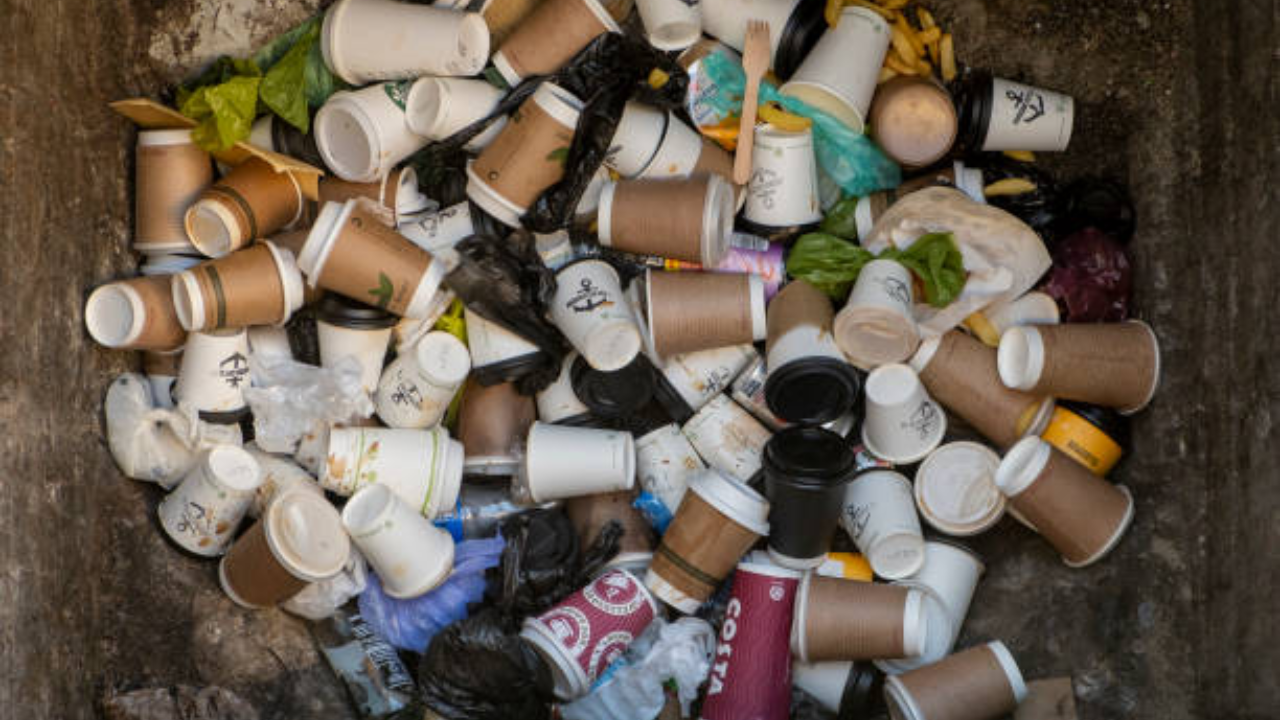
Coffee cups are particularly useful because they contain high-quality fibre.
The idea was first explored several years before the Penrith roads were laid. John Kypreos, director of State Asphalt Services, became interested in whether discarded coffee cups could be incorporated into asphalt. His idea eventually connected with Closed Loop and its Simply Cups collection program.An early 50-metre test section was laid in western Sydney. Rather than immediately putting the material into public roads, the experimental asphalt was subjected to demanding tests. Heavily loaded trucks repeatedly drove over the test strip, while laboratory equipment flexed the material until failure.According to Kypreos, the experimental surface performed at least as well as conventional asphalt and showed strong durability. The precise proportion of coffee-cup material used in the mixture was kept commercially confidential.The resulting PAK-PAVE™ technology was subsequently developed by State Asphalts NSW with Closed Loop Environmental Solutions and the Simply Cups program. The project also involved the University of New South Wales through a Commonwealth Cooperative Research Centres Program grant and received approval from relevant NSW authorities.Coffee cups are particularly useful because they contain high-quality fibre. Their problem is not necessarily the material itself but the plastic or waterproof lining that prevents them from being easily processed through conventional paper-recycling systems.Through Simply Cups, discarded takeaway cups can instead be collected separately and processed for use in products such as road surfaces. Closed Loop founder and head Rob Pascoe has argued that recycling is only truly successful when the material collected as waste is actually turned into a product that has a market.
More than just coffee cups
The Penrith road surface does not rely solely on discarded cups. Crushed recycled glass also forms part of the mixture, alongside reclaimed asphalt pavement and steel furnace slag.Recycled glass has already been used in road construction across a number of Sydney councils. In the Penrith project, these recovered materials collectively account for more than half of the road-making materials, helping reduce the need for virgin resources.This is where the project moves beyond simply finding another use for rubbish. It demonstrates what environmental organisations describe as a circular economy, in which materials are kept in use rather than being discarded after a single life cycle.The concept is more demanding than simply putting something into a recycling bin. For a waste stream to genuinely be part of a circular economy, the recovered material needs to have a practical use, the resulting product needs to meet the required standards and there needs to be a viable market for it.That distinction was highlighted by Pascoe in The Guardian’s 2020 report on the project. Simply collecting waste does not complete the recycling process, he argued. The material needs to be bought and used again for the loop to be genuinely closed.
A road with a wider purpose
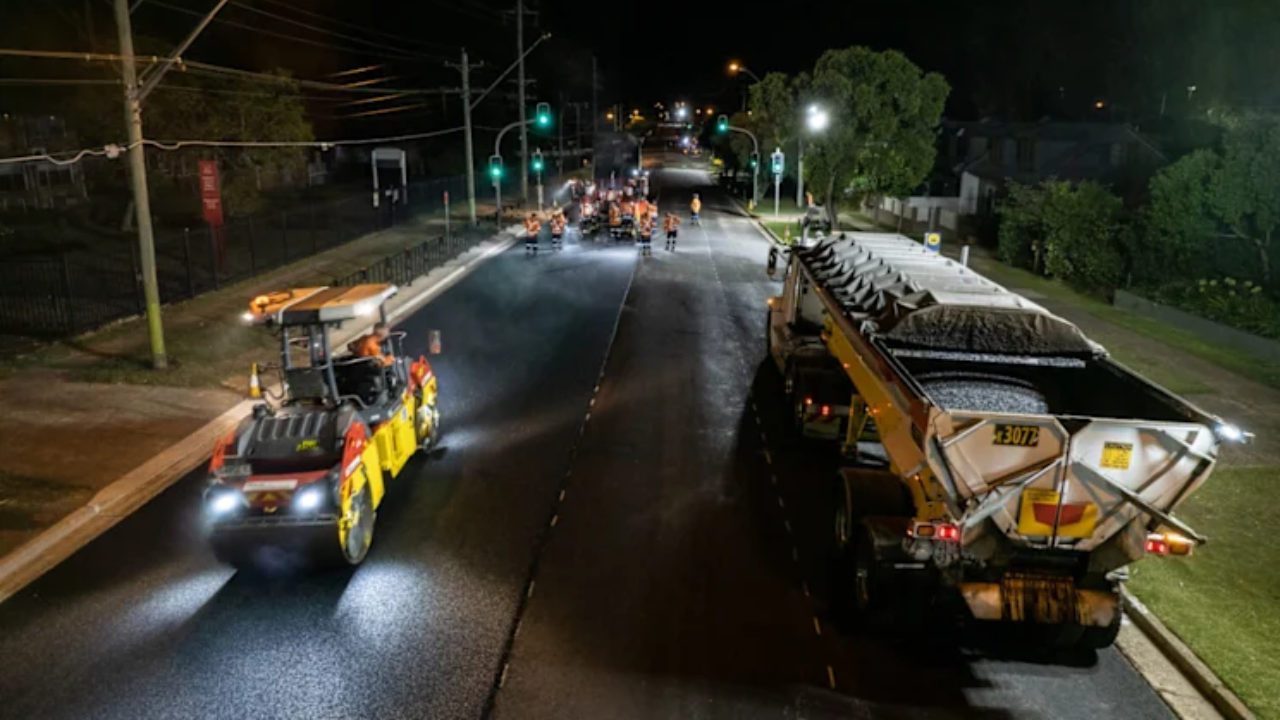
Instead of seeing a discarded coffee cup as the end of a product’s life, the approach treats it as raw material for something new.
The coffee-cup road project also emerged at a time when Australia was grappling with how to reduce its dependence on landfill and improve domestic recycling infrastructure.The Guardian reported that Closed Loop viewed the project as part of a broader effort to find commercial uses for waste streams. The organisation’s approach was to connect companies producing waste with manufacturers capable of turning that waste into useful products.The potential benefits extend beyond environmental gains. In 2020, Gayle Sloan, then CEO of the Waste Management and Resource Recovery Association Australia, told The Guardian that recovering, reusing or recycling 10,000 tonnes of waste could create substantially more jobs than sending the same material to landfill or exporting it.For State Asphalt Services, the longer-term ambition was even more ambitious: roads made almost entirely from recycled material. At the company’s western Sydney plant, recycled glass was already being used as a substitute for some sand, while old road surfaces could be processed alongside other materials and incorporated into new asphalt.The Penrith project therefore represents more than an unusual experiment with coffee cups. It shows how everyday waste can become an industrial resource when collection systems, technology and a commercial market come together.Instead of seeing a discarded coffee cup as the end of a product’s life, the approach treats it as raw material for something new. And in this case, that second life is literally under the wheels of Australian motorists.