









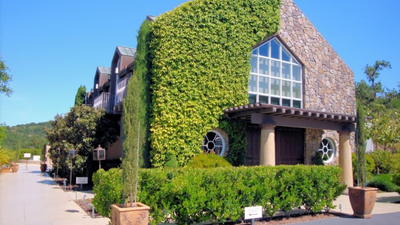
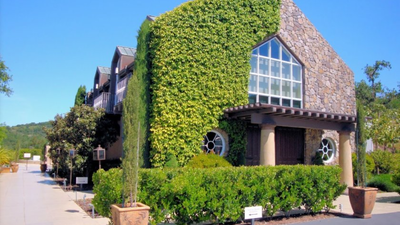
The last winery foreclosure in California happened in 1992, but it may happen again soon. Ray Signorello’s father founded their winery when he was just 14 years old. Next year, it is all set to celebrate its golden jubilee, but it might not be able to.On October 2nd, Napa’s Signorello Estate is set to be unceremoniously auctioned off in a small, concrete courtyard next to the Napa County Courthouse. Ray Signorello suspects that the winning bidder might be the lender, whom he owes $37 million- American AgCredit, a borrower-owned cooperative that finances agriculture businesses.
A series of bad fortunes
In the 2017 Atlas Fire, Signorello’s winery, set on a hilltop off Napa’s Silverado Trail was the first to have burned to the ground. The winery, hospitality space and Signorello’s home were destroyed completely. But there were two silver linings: his 38-year-old Chardonnay vines, which he believes are the second-oldest in Napa Valley, and his 28-year-old Cabernet vines, had survived.Rebuilding it took seven years and a series of delays in permitting, the pandemic, tariffs and the wine crisis. The permitting process with Napa County “dragged on,” and he wasn’t allowed to start construction until 2020. Then the pandemic hit, significantly impacting his restaurant wine business, which at the time, accounted for more than 50% of his sales. Construction on the winery also stalled, while his costs, especially for concrete and steel, “went through the roof.” “Every day, I’d get a call about how it’s going to take longer and cost more,” Signorello said to the San Francisco Chronicle, and he repeatedly had to go back to American AgCredit to increase the loan.At the same time, he had to engage in a long legal battle with his insurance company, which he said originally offered to pay him just $300 a foot for his losses. “You can’t build a shack for $300 (a foot),” he said. It cost him $1 million in legal fees to fight the company, and he “still only got 75% of what I should have.”Finally in June 2024, Signorello opened the doors to its new winery. It featured state-of-the-art, automated equipment and doors Signorello can open from his cell phone. It cost “north of $30 million,” he said, double his original estimate. But in the seven years it took to rebuild his business, the wine world had changed a lot. When Signorello obtained his original loan for about $10 million in 2018, wine sales were in a period of steady growth. They exploded in 2020, largely due to pandemic pantry loading. During those good years, while many of his neighbours were enjoying success, Signorello said his brand “went downhill” as he was relegated to hosting visitors in a modest trailer and his wine club numbers “slowly faded off.” Starting in 2023, global wine sales began to drop, and have continued their downward trend in the years since.Canada’s US alcohol ban in retaliation for Trump’s tariffs cost a 20% blow to his sales and the custom crush market he had bet on evaporated too. Smoke from another round of Napa Valley wildfires destroyed his entire 2020 red grape crop, meaning that in a few years, he’d have no red wine, the bulk of his production, to sell from that vintage.“I’ve done this for 38 years. It’s my livelihood, it’s my family’s livelihood,” Signorello said. “Maybe you could get through one or two of those, but when you put them all together — I’m not a magician,” he added. “I don’t think there’s anybody else that could have done much different.”
A looming foreclosure
Since 2018, Signorello said the interest rate on his loan from American AgCredit has skyrocketed, from 4.75% to 12.6% in 2024, due to him being “out of compliance.” He admitted that he missed payments and said American Ag Credit, the county’s fifth-largest farm credit association, started pressuring him to repay it. “They probably didn’t like the loan,” he said. “They realised — bad market, big loan — this is a problem for us.”Since Signorello did not have $37 million, he hired Canada-based BMO Capital Markets, a mergers and acquisitions leader in US wine to help him find an investor or buyer. But after a year of searching, “they got nothing,” he said. “I couldn’t solve the problem.”After the notice of sale posted in July, Signorello said longtime customers of his winery offered American AgCredit $16 million, all cash, but the creditor turned it down. The night before the Aug. 28 auction was scheduled to take place, Signorello made one last effort to save the winery and filed for bankruptcy, which delayed the auction a month and would, he hoped, force a sale through a more traditional courthouse auction.The filing included a stalking horse offer from his customers, worth $20 million. The filing also included a debtor-in-possession (DIP) financing agreement, which would allow Signorello to continue operating through the bankruptcy process. It would also mean that Amar Doman and Ashley Cooper, who financed the filing, would get paid back before American AgCredit in the case of a sale.American AgCredit opposed the DIP financing agreement in court, and Signorello said he felt he had no choice but to withdraw the bankruptcy filing. The auction is back on, now scheduled for October 2. “This process is a joke. It’s a courtroom step auction with cash, so (bidders) literally have to bring like 30 or 40 checks with them,” Signorello said. “Usually these things are quite small. They’re $100,000 deals. Wineries of this nature are not sold on corporate steps in front of a fountain.”Even in the wake of the wine crisis, which has led to a surge in closures and sales, winery foreclosures remain incredibly rare in California; wineries are more often auctioned off through distress sales via the bankruptcy process. In a foreclosure, which is typically initiated by a lender or creditor, a winery’s land, buildings, equipment and intellectual property are seized as collateral. In a bankruptcy, usually initiated by the winery, the court supervises a sale or liquidation.Signorello said that he finds American AgCredit’s strategy perplexing. The quiet real estate market for California wine isn’t showing signs of rebounding any time soon, and it could be a while before the institution gets a better offer than the $20 million it rejected. In the meantime, American AgCredit will either have to tend the vines and operate the winery — which will likely require obtaining a new ABC license — or shut it down with the 2026 fermentations still underway. 10 employees (including a vineyard foreman who’s worked there since 1989) will lose their jobs and the organic vineyards and 50-year family legacy could be shut down.