







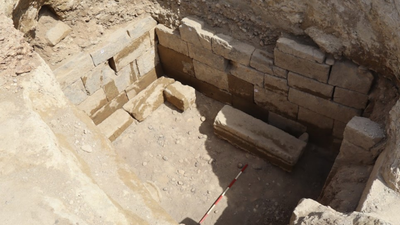
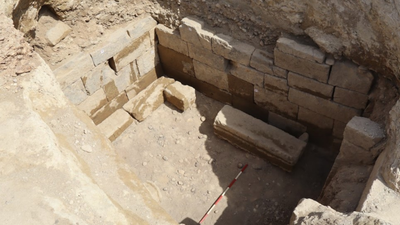
Archaeologists have uncovered a monumental Etruscan tomb inside an ancient cemetery at Vulci in central Italy, nearly 140 years after French archaeologist Stéphane Gsell first identified the burial mound surrounding it. The newly excavated Tomb of the Stone Chamber dates to the late seventh century BCE, one of the most prosperous periods in Vulci’s history, when the city also had intense connections with the Mediterranean. The burial contained weapons, chariot fittings, gold and bronze objects, bone and ivory artefacts, high-quality ceramics and an exceptional banquet service. Archaeologist Christian Mazet described it to Etruscan Times as a tomb “of the very highest rank”, based on the nature of its surviving grave goods.
A monumental Etruscan tomb hidden inside the Gsell tumulus
The discovery was made during the 2026 excavation campaign in the Polledrara necropolis at ancient Vulci. According to Etruscan Times, the Return to Vulci team identified the great Gsell Tumulus on the ground and brought to light what is in all probability the princely burial that Gsell had searched for but never managed to find. The newly uncovered structure, known as the Tomb of the Stone Chamber, lies within the monumental complex. The 2026 investigation also revealed that the tumulus may be considerably larger than previously believed, although its full dimensions still need to be established through further work.
Why archaeologists call it a tomb of the highest rank
The burial’s architecture and surviving grave goods point to its exceptional status within Vulci’s society. Christian Mazet, one of the scientific directors of the Return to Vulci project, said the presence of weapons, a chariot, gold objects and high-quality ceramics of the type found in princely tombs of the Osteria necropolis showed that the burial belonged to the highest rank. The official Italian Superintendency likewise described the discovery as particularly important for understanding the aristocracy of Vulci at the end of the seventh century BCE. The tomb consists of three chambers, with the walls of the main chamber built from large blocks of nenfro set into natural deposits associated with the ancient course of the Fiora River.
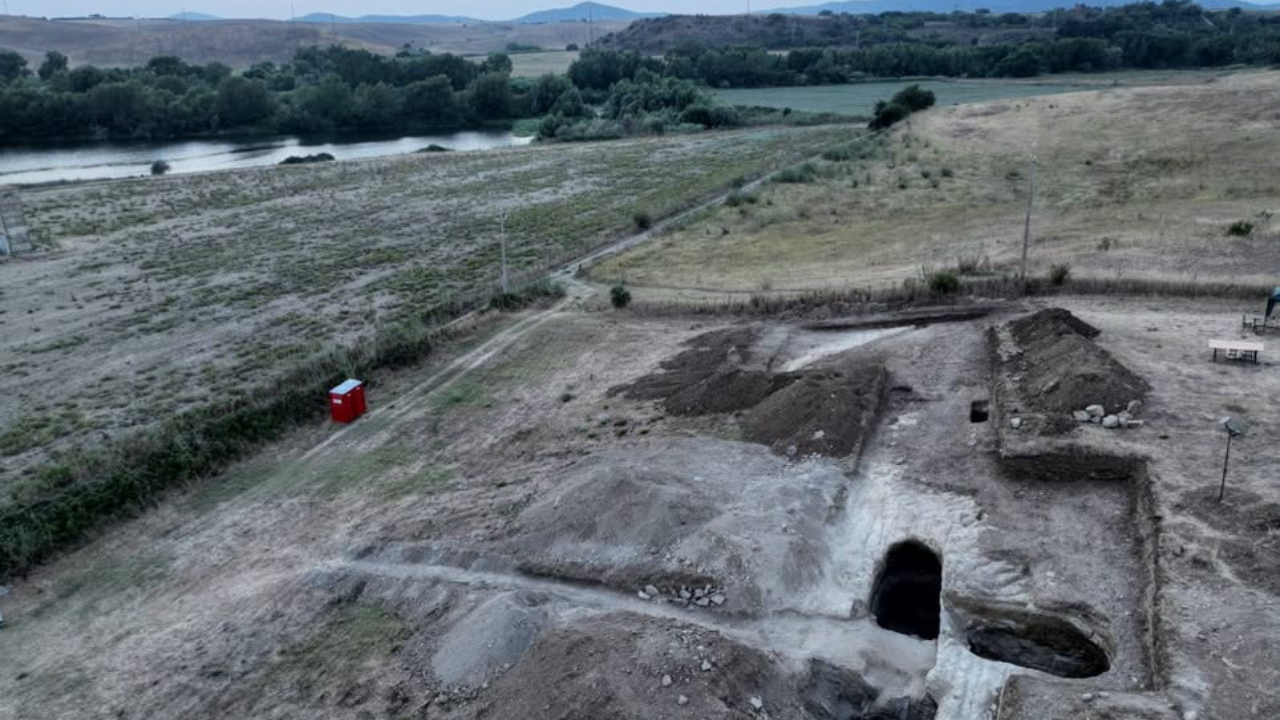
Project Site (Image: Ritorno a Vulci Project, 2026 / SABAP)
Weapons, chariot fittings and an exceptional banquet service
Despite clandestine intrusions into the tomb during the 20th century, archaeologists found groups of objects in the side chambers that had survived in their original positions. The excavations recovered weapons, chariot fittings, gold and bronze sheets, as well as objects made of bone and ivory. Researchers also found Corinthian pottery and bucchero wares, along with a bronze tripod associated with a lamp made of alabaster gypsum, probably of Aegean origin.The side chambers also contained an important banquet service made from Polledrara Ware, a rare local polychrome pottery that was used by Vulci’s leading families. The assemblage included dinoi for mixing wine and water, cups and other vessels for holding liquids, as well as a grater associated with wine preparation. A large polychrome ceremonial cup in the Ionian Wild Goat Style was also recovered, with very close parallels among the grave goods from the Tomb of Isis.
Stéphane Gsell identified the mound in 1889
The newly uncovered tomb is closely connected to the work of French archaeologist Stéphane Gsell, who investigated the necropolises of Vulci in the late 19th century. In 1889, Gsell identified the large tumulus at Polledrara, reconstructed its perimeter and searched for its main tomb. He eventually had to stop excavating because he no longer had the money or time needed to find the burial. More than a century later, the Return to Vulci team returned to the site and uncovered what it believes is the princely burial Gsell had searched for.
What the discovery reveals about ancient Vulci
The newly uncovered burial dates to the end of the seventh century BCE, a period when Vulci was experiencing one of the most prosperous phases in its history and maintaining intense connections with the Mediterranean. The wealth and variety of objects recovered from the tomb provide evidence of the high status of the people buried there. The discovery also offers an opportunity to compare the complex with other important Vulci burials, particularly the nearby Tomb of Isis, which was discovered in 1839 and is now associated with the British Museum. According to the Italian Superintendency, similarities between the two complexes could help researchers investigate funerary rituals, artistic production and exchange networks among Vulci’s elites at the end of the seventh century BCE.