









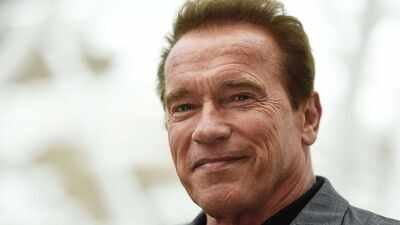
Long before Arnold Schwarzenegger became California’s governor, he was already working on an issue involving children and the hours they spent outside school. In 1992, Schwarzenegger and Danny Hernandez founded the Inner-City Games Foundation, an initiative that brought sports and fitness activities to young people in under-resourced communities.More than three decades later, that initiative has evolved into After-School All-Stars (ASAS), a national nonprofit providing free after-school and summer programmes. According to its latest figures, the organisation now reaches 140,833 students annually through 754 sites across 77 US cities.The organisation’s beginnings were rooted in the idea that children’s lives did not stop when the school bell rang. Its early programmes used sports and physical activities to provide young people with organised experiences during after-school hours.The Los Angeles chapter was established in 1992, and the organisation received its official 501(c)(3) nonprofit designation the following year. Over the next few years, chapters were established in cities including Atlanta, Las Vegas, Orlando, New York City and San Diego.
From sports programmes to broader education support
The initiative gradually became more ambitious. In 2003, the Inner-City Games expanded its mission to comprehensive, school-based programming and adopted the name After-School All-Stars.Its work now extends well beyond athletics. ASAS offers programmes covering academic support, STEM, visual and performing arts, health and wellness, and career exploration. Students can take part in activities ranging from homework assistance and coding to music, sports, cooking and career-focused experiences.The organisation also introduced programmes aimed at helping teenagers prepare for life beyond school. CampUS, launched in 2010, focused on high school and college success, while STEM CampUs followed in 2013 with activities connected to fields including engineering, graphic design and applied sciences. The same year, ASAS launched its national Youth Advisory Board, giving participating students a role in shaping programmes and community-service initiatives. The organisation reported serving 95,502 students in 2012. By 2021, its summer programming had expanded to 212 sites and reached nearly 11,000 students.In 2002, while campaigning in California, he backed Proposition 49, the After School Education and Safety Act. California voters approved the measure, which provided $550 million for after-school programmes for students in kindergarten through ninth grade, according to the ASAS timeline and the USC Schwarzenegger Institute.The USC Schwarzenegger Institute has also reported that Schwarzenegger spent $2.3 million of his own money supporting the campaign for the measure. His advocacy continued after his time in California politics. At the 2017 National Afterschool Summit, Schwarzenegger urged leaders to oppose proposed federal cuts to after-school funding and described the period between 3 p.m. and 6 p.m. as a particularly important period for young people.“This is not a party issue, this is a people’s issue,” Schwarzenegger said at the summit. During the event, he also referred to concerns raised by law enforcement about young people being exposed to drugs, alcohol, gangs and violence during unsupervised after-school hours.
The organisation’s reach continues to expand
ASAS has continued adding academic, career, health and enrichment opportunities to its programmes. Its current work is spread across schools and other community locations, including recreation centres and housing authorities.The organisation’s FY24 annual report highlighted programmes operating at 740 sites, with nearly 150,000 students participating during that year. Its financial timeline also states that annual revenue crossed $100 million in 2024, rising from $91.5 million in 2023 to $104.7 million, with the organisation reporting that 89% of revenue went directly to programmes.