









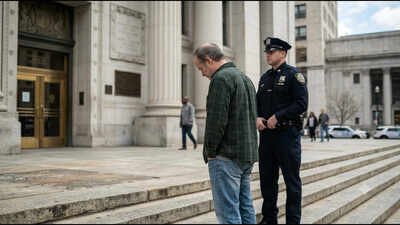

An Ohio man has pleaded guilty to running a fake investment scheme that prosecutors say convinced five people in Ohio and Florida to hand over more than $3 million, US Attorney’s Office for the Northern District of Ohio said on Wednesday. John E Brown II, 45, from Brecksville, Ohio, told investors they could make money through a ‘rolling code ticket packages’ linked to sporting events and theme parks.According to officials, the supposed investment involved bundled admission tickets for experiences such as sports events and theme parks. Brown claimed the value of these ticket packages could change depending on factors including the stock price of theme parks and how well a professional sports team was performing during a season.Brown also told potential investors that the ticket packages could ‘split’ that would double the number of tickets in a package and increase its value. He further told investors that they could make profits by trading the ticket packages when their value went up.The scheme ran from about May 2020 to May 2024, according to the latest court information. Brown pleaded guilty to 17 counts of wire fraud and two counts of engaging in a monetary transaction in criminal proceeds. US District Judge Dan A Polster accepted his plea on September 29, 2026.
How Brown persuaded investors
Prosecutors said Brown used several methods to make the investment opportunity appear genuine. He involved other people who acted as successful investors or ‘code’ buyers. Their role was to help convince potential victims that the investment was legitimate and safe. Brown also told some investors that their ticket packages were insured against losses.Once investors agreed to put money into the scheme, Brown directed them to transfer the funds to his business bank accounts. This gave him control over the money that victims believed was being used for the ticket investments.The Justice Department said Brown then used the money for his own benefit. About $1.375 million was transferred to different casinos so that he could gamble, according to prosecutors.The use of the money at casinos was also reported when Brown was initially charged in 2025. At that stage, federal authorities said five victims had lost a combined $3.3 million. The earlier complaint alleged that Brown also loaned some of the money to businesses or used it to repay one of the victims.
Fake documents used
The scheme began to come under pressure when investors did not see the returns they had expected. When victims asked Brown about their money, prosecutors said he gave them false explanations about what had happened to their investments.He also provided fake documents that appeared to show that he had purchased ticket codes for them. According to the Justice Department, Brown continued to give victims false assurances that their investments were safe.The victims included three people from Berea, Mayfield Heights and North Royalton in Ohio. Two others lived in Cape Coral and Orlando, Florida.Together, the victims lost more than $3 million after investing in what prosecutors described as a financial opportunity that did not exist.
Charges and sentencing
Brown pleaded guilty to all 17 wire fraud counts and two counts involving monetary transactions in criminal proceeds. The wire fraud charges each carry a maximum sentence of 20 years in prison.The two monetary transaction charges each carry a maximum sentence of 10 years in prison. Brown also faces fines of up to $4.75 million.His sentencing is scheduled for January 7, 2027. The final sentence will be decided by a federal district court judge after considering the US Sentencing Guidelines and other statutory factors.The investigation was conducted by the FBI Cleveland Division. Assistant US Attorney Edward D. Brydle led the prosecution for the Northern District of Ohio.