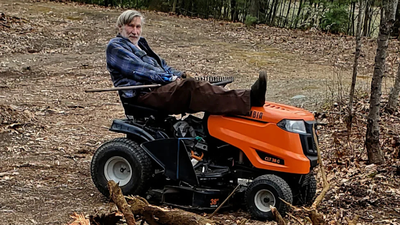










Every time Mike and Dana Blevins take their side-by-side around their 300-acre property in Perryville, Missouri, they see something they once had to work hard to bring back: white-tailed deer. “We take the side-by-side out with our grandkids, and we will always see deer,” the couple told the Missouri Department of Conservation (MDC) in its September 2026 Missouri Conservationist feature. “Watching them year-round is a way we monitor the herd.” That routine is more than a family outing. It is also a quiet measure of how dramatically the property has changed since the Blevins bought it in 1992.
A property where deer habitat had suffered
When the couple acquired the land, it was not being managed with a healthy deer population in mind. According to MDC, the previous owner allowed high hunting pressure and cattle to run in the woods, while the property lacked management aimed at supporting a healthy deer herd. The Blevins began changing that after purchasing the property.With recommendations from an MDC biologist, they introduced habitat-management practices designed to increase deer numbers. Over the following decades, the land became an example of how private landowners can work alongside wildlife officials to improve habitat and manage a local deer population. The transformation did not happen overnight. It unfolded over more than three decades, with the couple continually watching the animals and adjusting their approach. Today, seeing deer on the property has become an ordinary part of their lives.
Missouri’s remarkable deer comeback
The Blevins’ experience is part of a much bigger Missouri conservation story. It is difficult to imagine today, but white-tailed deer once came close to disappearing from the state. MDC says widespread habitat destruction and unregulated hunting caused the population to collapse. By 1925, an estimated fewer than 400 deer remained in Missouri.Conservation efforts eventually reversed that decline. Protection, regulated hunting and habitat management helped the population recover dramatically. That recovery turned the white-tailed deer into one of Missouri’s most familiar wild animals. MDC says nearly half a million people now pursue deer during hunting seasons, reflecting both the abundance of the species and its importance to the state’s outdoor culture.But abundance also brings a management challenge. A healthy deer population requires suitable habitat, responsible hunting and continued monitoring, particularly as disease threatens herds in parts of the state.
The new threat facing Missouri’s deer
For the Blevins, habitat restoration is only one part of protecting the animals they have spent decades watching. Their focus has increasingly turned to chronic wasting disease, or CWD, a fatal and contagious disease affecting white-tailed deer and other members of the deer family. The disease can spread through contact between animals as well as through infectious proteins left in the environment. MDC has been testing Missouri deer for CWD for more than two decades. The disease was first detected in the state in 2010, after nearly 33,000 deer had been tested. Since then, the department has worked with hunters and landowners on efforts to keep infections under control.The Blevins became involved after learning about the disease. Mike Blevins said the couple previously owned an archery shop and wanted to ensure they could give customers accurate information about CWD. They have also participated in post-season targeted removal efforts, while continuing to harvest enough deer to feed their family and donate meat through Missouri’s Share the Harvest programme.Missouri’s deer recovery may be one of the state’s major conservation successes, but officials warn that maintaining a healthy herd requires continued work. MDC says CWD remains relatively uncommon in much of Missouri, with less than 1% of tested deer statewide testing positive 15 years after the disease was detected. However, infection becomes harder to manage once it becomes well established in a population. For that reason, the department is shifting its approach toward more localised management, with hunters and landowners playing a central role during regular deer seasons.