






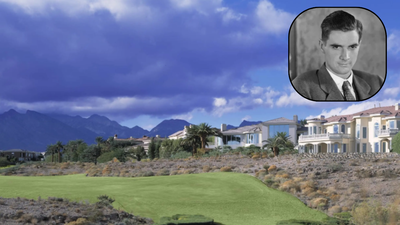
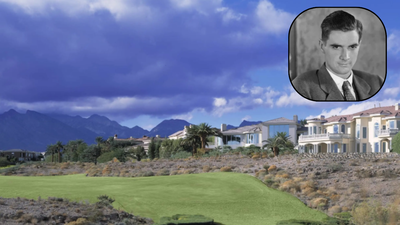
A barren stretch of land on the western edge of Las Vegas once seemed to have little immediate purpose. In 1952, Howard Hughes acquired 30,000 acres there for a reported $3 an acre, intending to use the property for his California-based business interests. The plan never happened, and the land remained largely dormant for more than three decades. According to Summerlin’s official history, the property eventually became the foundation for a master-planned community that evolved into today’s 22,500-acre Summerlin.
From barren land to a long-term development plan
Hughes acquired the land in the 1950s when the western edge of the Las Vegas Valley was still largely undeveloped. Summerlin’s history says he was considering the property as a possible relocation site for some of his California-based businesses. That relocation never took place. Instead, the 30,000-acre holding sat dormant for more than 30 years.The transformation began much later, after Hughes’ Summa Corporation, the predecessor to Howard Hughes, began looking at what could be done with the enormous tract. Rather than immediately turning it into a conventional housing development, the company assembled a team of land planners to create a broader master plan for the area.
Summerlin takes shape in 1988
A major turning point came in 1988, when Summa announced plans for Summerlin. The community was named after Jean Amelia Summerlin, Howard Hughes’ paternal grandmother. That same year also brought an important land exchange involving the Bureau of Land Management (BLM). Under the agreement, Summa gave up more than 5,000 acres in a land exchange with the Bureau of Land Management, helping create a buffer intended to protect the nearby Red Rock Canyon area while allowing development to move forward elsewhere.This was an important part of the project’s early planning because Summerlin was being designed not simply as a collection of homes, but as a large-scale community alongside the natural landscape surrounding it.
The first homes arrive
The development moved from planning to construction in 1990. Summerlin’s first residential village, The Hills, began development that year. The Hills covered 394 acres and was organised around a central park, schools and residential neighbourhoods. Summerlin Parkway was also completed from Rainbow Boulevard to Town Center Drive, providing a major connection between the developing community and US 95. At the time, locals reportedly nicknamed it the “road to nowhere” because so little development surrounded it.The first family moved into Summerlin in March 1991. Cal and Maria Champlin and their children became the community’s first residents, marking the beginning of what would eventually become a much larger population centre.
Building more than homes
As Summerlin expanded, its development strategy went beyond residential construction. Schools, parks, medical facilities, shopping centres, religious institutions and recreational amenities were added as new villages were built. The Summerlin Library and Performing Arts Center opened in 1993, while Summerlin Hospital Medical Center followed in 1996. The community’s first public high school, Palo Verde High School, opened in 1997.Golf also became part of the community’s identity. TPC Summerlin opened in 1991, and in 1996 Tiger Woods won his first PGA tournament there. The scale of construction grew rapidly. By 2001, Summerlin had completed its 20,000th new home. The community also recorded 114 new-home sales in a single week, according to its official history.
A growing connection to Las Vegas
Infrastructure played a major role in turning Summerlin from an isolated development into an integrated part of the Las Vegas Valley. Construction began in 1992 on an eight-mile section of the 215 Beltway through Summerlin. The road created another major east-west connection and helped make the community more accessible from other parts of the valley.The development continued to add commercial and entertainment destinations. Downtown Summerlin opened in 2014, creating an urban centre with retail, dining, offices and entertainment. Later additions included City National Arena, which opened in 2017 as the Vegas Golden Knights’ practice facility, and Las Vegas Ballpark, which opened in 2019.
Protecting open space while expanding
The relationship between development and conservation has remained part of Summerlin’s history. In 2002, another land exchange between Howard Hughes and the BLM gave 1,000 acres of highlands in Summerlin’s western region to the BLM. In return, Howard Hughes received roughly 1,000 acres along the community’s southern edge. The exchange expanded the Red Rock Canyon National Conservation Area while allowing Summerlin’s development to continue in areas considered more appropriate for construction.The community also developed an extensive network of parks and trails. Summerlin’s official figures now list more than 300 parks and more than 200 miles of interconnected trails.
From 30,000 acres to a major master-planned community
Today, Summerlin is far removed from the largely unused desert property Hughes acquired in 1952. The official Summerlin website says the master-planned community now covers 22,500 acres and is home to more than 130,000 residents. Once the master plan is completed, the population is projected to reach approximately 200,000.What began with Hughes’ purchase of a vast, barren tract for a reported $3 an acre ultimately became a decades-long development project with homes, schools, parks, hospitals, businesses, golf courses, entertainment venues and a major urban centre. The transformation was not immediate. The land remained dormant for more than 30 years before plans for Summerlin were announced in 1988. From the first village in 1990 to a community of more than 130,000 residents today, the property has evolved into one of the most prominent master-planned communities in the Las Vegas Valley.