








A rare Canadian-built computer that spent decades forgotten in a rural barn near Edmonton is preparing for a unique second chapter. The AES Alphaplus 12, believed to have been built around 1981, had resurfaced in its original shipping box and was taken to Carleton University in Ottawa for a scheduled public unboxing. The machine has attracted attention because so little documentation exists about this particular model, leaving its internal components and configuration uncertain. Its discovery offered a rare opportunity to examine a little-known part of Canada’s early computing history.
Importance of the rare Canadian computer discovery in an Edmonton barn
The rediscovery of the AES Alphaplus 12 is significant not simply because an old machine survived for decades, but because so little is known about the exact model. According to Carleton University’s School of Computer Science, the computer remained untouched after its time at the Northern Alberta Institute of Technology (NAIT) before being forgotten in a rural Edmonton barn.The university’s announcement, published on 2 September 2026, described the machine as a rare example of Canadian computing heritage. The 2 October unboxing event was scheduled to give specialists an opportunity to identify and assess the machine, and also to establish what can be learned from the surviving hardware.The university also noted that the machine was sealed in its dusty shipping box. That condition made the discovery particularly intriguing, as its contents had not yet been examined in the context of the planned public unboxing.
What made AES Data an important name in Canadian computing
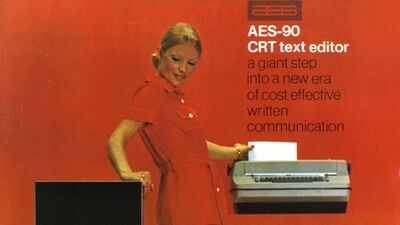
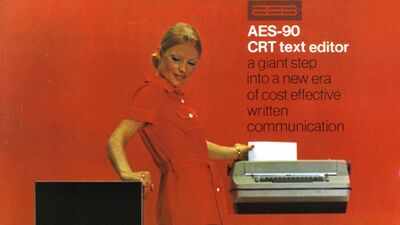
The story of the Alphaplus 12 is closely connected to the development of electronic word processing in Canada. Carleton University’s background article identifies Montreal-based AES Data Ltd. as the company behind the machine and traces its design lineage to the earlier AES-90.The AES-90 was an important development because it used a screen to display and edit text electronically. According to Carleton, it introduced capabilities such as automatic line wrapping, text justification and numerical alignment at a time when these functions were far from standard. In 1972, the press described the machine as an electronic editor, reflecting how different it was from conventional typing equipment.By 1978, AES was competing directly with IBM as Canada’s largest word-processing supplier, according to the university’s account. The company was acquired by Ottawa’s Kinburn Technology Corporation in 1987, creating a further connection between its history and the city where the newly recovered machine was taken.
How much is known about the Alphaplus 12 today
Despite AES Data’s importance in the word-processing industry, information about the Alphaplus 12 itself remains remarkably scarce. Carleton’s School of Computer Science reported finding only 2 pieces of documentation relating specifically to the model. A listing in a British museum archive and a brief reference in a Canadian trade magazine from 1981.Even Ingenium, Canada’s national science and technology museum, has early AES word processors and software in its collection but no record of this particular model, the university reported. That gap made the recovered machine especially valuable to researchers trying to establish a clearer picture of the country’s computing history.A separate entry in the Time-Line Computer Archive provides some context about the wider Alphaplus family. Its listing for the AES Alphaplus 14 describes a word processor built in the early 1980s by the Montreal-based company. The archive explains that the machine was designed for word processing rather than as a general-purpose computer and features a printer built into the monitor.However, the archive documents the Alphaplus 14, not the recovered Alphaplus 12. Its description therefore offers background on related equipment, rather than proof of the exact features or configuration of the barn discovery.The unboxing at Carleton University took place on 2nd October at 2 pm in room 4155 of the Herzberg Building where a livestream was also planned, according to the university’s announcement on 18 September 2026.
A forgotten machine returns to Canada’s computing history
Carleton’s announcement places the discovery within a wider pattern of vintage-computing finds. The university’s background article recalls the appearance of roughly 2,200 NABU computers from a barn in Massachusetts in 2023. Those machines had their own Canadian connection, having been developed by the Ottawa-based NABU Network in the early 1980s. It also describes the discovery of two Q1 microcomputers beneath boxes at Kingston University in London.The Alphaplus 12 is a smaller discovery in scale, but its limited documentation made it a unique find in its own right. Its journey from an educational institution in Alberta to decades of obscurity in a barn had left important details about the machine unresolved.