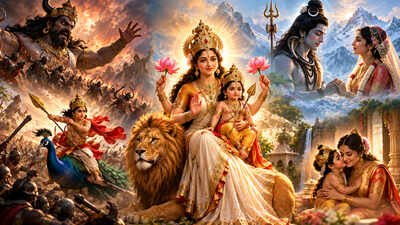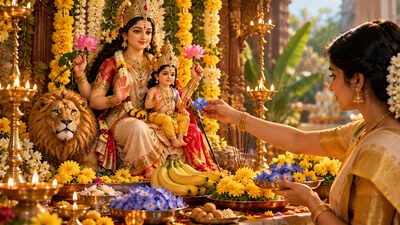








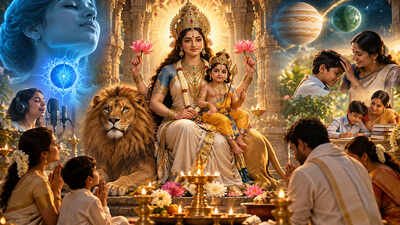
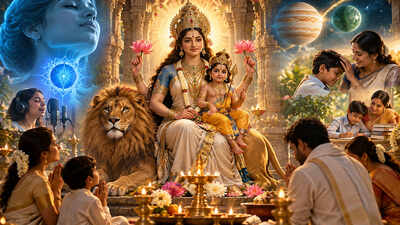
Vishuddha, the throat chakra, is where thought turns into sound. In some Yoga and Tantra traditions, Maa Skandamata is associated with this chakra. Devotees believe that worshipping her can help strengthen their voice and give them the confidence to express themselves. She is also traditionally invoked by those experiencing concerns related to the throat or difficulties in speaking their minds, although worship is not a substitute for medical care.
Planets and the Throat
On Thursday, 15 October 2026, the Panchami of Sharad Navratri, devotees turn to Maa Skandamata for calm and spiritual strength. Her grace is described as a cool stream that soothes troubled energies, especially when planetary influences are believed to be challenging.As a planetary remedy, she is traditionally associated with soothing and strengthening Mercury. When Mercury is considered afflicted in astrology, the mind may feel strained and self-expression may seem blocked. Her worship is believed to help ease this agitation.Because of her close association with children, she is also linked to Jupiter, the planet traditionally associated with offspring. These are traditional astrological associations, not guarantees of particular outcomes. An astrologer you trust can explain how they may apply to your individual birth chart.
What Devotees Ask of Her
The prayers offered to Maa Skandamata are deeply personal.
- For wealth and prosperity: Her worship is believed to bring happiness, prosperity and a settled, wholesome sense of well-being—a blessing that goes beyond simply acquiring more wealth.
- For children’s success: Mothers who hope their children will achieve recognition and accomplish great things, as Kartikeya did, seek her blessings. These prayers express ambition alongside the hope that a child’s potential will flourish.
- For healing relationships: According to tradition, worshipping Maa Skandamata is considered beneficial when there is pain, disagreement or estrangement between a mother and her son. Sometimes the greatest distance exists within a family, and devotees turn to her worship in the hope of softening resentment and restoring understanding.
Three Mantras, Three Moods
1. The Mool Mantra (Root Mantra)
Simple and sincere, this mantra expresses devotion and surrender.ॐ देवी स्कन्दमातायै नमः॥Om Devi Skandamatayai Namah.Meaning: I bow to Mother Skandamata.
2. The Beej Mantra (Seed-Syllable Mantra)
This mantra brings together devotion and the aspiration for strength, love and grace.ॐ ह्रीं क्लीं देव्यै नमः॥Om Hreem Kleem Devyai Namah.Meaning: I bow to the Divine Goddess, seeking strength, love and grace.
3. The Stuti Mantra (Hymn of Praise)
This verse repeats the salutation, reminding devotees of the Goddess’s presence in all living beings.या देवी सर्वभूतेषु स्कन्दमाता रूपेण संस्थिता।नमस्तस्यै नमस्तस्यै नमस्तस्यै नमो नमः॥Ya Devi Sarvabhuteshu Skandamata Rupena Samsthita, Namastasyai Namastasyai Namastasyai Namo Namah.Meaning: I bow again and again to the Goddess who abides in all living beings in the form of Skandamata.
The Form Celebrated in a Verse
Maa Skandamata’s divine form is praised in this verse, accompanied by a prayer for auspiciousness and blessings.सिंहासनगता नित्यं पद्माश्रितकरद्वया।शुभदास्तु सदा देवी स्कन्दमाता यशस्विनी॥Simhasanagata Nityam Padmashritakaradvaya, Shubhadastu Sada Devi Skandamata Yashasvini.Meaning: May the glorious Goddess Skandamata, seated upon a throne with lotuses in her hands, always bestow auspicious blessings.
Choosing Where to Begin
Choose the Mool Mantra as an expression of reverence and surrender, the Beej Mantra as a prayer for strength, love and grace, or the Stuti Mantra for repeated remembrance and devotion.Then offer your prayers for prosperity, a child’s success or peace between a mother and her son. Your family’s traditions or your guru’s instructions should take precedence when choosing a devotional practice.When the final mantra has been recited, the lamp is still burning, and the last namah lingers in the room for a moment before anyone speaks.