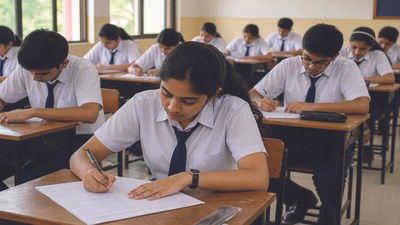









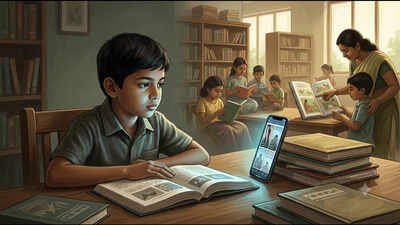
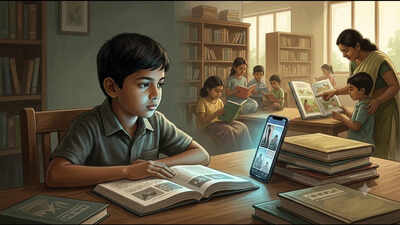
“Until I feared I would lose it, I never loved to read. One does not love breathing.” The words, written by Harper Lee in her classic novel To Kill a Mockingbird, published in 1960, carry a meaning that feels increasingly urgent today. Perhaps the time has come to fear the loss of something we once took for granted: the ability to lose ourselves in a book.Think of a moment when a close friend’s words cut deep, when disappointment left you searching for solace, and the world seemed unwilling to listen. Somewhere on a shelf, a familiar book waited. Sometimes, it was a companion; at others, a teacher. Its pages offered refuge when words failed and perspective when emotions overwhelmed. Books have a way of staying with us, even when people do not.For generations of readers, books were more than a means of acquiring knowledge. They were where we first encountered the ache of separation, the exhilaration of love, and the finality of loss. Long before life introduced us to these emotions in their full complexity, books had already given us a vocabulary for them. They taught us to inhabit another person’s world, sit with uncertainty, and recognise feelings beyond our own.Fast forward to today. Books that once offered solace remain unopened, their place taken by an unending stream of notifications, reels, and fleeting digital distractions. The habit of staying with a story is giving way to the impulse to swipe past it. The relationship between readers and books is changing, but the deeper question is what this change is doing to our capacity for attention, reflection, and understanding.The concern is not simply that children may be reading fewer printed books. It is whether they are losing the patience to follow an idea to its conclusion, the curiosity to venture beyond a prescribed syllabus, and the willingness to remain with a text long enough for its meaning to unfold.At a time when information is available at the tap of a screen, access is no longer the principal challenge. The harder task is learning how to absorb, question and connect what we encounter.
When reading becomes an exercise in extraction
Prof. V. N. Rajasekharan Pillai, an educationist and institution builder who has spent more than five decades in Indian higher education, has observed this change over the course of his career. Having served as chairman of the University Grants Commission (UGC), executive director of the National Assessment and Accreditation Council (NAAC), and vice-chancellor of Indira Gandhi National Open University (IGNOU), he has witnessed the changing relationship between students, education, and knowledge.“Deep reading is not a leisure skill. It is a foundational human capacity that shapes how societies think, decide, and live,” he told The Times of India, warning that fragmented scrolling can weaken sustained engagement with ideas.
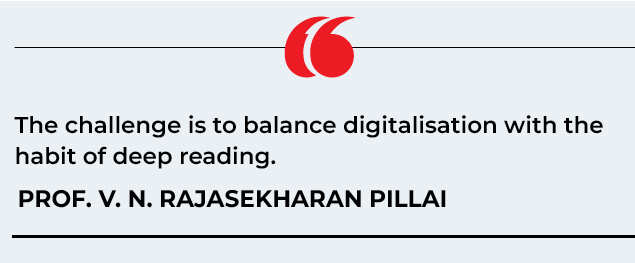
This brings us to a fundamental question about the changing purpose of reading. When a student reads primarily to locate a fact, check a definition, or prepare for an examination, what happens to the interpretative work that lies between the lines? Reading is often described as a gym for the brain. But when it becomes an exercise in retrieving information, does it retain its full intellectual value?His observation finds a parallel in the concerns raised by Niyati Verma, science resource person at the State Council of Educational Research and Training (SCERT), Delhi, who has noticed increasingly fragile engagement with texts beyond the prescribed syllabus.“Over recent years, the appetite for reading, both academic and leisure, has undoubtedly shriveled. Students now view texts beyond the syllabus as burdensome rather than portals to discovery,” she said.A prescribed chapter may fulfil an immediate academic requirement, but reading beyond it allows students to encounter unfamiliar perspectives, pursue questions independently, and develop interests that examinations cannot necessarily anticipate.Pillai said teaching practices and examination systems also shape reading habits. “The loss of deep reading weakens the research culture NEP 2020 seeks to build, the multidisciplinary synthesis it promotes, and the capacity of graduates to contribute to public life with reasoned judgment rather than reactive opinion,” he said.If students are consistently assessed on their ability to retrieve and reproduce selected information, what incentive do they have to cultivate the patience required to understand an entire argument? If reading is treated primarily as a means of passing examinations, an enduring relationship with books becomes harder to develop.The problem, therefore, is not confined to the attention economy outside the classroom. It may also lie within the pedagogical structures that determine what students read, why they read, and what they are ultimately expected to do with the knowledge they acquire.
The numbers behind the reading deficit
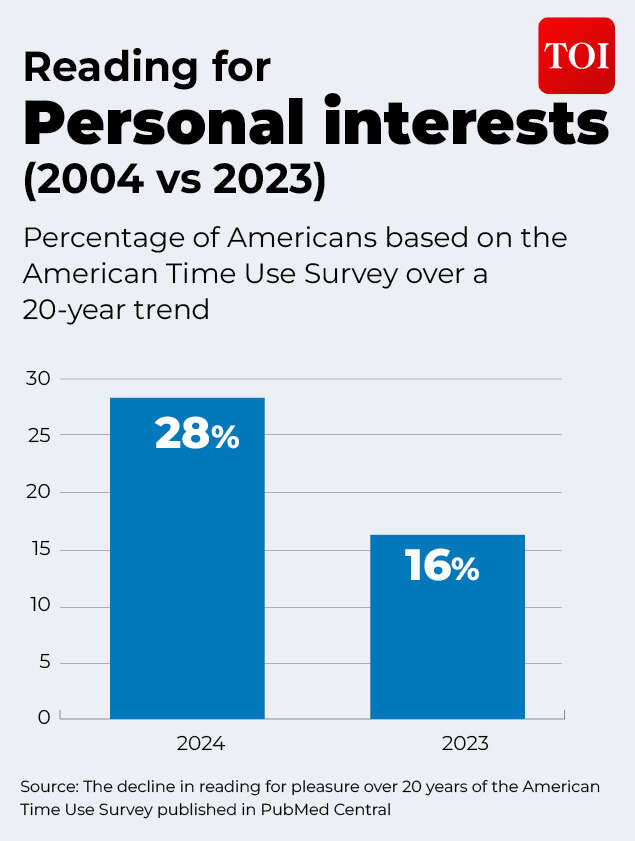
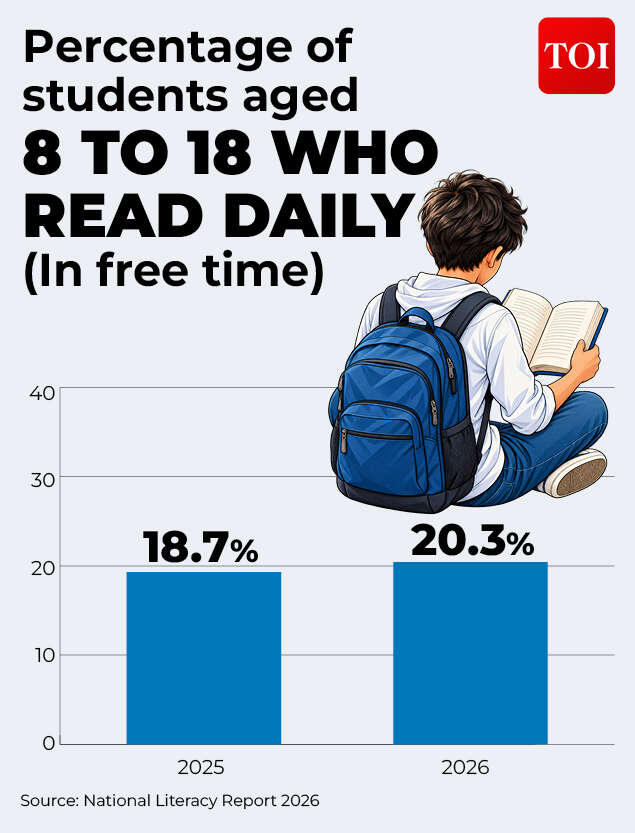
International research highlights the decline in reading for pleasure. The National Literacy Trust’s 2026 survey of 125,375 UK children aged five to 18 found that among eight- to 18-year-olds, reading enjoyment rose from 32.7% in 2025 to 36.1% in 2026, while daily reading increased from 18.7% to 20.3%. Both remained below levels recorded a decade earlier.The survey also found widening socioeconomic gaps in reading enjoyment. Nearly half of respondents said reading helped them explore their interests, while 65.8% cited encouragement from teachers and 54.8% from parents.A HarperCollins UK survey released in April 2025 found that regular reading to children under five fell from 64% in 2012 to 41%, alongside declining recreational reading among five- to ten-year-olds.
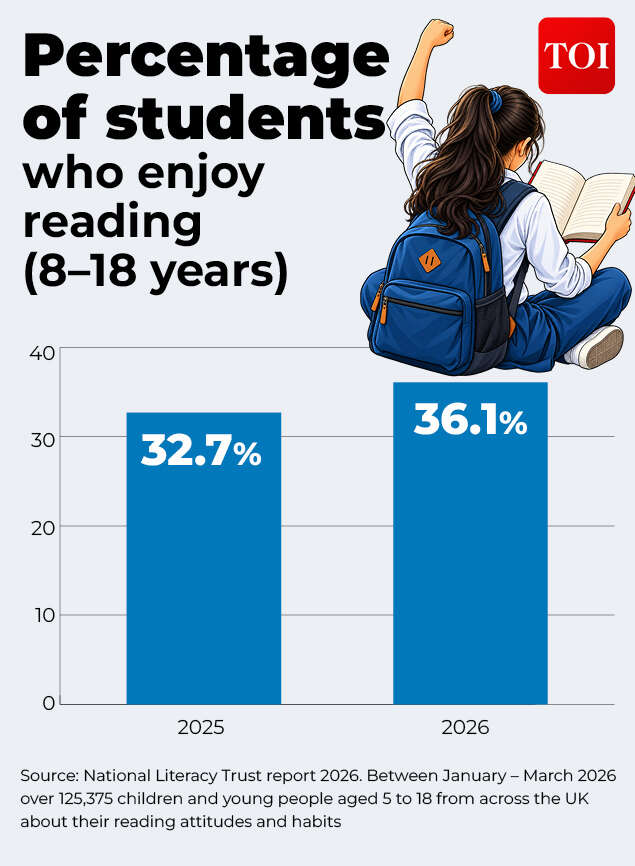
These findings suggest that reading habits depend not just on instruction but also on access to books, adult encouragement, and opportunities to read for pleasure. If children associate books primarily with assessments, what will encourage them to read beyond school requirements?
The tyranny of the instant answer
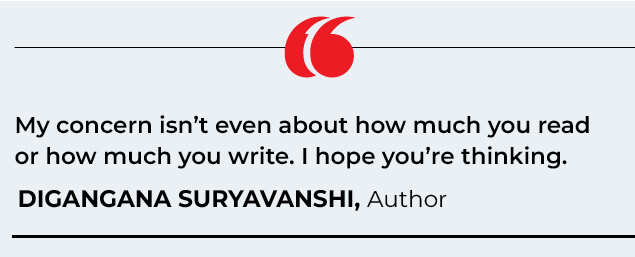
Short digital content can simplify complex subjects and spark curiosity, but may not ensure deeper understanding.Niyati observed that some students skim passages for answers but struggle with longer explanations. Students also report prolonged device use and attention difficulties, she said.Rapidly consuming short content can make sustained, focused reading more difficult. Actor and author Digangana Suryavanshi, who published WAVES – The Endless Emotions and Nixie the Mermaid and The Power of Love, has observed this shift.“I feel the generations to come are born into AI and AI tools, videos, Instagram. We’ve given our brains so much content in a shorter duration that comprehending something that takes its own time, something that you have to remain focused on for a few hours, becomes a challenge,” she said.For her, the issue extends beyond reading. She added that developing any skill requires patience and sustained focus, now increasingly rare.“Anything that you want to develop is a very patient job. It will require an X amount of focus, which is a rare thing now,” she said.
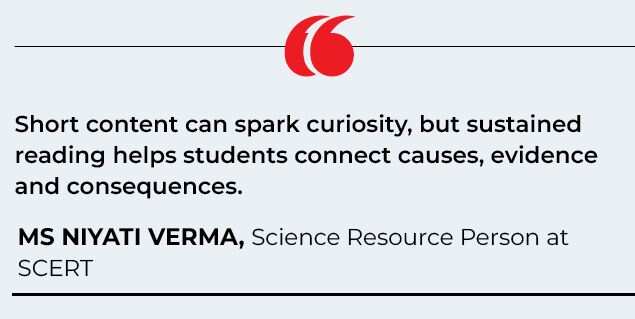
Research shows a modest comprehension advantage for print, particularly with informational texts. However, digital reading is not inherently harmful; comprehension depends on the task, material and interruptions.The debate is less about paper versus screens and more about the quality of attention readers bring to a text.Niyati explains the problem through a familiar example from biology. A student may readily recall that mitochondria are the “powerhouse” of the cell but struggle to explain how oxygen and glucose contribute to cellular respiration and energy release.The terminology has been retained; the conceptual relationship remains elusive.“Short content can be the hook; sustained reading helps students connect causes, evidence, and consequences,” she said.
The challenge is to ensure that a brief video or explainer becomes the beginning of a deeper inquiry rather than its endpoint.
Kerala’s library movement: Reading as a public culture
If reading habits are shaped by the environments in which children grow up, their revival cannot be left to individual discipline alone. Pillai’s account of Kerala’s library movement offers a perspective on how reading can become embedded in community life rather than remain confined to classrooms.Drawing on his experience in the state, Pillai recalled a longstanding tradition of community reading supported by libraries and reading rooms. In 1817, Travancore Regent Rani Gowri Parvathy Bayi declared that the state would bear the entire cost of education, directing the establishment of one school in every taluk with state-paid teachers.The initiative aimed to eradicate illiteracy and promote enlightenment, laying an early foundation for state-supported education and later developments in public libraries, reading rooms, and public health.According to Pillai, such initiatives helped strengthen the library movement and establish reading as a shared social practice.“Even today, an ordinary person in Kerala, whether a worker or a farmer, may read two newspapers before having their morning coffee,” he said, describing the place of reading rooms and libraries in the state’s community life.A library provides access to books, but an active reading culture also depends on whether people regard them as relevant to their lives. Reading rooms can make newspapers, literature, and other material part of everyday routines, allowing reading to extend beyond formal education and professional necessity.Pillai said government-supported literacy campaigns contributed to Kerala’s literacy achievements and reinforced the role of community participation. He expressed concern that some libraries were increasingly being treated as monuments rather than actively used public spaces.With internet connectivity expanding into villages, physical library visits may decline, but digital access cannot automatically replace the experience and value of traditional libraries. Pillai also highlighted the contribution of S. R. Ranganathan, widely regarded as the father of library science in India, and the development of digital libraries.His position is not that printed books must prevail over digital alternatives, but that technological progress should not come at the expense of institutions that have historically supported reading.
Rebuilding the habit, one reading session at a time
Prof. V. N. Rajasekharan Pillai says reviving deep reading requires coordinated action by schools, universities, libraries, governments, and civil society. At school level, programmes such as NIPUN Bharat need resources, multilingual materials, trained teachers, and protected reading time. School libraries must offer more than textbooks, while public and community initiatives can extend access beyond school hours.For universities, Pillai recommends reading complete texts, not just extracts or summaries, across disciplines, alongside instruction in active reading strategies. Curricula should protect time for focused reading and writing, while assignments should require learners to connect evidence across long-form sources instead of relying on secondary summaries.He says libraries should support teaching and research through information-literacy programmes, research support, reading groups and spaces for focused learning. Faculty should model deep reading and writing, backed by research support and manageable workloads. Flexible learning pathways can help students balance education, work, and family. He also stresses balancing printed books with digital media rather than pitting them against each other.Pillai’s argument is that deep reading is not an elite preference for print but a foundation for research, critical citizenship, and informed public reasoning. Universities that treat it as an institutional priority can connect the goals of the NEP 2020 with everyday learning; those that leave reading incidental risk making their ambitions for research and critical thinking difficult to realise.Niyati’s practical suggestions complement this approach: students can start with short, uninterrupted reading sessions and explore fiction, graphic novels, science articles, and biographies. Parents can encourage reading at home, while schools should reward understanding rather than rote reproduction.Ultimately, the question is not whether children should abandon screens or return exclusively to printed books. It is whether they can retain the curiosity to ask questions, the patience to follow an idea to its conclusion, and the willingness to stay with a story long enough for it to leave a mark.As Digangana put it, “The ability to think is the king.”