







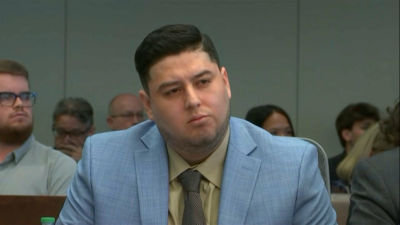
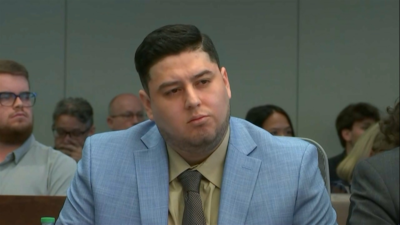
A man has been sentenced to life in prison without parole for the 2012 murder of University of North Carolina student Faith Hedgepeth, ending a case that remained unsolved for nearly a decade before DNA evidence led investigators to a suspect.Miguel Salguero Olivares, 33, was convicted on Friday of first-degree murder, rape, sexual offence and burglary. He was arrested in 2021 after a DNA sample collected during a driving-under-the-influence stop allegedly matched evidence recovered from the crime scene.Jurors deliberated for six hours over two days before reaching their verdict. Along with the life sentence for murder, Salguero Olivares received an additional 45 to 65 years in prison for the other offences.Hedgepeth was 19 and a sophomore at the university when she was found beaten to death in her off-campus apartment in September 2012. Prosecutors presented DNA, fingerprint and palm-print evidence linking Salguero Olivares to the crime.
DNA evidence formed the centre of the prosecution
Prosecutors said Salguero Olivares’ DNA was found in Hedgepeth’s body, on a note written on a fast-food bag and on a blood-covered rum bottle identified as the murder weapon. His fingerprints and palm print were also linked to evidence recovered at the scene.Forensic scientist Erin Ermish testified that the DNA recovered from Hedgepeth’s body was 170 septillion times more likely to have come from a mixture of Hedgepeth’s DNA and Salguero Olivares’ than from Hedgepeth and an unidentified person.Ermish also told the court that DNA recovered from the top of the rum bottle was 48.6 tredecillion times more likely to have come from Hedgepeth and Salguero Olivares than from two unrelated, unidentified people.The prosecution argued that the forensic findings provided compelling evidence of Salguero Olivares’ involvement.“We know who did it. The forensic evidence is screaming his name,” prosecutor Angela Garcia-Lamarca said during closing arguments, as per the AP.
Defence challenges investigation and forensic findings
Salguero Olivares’ lawyers argued that investigators had focused on their client prematurely and failed to examine other possibilities. They questioned how evidence was handled, the processing of the apartment and the reliability of parts of the DNA analysis.The defence also challenged the account of Hedgepeth’s roommate, Karena Rosario, who said she had left the apartment after returning from a night out and came back hours later to find Hedgepeth’s body.Lawyers argued that investigators had failed to search some areas of the apartment and had subsequently lost some potential blood evidence. They also noted that DNA from sexual intercourse can remain in the body for days, challenging the prosecution’s interpretation of the biological evidence.Defence attorney Jason Murphy suggested that a prior sexual encounter between Salguero Olivares and Hedgepeth could explain some of the DNA evidence. He also accused investigators of having “tunnel vision” in pursuing the case.The prosecution rejected those arguments, maintaining that the forensic evidence remained significant despite acknowledged investigative shortcomings.“No matter what kind of mistakes were made or things that were missed, it doesn’t erase the palm print; it doesn’t somehow lift the DNA out of Faith,” special prosecutor Lisa Coltrane said.
What happened the night Hedgepeth died
Hedgepeth was found dead in her apartment after a night out on September 7, 2012. Rosario testified that she had been drunk and unwell when Hedgepeth drove them home from a club at about 2am. Rosario later called a friend to collect her, leaving Hedgepeth alone in the apartment. She returned several hours later and discovered her roommate’s body.An autopsy found extensive fractures to Hedgepeth’s skull, cuts to her face and head, and injuries to her arms and legs.Prosecutors suggested that Salguero Olivares may have attended a barbecue at a neighbour’s home that night, attempted to approach the young women in the parking lot and returned after Rosario left. However, no witness corroborated that account. Garcia-Lamarca told jurors they did not need to accept that theory to find him guilty.Salguero Olivares did not testify during the trial, and the defence rested without calling witnesses.
Hedgepeth’s parents forgive her killer
Following the verdict and sentencing, Hedgepeth’s parents told the court that they forgave the man convicted of killing their daughter.Her mother, Connie Hedgepeth, said she had reached that decision weeks after her daughter’s death, while acknowledging the lasting pain of the loss.“It was just three weeks after her death. It didn’t matter who did it, I knew that I had to forgive, and I do forgive, but my heart aches for his family,” she said.Her father, Roland Hedgepeth, also addressed the court.“Today it got very real,” he said. “Nevertheless, I say it without reservation, I forgive Miguel for what he did.”