








An Australian homeowner has won a long legal battle against his uphill neighbour after faulty drainage repeatedly sent water into his backyard and damaged his swimming pool. The New South Wales Court of Appeal upheld a district court ruling that found the owners of the higher property responsible for the damage. The court ordered them to pay A$99,382.01 (£51,200) in compensation and complete repairs to fix their stormwater drainage system. The dispute involved Charbel Tannous, who owns the lower property, and his uphill neighbours, Ya Jun Tang and his co-owners. The case focused on repeated flooding caused by water flowing from the higher land into Mr Tannous’s home.
Blocked pipes trigger backyard flooding
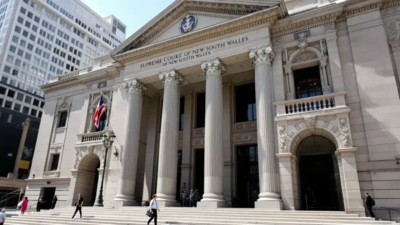
According to court documents published by the Supreme Court of New South Wales under appeal docket 2026/00016256, the flooding was linked to a drainage easement on the higher property. Mr Tannous claimed that Mr Tang and his family had failed to maintain and repair the stormwater drainage system serving their land. Over time, an underground pipe became misshapen and blocked, stopping rainwater from flowing away as it should. During heavy rain, excess water spilled over the boundary from the higher property and flowed directly onto Mr Tannous’s lower lot. The repeated flooding covered his lawn, filled his backyard with water, and carried debris into his swimming pool. This contaminated the pool water and caused structural damage. Despite repeated complaints, the problem continued. Mr Tannous eventually filed a private nuisance lawsuit in the New South Wales District Court.
District court awards damages and repair mandate
During the trial in the New South Wales District Court, Judge Cole heard Mr Tang deny responsibility for the water damage. The defence argued that building work on Mr Tannous’s property had caused the flooding. This included excavation, demolition, and the removal of an existing concrete kerb. Mr Tang also filed a cross-claim under Section 177 of the Conveyancing Act 1919. He argued that Mr Tannous’s construction work had weakened the structural support for the higher property. Judge Cole rejected the defence arguments and dismissed the cross-claim entirely. The court found that the misshapen and blocked stormwater pipe on the higher property was the main cause of the repeated flooding. The district court ruled that the uphill owners had created a private nuisance by failing to fix their faulty drainage system. Judge Cole ordered them to pay Mr Tannous A$99,382.01 in compensation. The judge also issued a mandatory court order requiring Mr Tang to repair and redesign the drainage system to prevent water from flowing onto the lower property again.
Appeals court rejects challenge to ruling
Mr Tang and his co-owners sought to overturn the decision. In March 2026, they applied to the New South Wales Court of Appeal for permission to challenge the ruling. The compensation award was just below the A$100,000 limit required for an automatic right of appeal under Section 127(2)(c) of the District Court Act 1973. The applicants therefore needed formal permission from the appeals court to proceed. In legal submissions prepared by their lawyer, M. Luitingh, the applicants argued that the trial judge had made several factual errors about the removal of the kerb. They also claimed that the judge had relied on assumptions about their motives rather than physical evidence. They further argued that the order requiring repairs was legally flawed. They said that changing the pipe’s layout required approval from the local municipal council, which could make it impossible to carry out the court’s instructions. M. Young SC, representing Mr Tannous, argued that the trial judge had applied the law correctly. He said the evidence clearly showed that the failure to address the blocked pipe had caused a private nuisance. The appeals court upheld the original decision. It agreed that the trial judge had correctly identified the blocked pipe as the main cause of the flooding. The court also confirmed that owners of higher properties have a legal duty to prevent foreseeable water runoff caused by neglected drainage systems on their land. The ruling leaves the original A$99,382.01 compensation award unchanged. It also requires the uphill owners to complete the ordered drainage repairs.