









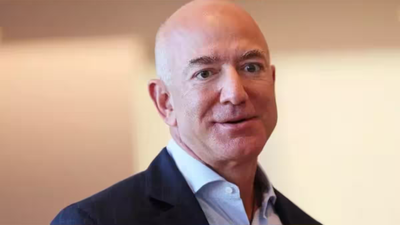
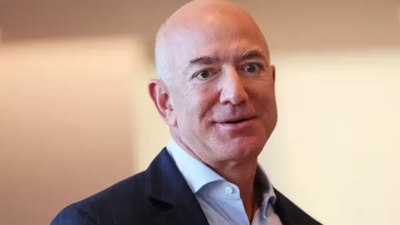
Thousands of animal and plant species are at risk of disappearing, and conservation groups often need years of uninterrupted work to bring vulnerable populations back from the brink. Jeff Bezos and Lauren Sánchez Bezos are backing a new international effort that aims to give some of those projects more dependable financial support. As reported by Fortune, The Bezos Earth Fund has committed $100 million to the Species Recovery Alliance, a partnership involving 9 founding organisations and a combined $500 million commitment. Announced during a United Nations biodiversity summit in Armenia in October 2026, the initiative will support conservation programmes for species facing some of the highest risks of extinction.
Bezos Earth Fund backs $500 million alliance to protect endangered species
The Species Recovery Alliance was announced on 16 October at the Leaders’ Summit of COP17, the United Nations biodiversity conference held in Yerevan, Armenia. The Bezos Earth Fund is among 9 founding members, with its contribution accounting for $100 million of the initiative’s $500 million commitment, according to a spokesperson quoted by Fortune.The partnership brings together organisations with different conservation interests, including Re:wild, the environmental group co-founded by Leonardo DiCaprio, and Rainforest Trust. The other founding members are the Colossal Foundation, Critical Ecosystem Partnership Fund, Fondation Segré, Franklinia Foundation, Ayers Wild Cat Conservation Trust and WildLives Earth.Rather than placing all the money in one shared pot, the members will manage their own grants while coordinating their work. Funding is intended for conservation organisations and local partners tackling threats to species classified by the International Union for Conservation of Nature (IUCN) as endangered, critically endangered or extinct in the wild.Cristián Samper, managing director of the Bezos Earth Fund and its nature solutions lead, said a lack of dependable funding could put recovery efforts at risk even after conservation teams had made substantial progress.
More than 31,000 species fall within the alliance’s target categories
The IUCN Red List identifies more than 49,500 species as threatened with extinction. The new alliance will concentrate on three high-risk categories, which together cover more than 31,000 species.Its funding could support a range of interventions, depending on what each species needs. Some programmes may involve breeding animals in captivity before releasing them into the wild. Others may focus on rebuilding damaged habitats, reducing the spread of disease or controlling invasive species that threaten native wildlife.The alliance intends to track progress through the IUCN Red List and its Green Status of Species, which provides a way to assess conservation outcomes and the recovery of species over time.
Earlier Phoenix project targets 100 species across 30 countries
The new alliance follows another major commitment by the Bezos Earth Fund and Re:wild. In August 2026, the two organisations launched the Phoenix Species Project, pledging $100 million each towards a combined $200 million effort. That programme aims to recover 100 critically endangered species and species already extinct in the wild across 30 countries. Its targets include Madagascar’s golden-crowned sifaka, a rare lemur, and Australia’s elusive night parrot.The Phoenix initiative and the Species Recovery Alliance are separate efforts, although both involve the Bezos Earth Fund and an emphasis on reversing severe declines in wildlife populations.Lauren Sánchez Bezos, the fund’s vice chair, described the Phoenix project as a response to the possibility that children could grow up without ever encountering some of the animals that fascinate them. Her comments drew attention to a less visible aspect of extinction: species can disappear before future generations have a chance to know they existed.
Government nature funding remains below international targets
Private philanthropy is taking on a larger role as governments struggle to meet their biodiversity commitments. At the 2022 United Nations biodiversity summit in Montreal, countries agreed to mobilise $200 billion annually for biodiversity by 2030.Figures from the Organisation for Economic Co-operation and Development, cited by the Associated Press, put annual funding at between $75 billion and $92 billion from 2023 to 2025. That leaves a substantial gap between the money being raised and the level countries agreed to pursue. A United Nations progress report issued ahead of the October summit also found that fewer than half of national biodiversity targets were on track.Astrid Schomaker, executive secretary of the UN Convention on Biological Diversity, told the Associated Press that progress was not happening quickly enough. Alongside the private-sector alliance, 17 governments led by Colombia and Armenia launched a separate initiative known as the Coalition of Action to Recover Endangered Species, or CARES. The two efforts have different structures, but both seek to strengthen action on species facing extinction.
Bezos Earth Fund has distributed $2.4 billion of its $10 billion pledge
Jeff Bezos established the Bezos Earth Fund in 2020 with a pledge of $10 billion to support climate action and nature conservation by 2030. The commitment was presented as the largest individual philanthropic pledge focused on climate and nature at the time.The fund has distributed $2.4 billion so far, a spokesperson told Fortune. More than $7 billion therefore remains to be allocated over the roughly four years leading up to the deadline. Fund officials told Bloomberg in May 2026 that they remained committed to the target.The latest species recovery commitment is part of a broader programme of grants. In recent months, the fund has announced $34 million for sustainable fabrics, $26 million for wildfire detection and $100 million for turning vacant urban land into parks in eight US cities. In September, it also announced more than $25 million in grants connected to the Pacific Ocean.