







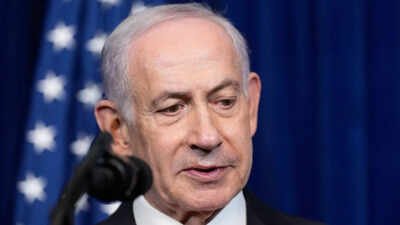
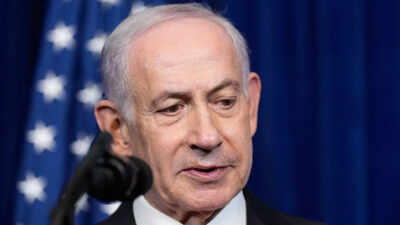
Israeli prime minister Benjamin Netanyahu suffered a another setback in his bid to retain power on Thursday after the ultra-Orthodox United Torah Judaism (UTJ) party declined to endorse any candidate to form the next government, while an Arab-led party backed his main rival Gadi Eisenkot.The developments have strengthened Eisenkot’s position ahead of a crucial decision by Israeli president Isaac Herzog on whom to invite to form the next government, following the inconclusive October 27 election.Herzog was scheduled to meet Netanyahu and Eisenkot separately at his residence in Jerusalem on Thursday evening, concluding consultations with political parties that began a day earlier. Under Israeli law, the president must nominate the lawmaker he believes has the best chance of forming a government, not necessarily the leader of the party that won the most seats.Netanyahu’s Likud emerged as the single largest party with 27 seats in the 120-member Knesset. However, his broader nationalist-religious bloc secured only 53 seats, falling short of a parliamentary majority.Eisenkot’s anti-Netanyahu bloc, comprising four Jewish-led parties from the centre-left to the right, won 48 seats. The two Arab-led parties secured a combined 19 seats, an unprecedented result that has made their support particularly significant in the government formation process.UTJ’s decision to withhold its recommendation marks a rift with Netanyahu, its longstanding political ally. The seven-seat party comprises two factions — Degel HaTorah, representing Lithuanian ultra-Orthodox Jews, and Agudat Yisrael, representing Hasidic ultra-Orthodox Jews.Degel HaTorah, which holds four of the party’s seats, said it would not recommend any candidate following instructions from its spiritual leaders. The position of the remaining three Agudat Yisrael lawmakers had also been uncertain.The disagreement stems from Netanyahu’s failure to pass legislation guaranteeing military service exemptions for ultra-Orthodox men studying in religious seminaries, a longstanding demand of the community. UTJ representatives have indicated that their support for any future government would depend on legislation protecting these exemptions.The party had reportedly considered supporting a minority government led by Eisenkot without formally joining it, signalling a possible break from its longstanding alliance with Netanyahu.Meanwhile, the Arab-led Ra’am party announced that its eight lawmakers would recommend Eisenkot, giving him a clearer lead in the presidential consultations. The other Arab-led faction, the Joint List, had yet to clarify whether it would also back him or abstain.Despite the shift in recommendations, Eisenkot faces his own coalition-building difficulties. While his bloc has ruled out a government with Netanyahu, several of its constituent parties have also resisted relying on Arab-led parties or cooperating with ultra-Orthodox factions.Herzog has urged political parties to overcome their differences and avoid another election, pointing to the security and diplomatic challenges facing Israel.The election results have also triggered a dispute over allegations of voter fraud. Netanyahu and his allies have accused Arab-led parties of benefiting from possible vote tampering, with critics alleging that the prime minister’s camp is attempting to cast doubt on the results to undermine the outcome.Israel’s Central Election Committee said on Wednesday that the integrity of the election had not been compromised. Sohlberg urged elected representatives to protect public trust rather than weaken it.Herzog has until November 11 to decide whom to nominate. The candidate who receives the mandate will have up to 42 days to put together a governing coalition. If no candidate succeeds, Israel could face another election.Netanyahu will remain prime minister in a caretaker capacity until a new government is formed.