









“Today begins the great American comeback,” House Democratic leader Hakeem Jeffries declared after US voters handed Democrats control of both chambers of Congress in the midterm elections, dealing a major blow to President Donald Trump and his Republican Party.The result marks a dramatic reversal of political fortunes in Washington. Democrats made significant gains in the Senate and House of Representatives, flipping seats in traditionally Republican states, including Texas, South Carolina, North Carolina and Kansas. They also captured key gubernatorial races, including in Texas and Georgia.Republican candidates struggled even in contests they were widely expected to win comfortably, reflecting growing voter dissatisfaction with the Trump administration. The results represent the first major electoral check on Trump’s power since his return to the White House.Discontent over the economy, rising living costs, the war in Iran and the administration’s aggressive immigration crackdown emerged as key factors behind the Republican rout.
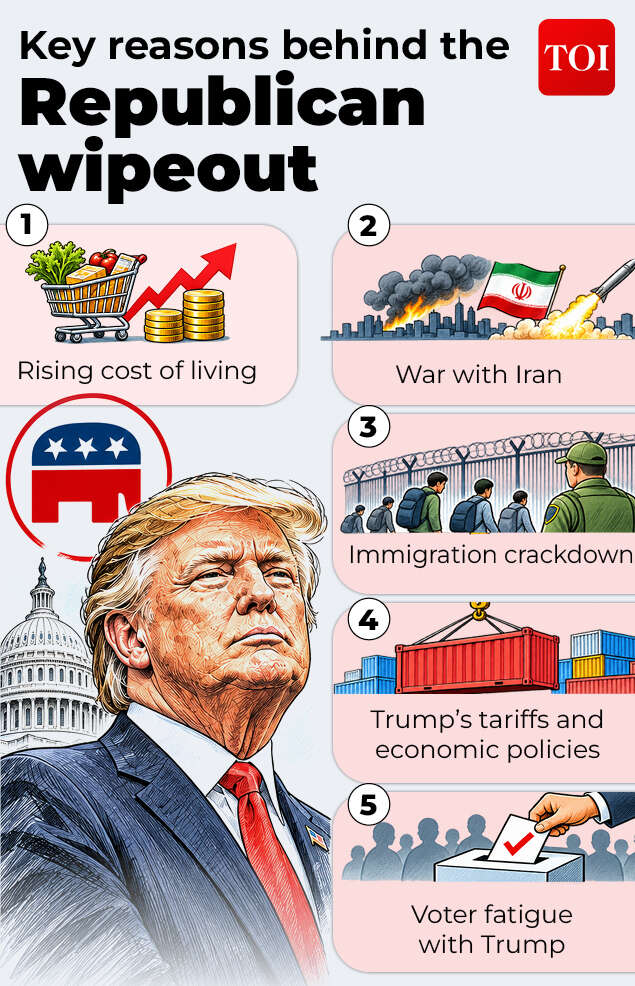
Key reasons behind the Republican wipeout.
But what does the Democratic takeover mean for Trump? With two years left in his presidency, he still commands the executive branch and retains considerable constitutional powers. Democrats, however, will now control congressional committees, investigations, legislation and Senate confirmations, setting the stage for an increasingly contentious relationship between the White House and Capitol Hill.
Trump weakened, but still holds the veto
The new Congress, the 120th, is scheduled to take office on January 3, 2027. Democrats will then control both chambers for the first time during Trump’s current term, giving them a powerful platform to challenge his legislative agenda.The immediate consequence is likely to be a legislative slowdown. Trump’s priorities on immigration, healthcare, taxation, federal spending and other policy areas will face greater resistance, while Democrats could seek to roll back or modify parts of the Republican legislative programme.
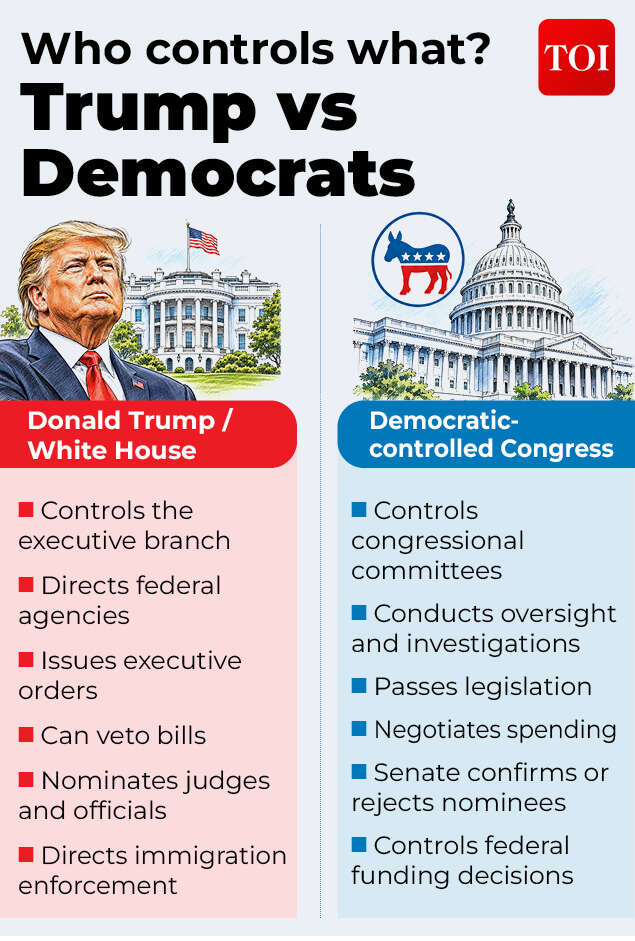
A look at Trump’s powers vs Democrats’ new congressional powers.
Before the election, Democrats had identified restoring healthcare support, tackling the cost of living and challenging Trump’s tariffs as key priorities. They have also signalled their intention to increase congressional scrutiny of the war in Iran.However, winning control of Congress does not give Democrats a free hand to translate their proposals into law. Most legislation still requires the president’s signature, giving Trump the power to veto bills that he opposes. Overriding a presidential veto requires a two-thirds majority in both chambers, a threshold Democrats are unlikely to reach on their own.Trump appeared unfazed by the prospect of dealing with Democratic majorities. While acknowledging that the war in Iran had contributed to higher petrol prices and inflation, he rejected suggestions that his decisions were responsible for the Republican defeat. He insisted he would make the same decision on Iran again, arguing that Tehran could not be allowed to develop nuclear weapons.He also said he expected to work with Democrats unless they chose to be “destructive”. But he made clear that he was prepared to use his constitutional authority, declaring: “But I have the power of the veto.”That power could define the next two years. Democrats may be able to pass legislation through Congress, but getting it signed into law could require negotiations with the White House or support from Republican lawmakers.
Investigations could dominate Washington
One of the most consequential changes will be Democrats’ expanded control over congressional oversight. With majorities in both chambers, they will have greater authority to direct committees, convene hearings, launch investigations and issue subpoenas, giving them powerful tools to scrutinise the Trump administration.Incoming Democratic leaders have signalled that they intend to examine a range of issues, including the conduct of the Department of Homeland Security and Immigration and Customs Enforcement, alleged corporate corruption and the release of the Epstein files.Robert Garcia of California, who is expected to lead a powerful House oversight committee, offered a glimpse of the approach Democrats could adopt, warning those connected to the administration to “lawyer up”.The prospect of impeachment could also return to the centre of Washington politics. The House has the constitutional authority to initiate impeachment proceedings against a president. Democrats impeached Trump twice during his first term, but the Senate acquitted him on both occasions.Even if the Democratic-controlled House votes to impeach him again, removing Trump would be considerably more difficult. Conviction in the Senate requires a two-thirds majority, meaning Democrats would need substantial Republican support.Trump has already warned Democrats against pursuing another impeachment effort, saying it would “destroy” their party. Speaking at the White House after the election, he dismissed the prospect of being worried about impeachment and questioned what grounds Democrats could use to pursue it.For Democrats, therefore, another impeachment bid could become as much a political calculation as a constitutional question. While the House majority gives them the power to initiate proceedings, they will have to weigh the political consequences of a move that is unlikely to result in Trump’s removal.
Senate control puts Trump’s appointments under pressure
Democratic control of the Senate will give the party another significant lever over the Trump administration: the power to scrutinise and vote on presidential nominees.The Senate plays a central role in confirming Cabinet officials, ambassadors, senior administration appointments and federal judges. Democrats will be able to subject Trump’s nominees to greater scrutiny, delay confirmation proceedings and potentially reject candidates they oppose.The implications could be particularly significant for the federal judiciary. If vacancies arise on the Supreme Court or in lower federal courts during the remainder of Trump’s term, Senate Democrats could block his nominees or press the White House to consider candidates capable of attracting bipartisan support.The shift in Senate control could therefore slow Trump’s efforts to fill key positions across the government and limit his ability to shape the federal judiciary in his final two years.
From immigration to the Iran war: What issues will Democrats focus on?
The war in Iran is likely to become one of the most contentious areas of confrontation between the White House and the new Congress. Democrats could demand greater scrutiny of the administration’s military decisions, question the funding and scope of military operations, and press for greater accountability over the conflict’s economic consequences.Immigration will be another major battleground. For Indian professionals, students and families in the US, Democratic control of Congress could mean greater scrutiny of Trump’s immigration policies. But it does not automatically translate into a reversal of existing executive orders or regulations.Immigration attorney Bhumireddy Sai Srinivas Reddy told The Times of India that immigration powers are divided between Congress and the president. While Congress makes immigration laws and controls agency funding, the president implements them through executive orders, agency rules and enforcement priorities.
“Whichever party controls Congress, its main tools are oversight and funding. Congress can hold hearings, request information from DHS and USCIS, and set conditions in agency budgets. But it cannot cancel an executive order or regulation on its own,” Reddy said.
He added that most day-to-day changes in immigration policy would continue to depend on the executive branch, federal agencies and the courts.“For Indian H-1B workers, the near term may bring more policy debate and review, not an automatic change to visa rules. Any real change will depend on specific legislation, court decisions, or agency action,” he said.US-based H-1B immigration lawyer and Laborless CEO Roman Zelichenko said a Democratic-controlled Congress could restrain some of Trump’s immigration policies, but reversing them would be difficult without the president’s support or enough votes to override a veto.
“Many of the changes affecting employers and foreign workers are driven by executive actions and agency rulemaking, which Congress cannot simply undo by changing hands. Ultimately, the biggest near-term shifts in immigration policy will likely continue to come from the White House, federal agencies, and the courts, while Congress can play an important role in checking executive authority,” he said.
Democrats could also use their oversight powers to investigate Trump’s deportation drive, ICE’s conduct, detention conditions and policies affecting legal immigrants and work visa holders. They could summon officials, demand documents and use budget negotiations to seek changes in enforcement practices.However, congressional control alone will not dismantle Trump’s immigration agenda. Any major reversal would require legislation, successful legal challenges or changes in executive policy.
The next two years could test both parties
The Democratic victory does not mean Trump has lost control of the presidency. He will continue to lead the executive branch, direct federal agencies and exercise the constitutional powers of his office until January 2029.Faced with congressional resistance, Trump could increasingly turn to executive orders and other presidential actions to advance his agenda. But these, too, could face legal challenges, congressional scrutiny and restrictions through federal spending decisions.The political stakes will extend well beyond immediate legislative battles. The midterm results have effectively opened the contest for the 2028 presidential election, with both parties under pressure to demonstrate that they can respond to voters’ concerns.
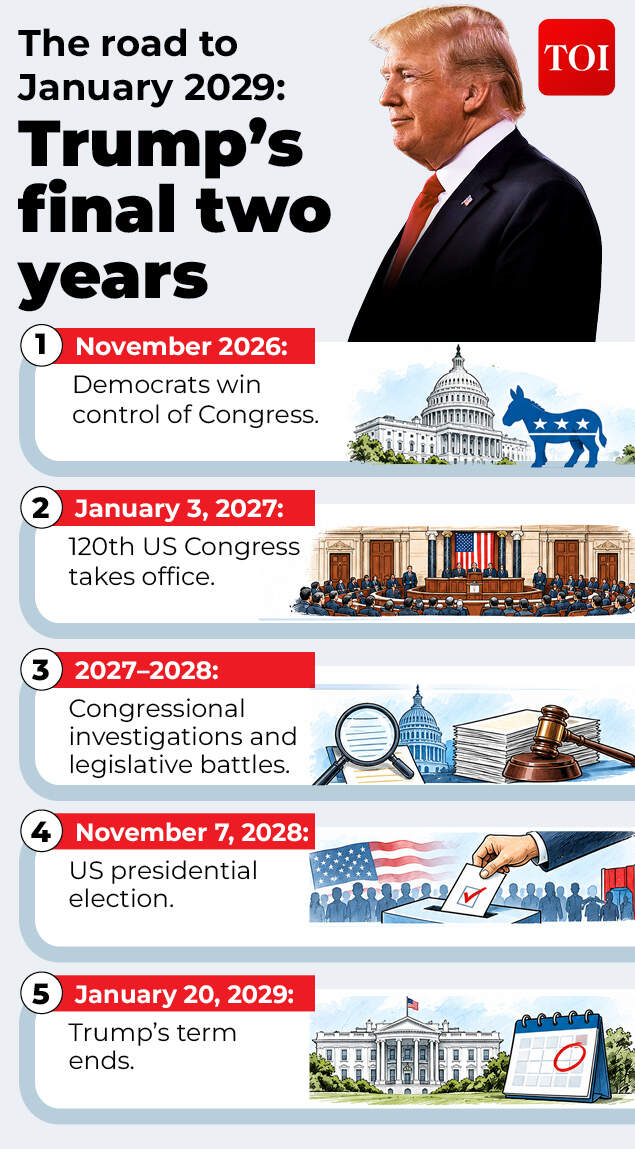
The next two years could test both parties.
Democrats will have to show that they can do more than oppose Trump. Control of Congress gives them an opportunity to advance an alternative agenda, particularly on the economy, healthcare and the cost of living. Republicans, meanwhile, will have to navigate divided government while deciding how closely they want to align themselves with a president whose political standing has taken a major hit.Trump has acknowledged that the results could make governing more difficult. But Democrats, too, face a test: whether they can use their new power to deliver tangible results or allow the next two years to be consumed by investigations and political confrontations.The midterms have shifted the balance of power in Washington, but they have not stripped Trump of the powers of the presidency. Democrats can investigate, challenge and obstruct him, making his final two years considerably more difficult. But the veto, executive authority and control over federal agencies remain firmly in Trump’s hands.