






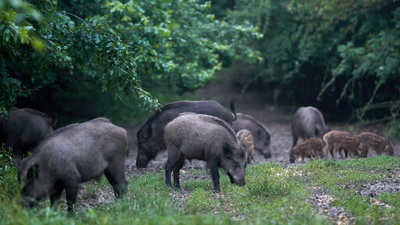
Feral pigs have become a costly problem across the United States, damaging agricultural land, destroying natural habitats and threatening livestock and human health. Their habit of digging through soil in search of food can ruin crops, disturb vegetation and damage water resources, leaving farmers and landowners with expensive restoration work. The animals also carry diseases that can spread to livestock and people, adding to the challenges of controlling their growing populations.The US Department of Agriculture (USDA) announced on November 3, 2026, that it had awarded $51.9 million to 29 partnership projects across 13 states to combat the invasive animals. According to the USDA’s Natural Resources Conservation Service (NRCS), the funding will support coordinated trapping, removal, land restoration and training for landowners. The announcement, published on the NRCS website, is part of a broader $105 million investment in the Feral Swine Eradication and Control Pilot Program, jointly implemented by NRCS and the Animal and Plant Health Inspection Service (APHIS).
Feral pigs cause billions of dollars in annual damage
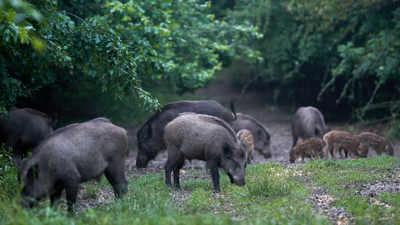
Feral swine, also known as wild pigs, wild hogs and wild boars, are considered an invasive species in the US. According to APHIS, they are descendants of domestic pigs brought to the country by Europeans, which subsequently escaped or were released into the wild.Their population expansion has created problems for agricultural producers and natural ecosystems. The animals use their snouts to dig through the ground while searching for food, disturbing soil, damaging crops and destroying vegetation. Their activities can also affect wildlife habitats, wetlands and waterways.The USDA’s APHIS estimates that feral swine damage costs the country at least $3.4 billion annually. The animals also carry diseases that can affect livestock and people. The agency reports that approximately 8% of feral swine are infected with brucellosis, a disease that can spread to humans and animals.
29 projects will target 13 states
The newly announced funding will support projects in Alabama, Arkansas, California, Florida, Georgia, Louisiana, Mississippi, Missouri, North Carolina, Oklahoma, South Carolina, Tennessee and Texas. The projects will combine population monitoring, coordinated trapping and removal operations with assistance to landowners whose properties have been affected. Participating organisations will also provide training and technical guidance to help producers manage feral swine populations.Some of the projects will cover particularly large areas. In Louisiana, the Department of Agriculture and Forestry will lead an initiative covering approximately 16.6 million acres across 27 parishes. The project will expand surveillance and trapping methods, improve landowner participation and coordinate removal operations across the Red River and Mississippi River basins.In Alabama, four projects will cover counties including Baldwin, Barbour, Bullock, Lamar, Mobile, Monroe, Pickens, Sumter and Wilcox. The initiatives expect to conduct activities across at least 100,000 acres and help landowners restore areas damaged by the animals.Texas received funding for four projects, including three led by the Texas State Soil and Water Conservation Board across nine counties. A fourth project, led by White Buffalo Inc., will focus on determining whether feral swine remain in Sherman County. Over five years, the three projects covering nine counties expect to directly engage approximately 200 producers and affect around one million working acres through coordinated population management.
Government programme combines removal and restoration
The $51.9 million allocation forms part of the wider Feral Swine Eradication and Control Pilot Program, which brings together NRCS and APHIS. Under the initiative, APHIS will coordinate feral swine removal, while NRCS will support restoration activities and provide assistance through partnerships with non-federal organisations. These partners will help landowners access trapping equipment, restoration services and practical training.The programme aims to reduce animal populations while helping agricultural producers prevent further damage to their properties. Funding for the latest projects comes through the Working Families Tax Cuts Act, which provides additional support for NRCS conservation programmes. Since 2020, NRCS has invested $92.9 million in 63 projects through the programme. These efforts have assisted more than 6,700 landowners across nearly nine million acres. Participating partners have also organised more than 800 events to teach landowners feral swine trapping techniques.The latest investment expands these efforts, with federal agencies and local partners working towards reducing the damage caused by invasive pigs and protecting agricultural land and natural resources across the country.