








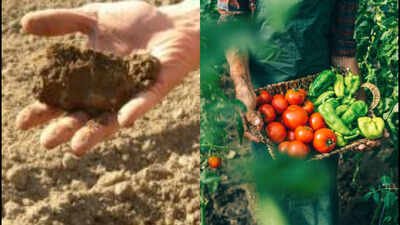
An Oregon farmer grew tomatoes, potatoes, squash, garlic and beans for 40 years without irrigation; careful soil preparation kept stored moisture in the root zone

An Oregon farmer grew tomatoes, potatoes, squash, garlic and beans for 40 years without irrigation; careful soil preparation kept stored moisture in the root zone

He started dry farming in California but moved to a 9.6-acre site near Veneta, Oregon, in 2007 Someone has rightly said that ‘Necessity is the mother of invention’. Over decades, weather patterns became less predictable across the Pacific Northwest, and farmers contended with hotter temperatures, drought and shrinking snowmelt that strained water supplies. It was…

Read More
Laurance Rockefeller first saw undeveloped St. John from a boat in 1952; his conservation group later acquired about 5,000 acres and gave them to create a US national park

Laurance Rockefeller first saw undeveloped St. John from a boat in 1952; his conservation group later acquired about 5,000 acres and gave them to create a US national park

Laurance Rockefeller on St. John at Caneel Bay (Image Credit: National Park Service) What if one of America’s most beautiful national parks began with a wealthy conservationist simply looking at an undeveloped island from a boat? In 1952, Laurance Rockefeller sailed past St. John in the U.S. Virgin Islands and was struck by its untouched…

Read More
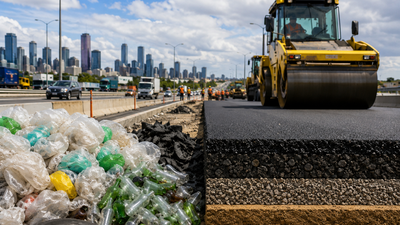
In 2022, Melbourne’s M80 became Victoria’s first major road project with recycled content in every pavement layer, reusing 35.5 million plastic bags and 22 million bottles

In 2022, Melbourne’s M80 became Victoria’s first major road project with recycled content in every pavement layer, reusing 35.5 million plastic bags and 22 million bottles

Representative Image (AI-generated) What if some of the waste we throw away could eventually become part of the roads we drive on? In 2022, Melbourne’s M80 Ring Road upgrade offered a striking example of how discarded materials can be given another purpose through major infrastructure projects. The upgrade between Sydney Road and Edgars Road became…

Read More
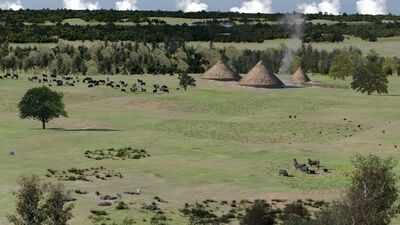
3,000 years ago, 12 Bronze Age houses stood where a Scottish suburb is rising; archaeologists found graves, pottery kilns and food stores | World News

3,000 years ago, 12 Bronze Age houses stood where a Scottish suburb is rising; archaeologists found graves, pottery kilns and food stores | World News

Long Lost Bronze Age Settlement revealed at Erskine. Image Credit: GUARD Archaeology More than 3,000 years ago, a community lived, worked and raised families on land that is now being transformed into a modern Scottish suburb. Archaeologists excavating at Northbar, on the south-eastern outskirts of Erskine in Renfrewshire, discovered the remains of 12 Bronze Age…

Read More
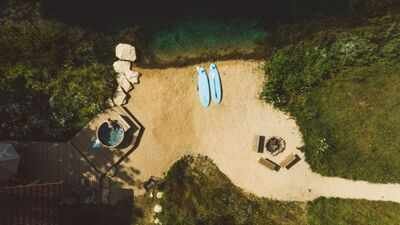
A man spent his life’s earnings buying a 130-acre abandoned gravel pit, he planted 50,000 trees, and years later, the barren land had become a thriving wildlife oasis

A man spent his life’s earnings buying a 130-acre abandoned gravel pit, he planted 50,000 trees, and years later, the barren land had become a thriving wildlife oasis

The natural landscape Edmondson created also became the setting for Log House Holidays. (Photos: LHH) Anthony Edmondson spent his life’s earnings buying a 130-acre abandoned gravel pit in the Cotswolds, south central England, in the 1980s. He planted 50,000 trees, sowed wildflowers and added reeds to the water which over the years, has transformed the…

Read More
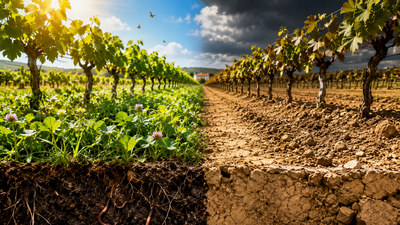
A Spanish vineyard has gone more than 20 years without irrigation or pesticides; its cover-cropped topsoil now has over twice the organic matter of nearby tilled soil

A Spanish vineyard has gone more than 20 years without irrigation or pesticides; its cover-cropped topsoil now has over twice the organic matter of nearby tilled soil

Representative Image (AI-generated) For more than two decades, the soil between rows of grapevines in a Spanish vineyard has remained covered with spontaneous vegetation instead of being repeatedly tilled. The unusual approach was associated with a striking difference beneath the vines: soil managed with long-term vegetation cover contained more than twice as much organic matter…

Read More
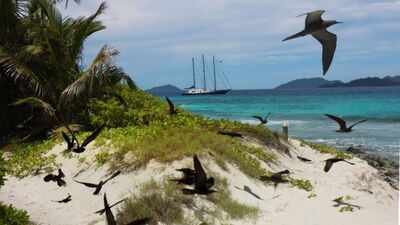
In 1973, Christopher Cadbury funded the £40,000 purchase of a Seychelles island stripped for coconuts and seabird eggs; today over 1 million seabirds breed there each year

In 1973, Christopher Cadbury funded the £40,000 purchase of a Seychelles island stripped for coconuts and seabird eggs; today over 1 million seabirds breed there each year

For decades, the small island of Aride in the Seychelles was treated less as a wildlife sanctuary and more as a source of income. Its forests were cleared for cultivation, coconut plantations covered parts of the island and its seabirds became a resource that could be harvested. Sooty tern eggs, in particular, were collected in…

Read More
New Zealand opens five marine reserves with groundbreaking Maori co-management model to protect Otago’s coastal ecosystems | World News

New Zealand opens five marine reserves with groundbreaking Maori co-management model to protect Otago’s coastal ecosystems | World News

Five new marine reserves now protect 308 square kilometres of Otago coastline (Image: Edward Carver/Mongabay) Along New Zealand’s Otago coast, a new approach to marine conservation is putting Indigenous knowledge and government authority side by side. On July 1, 2026, five new marine reserves came into force across 308 square kilometres of coastal waters, creating…

Read More