





More than 100,000 ancient shipwrecks may be hiding beneath the Baltic Sea; researchers are beginning to map the underwater graveyard | World News

More than 100,000 ancient shipwrecks may be hiding beneath the Baltic Sea; researchers are beginning to map the underwater graveyard | World News

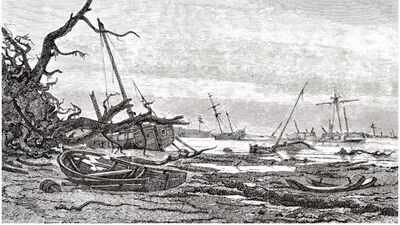
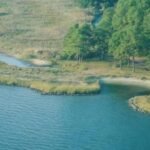
The destructions created by the 1872 Baltic sea flood in the area between Præstø and Faxe as depicted by Holger Drachmann as reporter for Illustreret Tidende. Image Credit: Holger Drachmann/Wikipedia More than a thousand ancient shipwrecks could still be lying beneath the Baltic Sea off the coast of Latvia, according to estimates cited by Latvian…

Read More
A 9-year-old girl in the Philippines raised money to help one of the world’s rarest birds; the child became an unlikely conservation campaigner | World News

A 9-year-old girl in the Philippines raised money to help one of the world’s rarest birds; the child became an unlikely conservation campaigner | World News

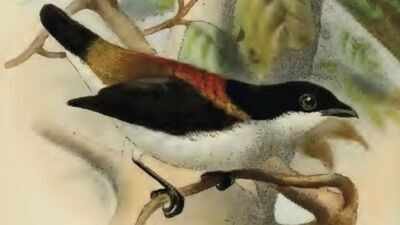
Cebu flowerpecker. Image Credit: Joseph Smit/Wikipedia A nine-year-old girl named Gail Lim from Cebu City in Philippines has turned her love for wildlife into a meaningful conservation campaign, raising 20,000 Philippine pesos for the critically endangered ‘Cebu flowerpecker.’ She became interested in the tiny bird after learning that it is found only in Cebu and…

Read More
A forgotten American photographer captured one of the earliest clear images of a total solar eclipse 175 years ago; the photograph changed eclipse science | World News

A forgotten American photographer captured one of the earliest clear images of a total solar eclipse 175 years ago; the photograph changed eclipse science | World News

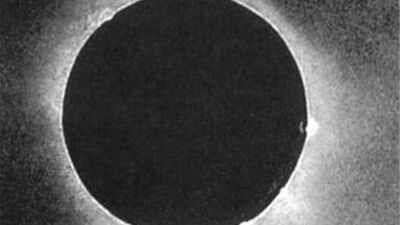
Berkowski made this first solar eclipse photograph at the Royal Observatory in Königsberg, Prussia (now Kaliningrad, Russia). Image Credit: Johann Julius Friedrich Berkowski/Wikipedia A total solar eclipse is one of nature’s most dramatic sights, but 175 years ago it was also a difficult scientific problem to record. On July 28, 1851, a little-known photographer named…

Read More
Meet Natalie Muro, the 18-year-old Colorado student who used wind-driven waves and an invasive plant to fight toxic algal blooms in a real reservoir

Meet Natalie Muro, the 18-year-old Colorado student who used wind-driven waves and an invasive plant to fight toxic algal blooms in a real reservoir

Natalie Muro (William J. Palmer High School Colorado Springs, CO) An 18-year-old student from Colorado Springs has developed a sustainable floating device that uses wind-driven wave energy and a local invasive weed to remove toxic algal blooms from freshwater lakes. Natalie Muro, a senior at William J. Palmer High School, tested her prototype in a…

Read More
In the 1970s, one New Mexico architect began building homes from discarded tyres and cans; his Earthship idea is now being adapted for extreme weather | World News

In the 1970s, one New Mexico architect began building homes from discarded tyres and cans; his Earthship idea is now being adapted for extreme weather | World News

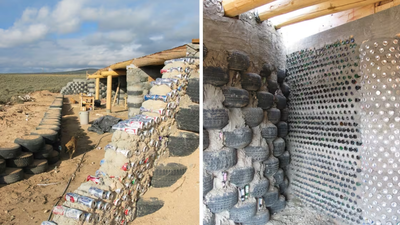
In the New Mexico desert, discarded car tyres, beer cans and bottles became the unlikely foundations of a different kind of home. Architect Michael Reynolds began developing his Earthship idea in the early 1970s, turning waste materials into thick walls designed to hold heat and houses built to produce and manage many of their own…

Read More
In 1988, a California couple began restoring their 136-acre family farm; decades later, it has become a thriving habitat for birds, quail and even cougars

In 1988, a California couple began restoring their 136-acre family farm; decades later, it has become a thriving habitat for birds, quail and even cougars

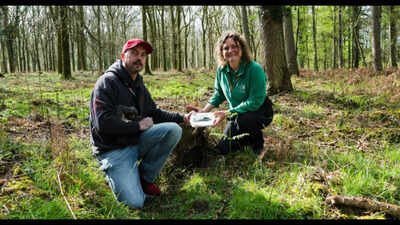
Peter Hunter kneels beside a clump of young willows clinging to the edge of Dry Creek. The slender shoots are leafless but supple, a faint tinge of red promising spring growth. On the bank above him, Hunter eyes hundreds of seedlings, cottonwoods, redbud, and other shrubs pushing up through protective plastic tubes into the pale…

Read More
1958, the US secretly detonated 3 nuclear devices 100–500 km above the South Atlantic; they created artificial auroras and radiation belts that lasted weeks

1958, the US secretly detonated 3 nuclear devices 100–500 km above the South Atlantic; they created artificial auroras and radiation belts that lasted weeks

1958, the US secretly detonated 3 nuclear devices In August and September 1958, the United States military carried out a secret series of high-altitude nuclear tests in the remote upper reaches of the South Atlantic Ocean. Code-named Operation Argus, the operation involved launching three low-yield nuclear devices between 100 and 500 kilometres into space. The…

Read More