








Headlines
A half-mile solar strip floats above an irrigation canal in Gujarat, generating 1.6 million kilowatt-hours of power while saving 2.38 million gallons of water from evaporation

A half-mile solar strip floats above an irrigation canal in Gujarat, generating 1.6 million kilowatt-hours of power while saving 2.38 million gallons of water from evaporation

When it comes to solar panels, they are usually spread across rooftops or open fields where they serve more purposes than just providing energy. But near Chandrasan village in the western Indian state of Gujarat, a roughly 2,460-foot ribbon of panels sits above moving irrigation water, turning an existing canal into both a power site…

Read More
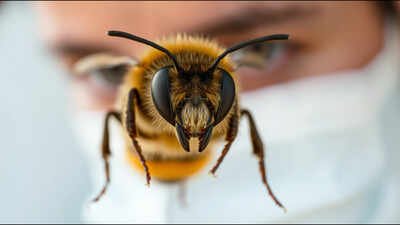
Scientists trained honeybees to recognise human faces, showing how tiny brains can distinguish faces by the arrangement of their features |

Scientists trained honeybees to recognise human faces, showing how tiny brains can distinguish faces by the arrangement of their features |

Honeybees can be trained with nothing more than the promise of a sugary reward; they learn to pick out a specific face and keep picking it out later, even when it appears from a slightly different angle or sits among faces they have never encountered before. It is a strange and slightly humbling discovery, not…

Read More
Quote of the day by Melinda French Gates: “When something’s uncomfortable, it means you’re actually…” – a lesson on stepping outside your comfort zone | World News

Quote of the day by Melinda French Gates: “When something’s uncomfortable, it means you’re actually…” – a lesson on stepping outside your comfort zone | World News

Quote of the day by Melinda French Gates Growth rarely feels comfortable while it is actually happening. Learning something new, taking on more responsibility, or simply stepping into an unfamiliar situation tends to bring real uncertainty along with it. Melinda French Gates put a name to that discomfort directly. “When something’s uncomfortable, it means you’re…

Read More
Meet Japan’s ‘women of the sea’: 80-year-old diver dives into cold waters without an oxygen tank to harvest seafood using a centuries-old tradition | World News

Meet Japan’s ‘women of the sea’: 80-year-old diver dives into cold waters without an oxygen tank to harvest seafood using a centuries-old tradition | World News

For generations, women along Japan’s Ise-Shima coastline have entered the sea without scuba equipment or oxygen tanks to gather seafood from the seabed. Known as Ama, or ‘women of the sea’, these traditional free divers rely on breath-holding, years of experience and an intimate knowledge of the ocean. Some have continued the demanding work well…

Read More
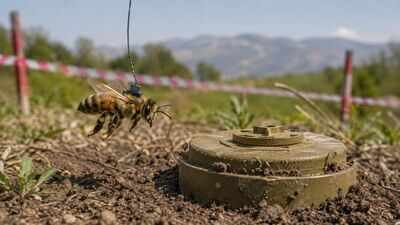
In 2013, honeybees were trained to find land mines left behind by the Balkan wars, turning their extraordinary sense of smell into an unlikely detection tool |

In 2013, honeybees were trained to find land mines left behind by the Balkan wars, turning their extraordinary sense of smell into an unlikely detection tool |

Croatia was still dealing with the hidden legacy of the Balkan wars when scientists began looking to an unlikely ally: honeybees. Years after mines had been buried across fields, forests and rural land, uncertainty over their locations continued to complicate farming, development and everyday life. Traditional mine-clearance teams faced the difficult task of finding explosives…

Read More
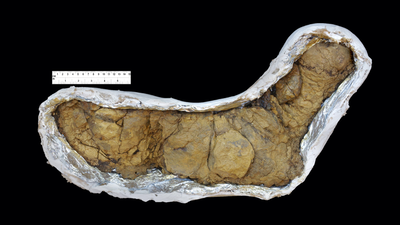
Scientists discovered that animal poop travelled across oceans 540-million-years ago and triggered the evolution of life on earth |

Scientists discovered that animal poop travelled across oceans 540-million-years ago and triggered the evolution of life on earth |

A large coprolite of a carnivorous dinosaur found in Harding County, South Dakota, US. Image Credit: Poozeum/Wikipedia Around 540 million years ago, the biological landscape of Earth went through a huge transformation called the Cambrian explosion. During this era, the ancestors of most modern animal groups began to appear, depicting a massive surge in biodiversity….

Read More
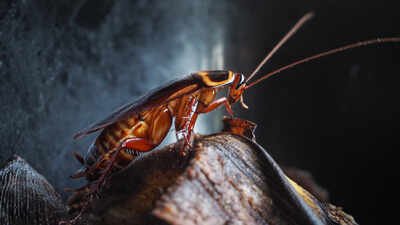
Newborn German cockroaches eat from a shared fecal pile and learn their colony’s smell; the social bond may explain why traps often fail

Newborn German cockroaches eat from a shared fecal pile and learn their colony’s smell; the social bond may explain why traps often fail

The discovery may also help explain why conventional traps and insecticidal baits can sometimes have trouble controlling infestations. why cockroach traps fail, how German cockroaches find their colony, how cockroach pheromones work, why cockroaches gather in groups, newborn cockroaches learn colony smell, cockroach feces used to identify colony members, using pheromones to control cockroach infestationsCockroaches…

Read More