








Headlines
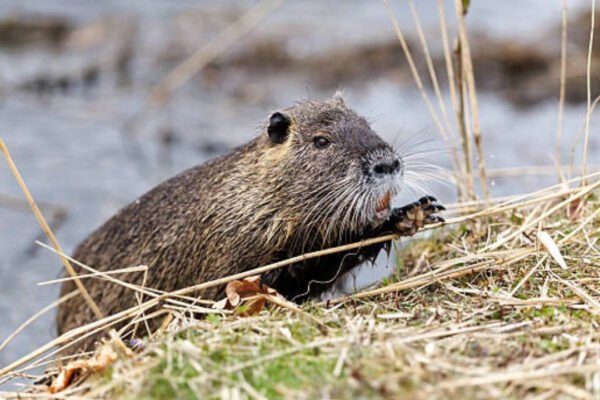
One of the world’s largest rodents was imported for fur farming in North America; today it’s devastating wetlands and riverbanks across US |

One of the world’s largest rodents was imported for fur farming in North America; today it’s devastating wetlands and riverbanks across US |

Two hundred years ago, you wouldn’t have been able to find them outside of South America. But since then, Nutria, one of the world’s largest rodents, has taken over US. These rodents were initially brought to North America in the late 19th and early 20th centuries, primarily for fur farming, since their soft underfur was…

Read More
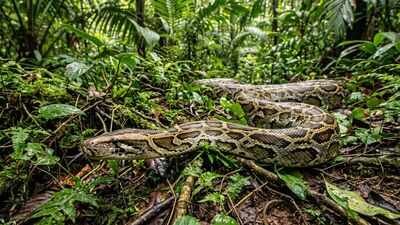
In 1992, Hurricane Andrew may have helped giant Burmese pythons spread across Florida’s Everglades, creating one of America’s worst invasive species crises | World News

In 1992, Hurricane Andrew may have helped giant Burmese pythons spread across Florida’s Everglades, creating one of America’s worst invasive species crises | World News

For decades, Florida’s Everglades have faced a silent invasion unfolding beneath the dense vegetation and winding waterways. What began with the arrival of Burmese pythons through the exotic pet trade has become one of the most significant wildlife challenges in the United States. The turning point came around 1992, when Hurricane Andrew damaged facilities in…

Read More
The Great Pyramid was not built by slaves. Instead, it was built by paid workers who drank beer, ate meat, received medical care and were buried with honour | World News

The Great Pyramid was not built by slaves. Instead, it was built by paid workers who drank beer, ate meat, received medical care and were buried with honour | World News

Image Credit: By Morhaf Kamal Aljanee For decades, pop-culture like Hollywood blockbusters and classical history books, has painted a harsh picture of the Great Pyramid’s construction. We often imagine thousands of slaves, oppressed by cruel supervisors, pulling massive stones in the cruel heat to build eternal monuments for their kings. However, modern archaeology has challenged…

Read More
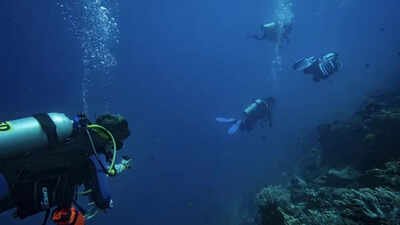
Most scuba divers believed they rarely touched reefs; underwater observers found more than 40% of contacts caused visible damage

Most scuba divers believed they rarely touched reefs; underwater observers found more than 40% of contacts caused visible damage

A researcher following scuba divers for this project Most scuba divers believe they rarely touch fragile seabed ecosystems, yet underwater observers tracking hundreds of tourists found that more than 40 per cent of their physical contacts caused visible damage to living coral structures.Research published in The Conversation by marine scientists and dive professionals revealed that…

Read More
PoK protests: Thousands march to Muzaffarabad after failed talks; polls delayed in two districts

PoK protests: Thousands march to Muzaffarabad after failed talks; polls delayed in two districts

Thousands march to Muzaffarabad after failed talks; polls delayed in two districts Protests in Pakistan-occupied Kashmir (PoK) intensified on Monday as thousands of demonstrators began marching towards Muzaffarabad after negotiations between the Joint Awami Action Committee (JAAC) and the authorities broke down, while election officials postponed legislative assembly polls in two districts amid the unrest.The…

Read More
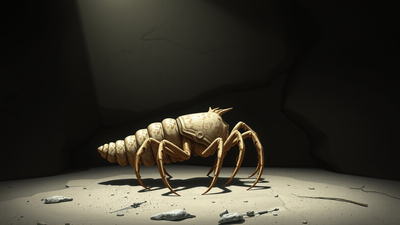
518 million years ago, one tiny sea creature may have started the evolution of the fangs seen in spiders today | World News

518 million years ago, one tiny sea creature may have started the evolution of the fangs seen in spiders today | World News

Scientists have identified the earliest known evidence of spider fangs in a 518 million-year-old fossil recovered from southern China, tracing the origin of one of the animal kingdom’s most feared biological tools back to a small marine creature that lived long before spiders existed. The fossil belongs to a species called Urokodia aequalis, examined by…

Read More
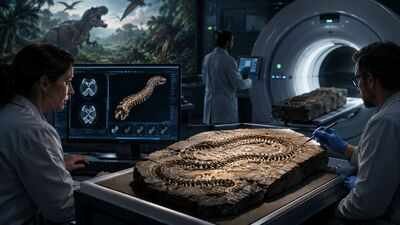
200 years after the first dinosaur, scientists use brain scans on a 100-million-year-old snake fossil from Brazil |

200 years after the first dinosaur, scientists use brain scans on a 100-million-year-old snake fossil from Brazil |

Two centuries ago, a British geologist gave the world its first named dinosaur. Megalosaurus, described from a handful of fossilised bones, marked the birth of an entire scientific field. Back then, researchers worked with little more than fragments, guesswork and imagination to picture prehistoric life. Fast forward 200 years, and palaeontology looks unrecognisable. Scientists no…

Read More
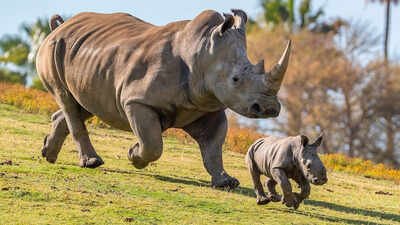
Poachers killed their mothers and left six young rhinos orphaned; after up to five years of rehabilitation, every one has now given birth in the wild

Poachers killed their mothers and left six young rhinos orphaned; after up to five years of rehabilitation, every one has now given birth in the wild

Rescued rhinos defy the odds, give birth after returning to the wild Six rhinos left for dead by poachers in South Africa when they were just young calves have all given birth naturally in the wild, marking a big win for wildlife recovery efforts in KwaZulu-Natal.Poachers killed their mothers around 2017, leaving the young rhinos…

Read More