






![Sigma Full Movie Collection: ‘Sigma’ box office collection day 1 [LIVE]: Vijay’s Jason Sajay’s directorial debut with Sundeep Kishan off to decent theatrical run | Tamil Movie News](https://bekhabarnewss.in/wp-content/uploads/2026/10/sigma-150x150.jpg "Sigma Full Movie Collection: ‘Sigma’ box office collection day 1 [LIVE]: Vijay’s Jason Sajay’s directorial debut with Sundeep Kishan off to decent theatrical run | Tamil Movie News")

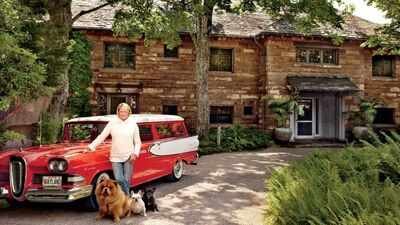
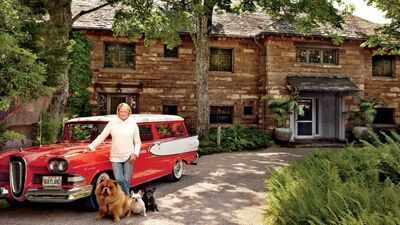
Perched above Seal Harbor on Maine’s Mount Desert Island, Skylands carries nearly a century of history tied to the Ford family and is now closely associated with Martha Stewart. Stewart bought the 63-acre estate in 1997, reportedly for just under $6 million, and has since treated the property as a piece of American architectural and landscape history rather than simply a summer home. In her own Martha Stewart Blog, she described the estate’s history and the work involved in bringing its Jens Jensen-designed landscape back towards its original character.
A retreat created for Edsel Ford
Skylands was developed for Edsel Ford, the son of Henry Ford, and his wife, Eleanor. The house was completed in 1925 and designed by architect Duncan Candler, while renowned landscape designer Jens Jensen created the surrounding landscape. Architectural Digest describes the three-story stone residence as sitting high above Seal Harbor, with a setting shaped by granite outcrops, trees, ferns and terraces rather than a conventional manicured lawn.The estate’s design was closely connected to its natural surroundings. Jensen incorporated elements including mossy woods, ferns, evergreens and maples into the landscape, creating a setting that blended the house with the terrain around it.In a 2013 post on her blog, Stewart wrote that the Ford estate had been sold to another family and said the property had not been maintained in the same way as it had been during the Fords’ ownership. When she purchased Skylands in 1997, she brought in landscape architect Patrick Chassé to help with the restoration of Jensen’s work. Stewart wrote that Chassé helped with the design of a council ring while also addressing the “challenges and compromises” involved in bringing the historic landscape back to its natural character.
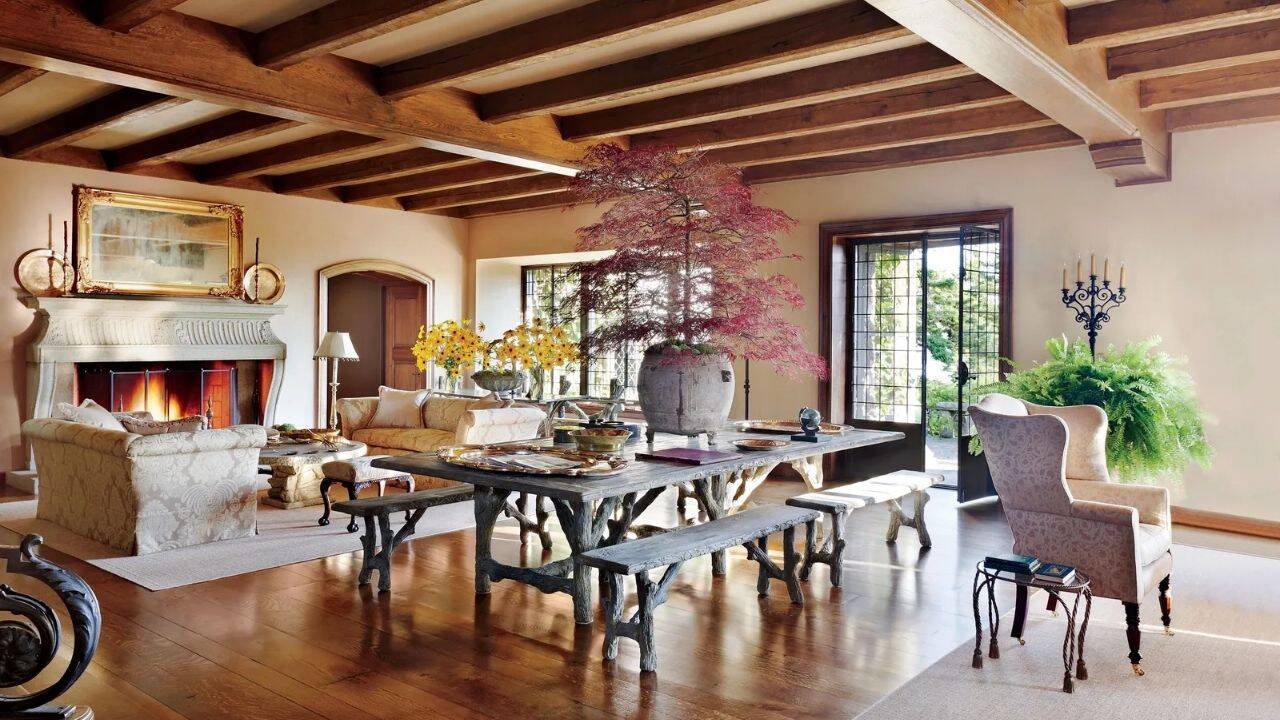
She restored its historic landscape while preserving the 12-bedroom stone house and Ford family china (Image Credit: Architectural Digest)
Stewart preserved the house rather than remaking it
The character of Skylands has remained closely tied to its original architecture. Architectural Digest reported that the house has 12 bedrooms, several outbuildings and a 60-foot-long beamed living hall. Rather than extensively modernising the property, Stewart embraced many of its existing details and furnishings. The property was sold to Stewart with much of its contents still inside. According to Architectural Digest, the purchase included cabinets and shelves containing the Fords’ silver, glassware, china and linens. Stewart herself told the magazine, “I didn’t have to buy a plate,” adding that she had nevertheless added her own pieces over the years. That approach helped retain a direct connection to the home’s previous owners. Architectural Digest noted that Stewart has described herself as a caretaker of the property.
Interiors reflect both Ford history and Stewart’s style
Inside, Skylands retains numerous details associated with its early-20th-century design. These include Pewabic-tiled bathrooms, leaded-glass windows, polished copper, cut crystal and vintage Frigidaire refrigerators in the kitchen, along with furniture and decorative objects ranging from Georgian stools and wing chairs to regional maps and prewar prints of Maine birds.Stewart has added her own design touches, but they have generally been incorporated alongside the property’s existing character. Architectural Digest reported that Kevin Sharkey, then executive editorial director at Martha Stewart Living, assisted her with the decorating. Some original objects have been stored, while others remain part of the home’s interiors.The house also became a source of inspiration for Stewart’s wider creative work. Architectural Digest reported that she spends part of July and August at Skylands, along with long weekends during other parts of the year, and that the property has served as a setting and inspiration for her design work and media projects.
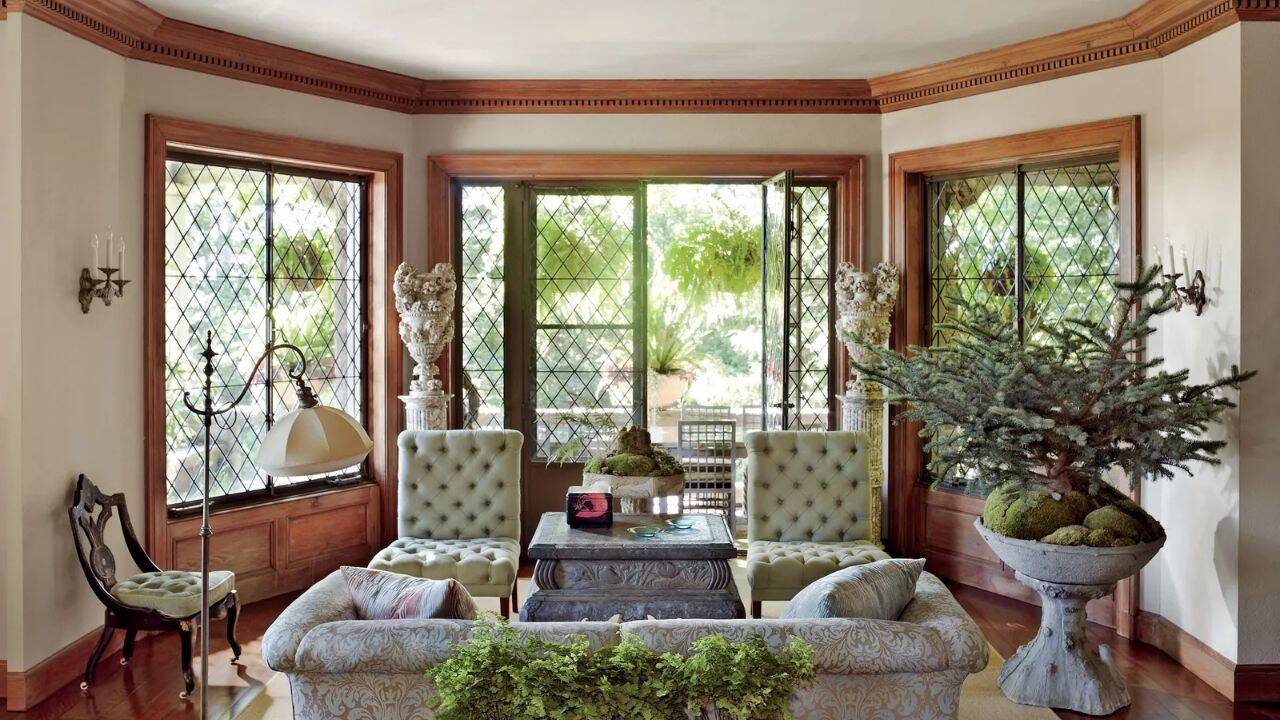
Stewart has added her own design touches, but they have generally been incorporated alongside the property’s existing character (Image Credit: Architectural Digest)
A landscape shaped by history
The restoration of Skylands has extended beyond the house itself. Stewart’s 2013 blog post focused particularly on the work of Patrick Chassé and the challenge of recovering aspects of Jensen’s original landscape design. She wrote that Jensen’s work had used the existing vegetation and terrain to create a landscape that felt naturally integrated with the property. The estate’s history also remains visible in its setting. Architectural Digest described pink-granite gravel drives winding through the forest, terraces surrounded by natural vegetation and a house constructed from local stone that appears to emerge from the surrounding granite landscape.The property had changed hands before Stewart acquired it. Architectural Digest reported that the Fords and their four children spent summers there until another family acquired the estate in 1980, following Eleanor Ford’s death. That family subsequently sold Skylands to Stewart in 1997.Today, Skylands remains a private retreat for Stewart, but its significance extends beyond its role as a celebrity home. Its architecture, original furnishings and Jensen-designed landscape preserve links to the Ford family’s era on Mount Desert Island. Stewart’s approach has centred on maintaining those layers of history while continuing to use the estate as a living home rather than treating it solely as a preserved relic.