








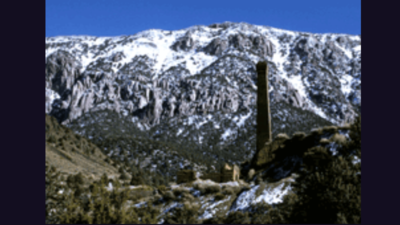
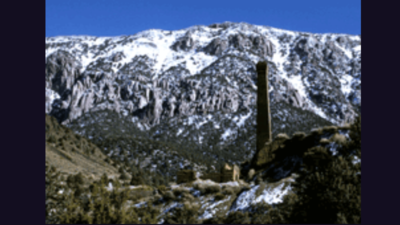
Greenwater, California, grew into a settlement of 2,000 people following a copper discovery in 1905, but its mining boom had collapsed by 1909 without ever making a profit. Located south of Dante’s View in the Death Valley region, the town attracted people hoping to benefit from copper mining. According to the National Park Service, water had to be hauled into the settlement and sold for $15 a barrel. As mining activity declined, residents left for other areas. Today, no ruins remain at the former townsite, marking the end of Greenwater’s short-lived mining history.
What caused Greenwater, California’s copper mining boom to end by 1909
Despite its growth, Greenwater faced a practical challenge in securing water for its residents and mining operations. The settlement was located in a desert region where water supplies were limited, making it necessary to transport water into the town. The cost of obtaining this essential resource was reflected in the price charged to residents and other users.The National Park Service states that “Water had to be hauled into the town and was sold for $15 a barrel.” The agency’s account identifies the expense and difficulty of supplying water as part of Greenwater’s history. Although the town attracted a population of 2,000, its development depended on mining activity that ultimately failed to generate a profit.
Why did Greenwater, California’s copper mining boom collapse by 1909
Greenwater’s growth did not last. The copper mining boom that had brought people to the settlement collapsed by 1909, and the mining operations had failed to produce a profit. As the industry declined, the population left the town and moved elsewhere.According to the National Park Service, “By 1909 the mining had collapsed without ever showing a profit and people left for other areas.” This account establishes the end of Greenwater’s short-lived mining boom. The settlement’s history illustrates the abrupt change from rapid population growth to abandonment after the mining activity on which it depended came to an end.
What remains of Greenwater, California, after its copper mining boom ended
Greenwater is now a historical reminder of the mining settlements that developed and disappeared across the Death Valley region. Unlike some former mining towns where buildings or industrial structures remain, Greenwater has no surviving ruins, according to the National Park Service. Its history is documented through the agency’s account of the early mining boom and the settlement’s subsequent collapse.The former townsite is located south of Dante’s View, off the Greenwater Valley gravel road. The National Park Service identifies the location in its historical information about Death Valley’s ghost towns. Greenwater’s brief existence, from the copper discovery in 1905 to the collapse of mining by 1909, remains part of the wider history of mining settlements in the region.