






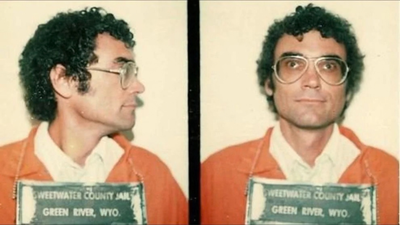
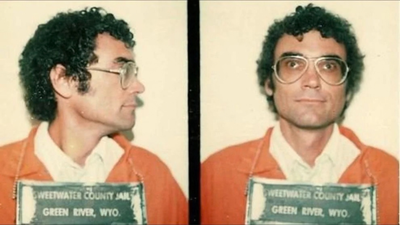
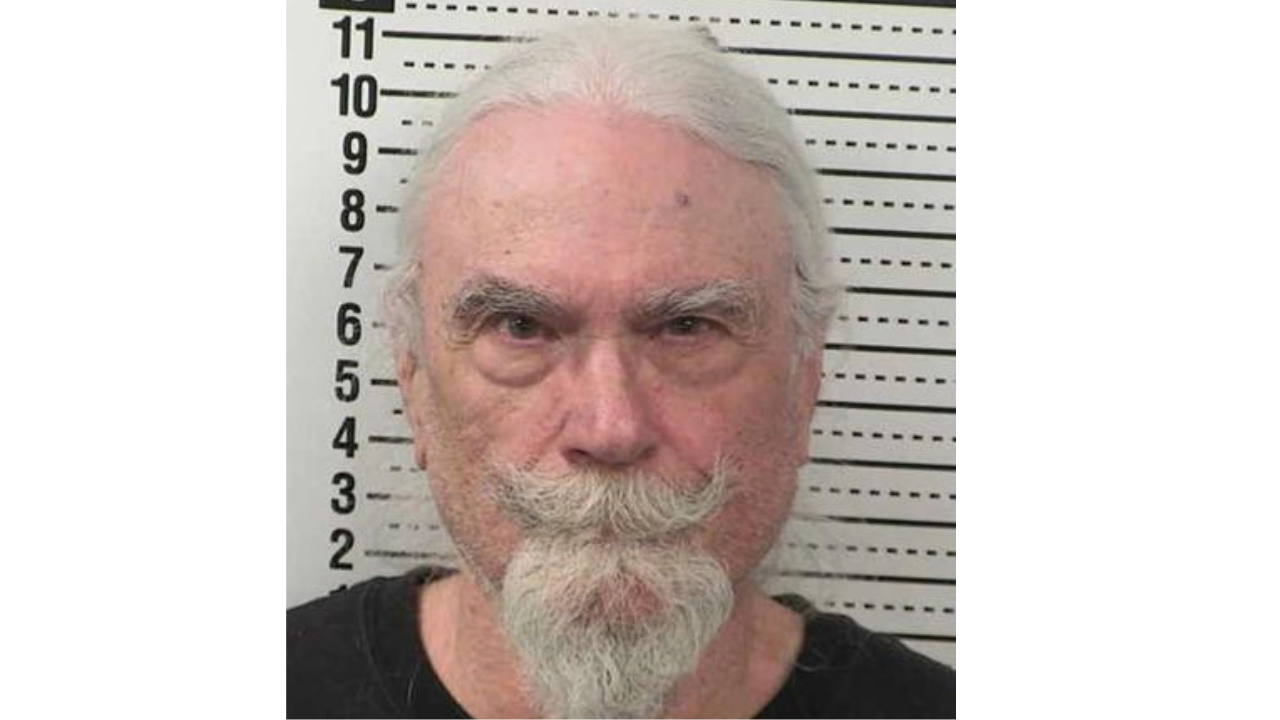
A fugitive who was wanted in Wyoming on an attempted murder charge spent more than four decades living under the identity of a deceased former college classmate, according to the US Department of Justice. Stephen Craig Campbell, 76, assumed the identity of Walter Lee Coffman, who died in 1975 at age 22. Campbell first applied for a US passport in Coffman’s name in 1984, submitting his own photograph and current address. Over the years he obtained government documents, bought property and fraudulently collected more than $138,000 in Social Security retirement benefits. The deception unravelled after a September 2019 driver’s licence renewal, and FBI agents arrested him in New Mexico in February 2025. He was sentenced to 81 months in federal prison.
Campbell became a fugitive after a 1982 bombing allegation
According to court documents cited by the DOJ, Campbell became a fugitive after being accused in 1982 of attempting to kill his estranged wife’s boyfriend. Prosecutors said he planted a homemade explosive device at the man’s home. It detonated when Campbell’s estranged wife opened the package, causing severe lacerations and the loss of one of her fingers. The explosion also started a fire that spread to a second apartment unit. Campbell failed to appear in court on the original charge of attempted first-degree murder. A Wyoming warrant issued in 1983 for that failure to appear remains outstanding.
He assumed the identity of a dead classmate
After becoming a fugitive, Campbell took the identity of Walter Lee Coffman, a former classmate from the University of Arkansas. Coffman died in 1975, just months after graduating with an engineering degree. In 1984, Campbell first applied for a US passport in Coffman’s name, using his own photograph and current address. He renewed the fraudulent passport over the years, including in 2005 and 2015. The identity also let him obtain a replacement Social Security card, multiple passports, a New Mexico driver’s licence and other official documents. Around 2003, he used it to buy property in Weed, New Mexico, where he continued to live under Coffman’s name.
He tried to erase Coffman’s death record
Campbell took steps to secure the identity long before the discovery of his fraud. In 1992, he contacted the Social Security Administration in an attempt to remove Coffman’s death record. On October 15, 1995, he fraudulently applied for and received a replacement Social Security card in Coffman’s name, using an Oklahoma driver’s licence in that name.
He collected more than $138,000 in Social Security
Using Coffman’s identity, Campbell fraudulently obtained more than $138,000 in Social Security Retirement Insurance Benefits, beginning in 2015, according to the DOJ’s sentencing announcement. An earlier account, from the time of his guilty plea, put the figure at about $140,000.In September 2019, Campbell presented a passport bearing Coffman’s name to a New Mexico Motor Vehicle Division employee in Cloudcroft and used it to renew his driver’s licence, knowing it was not legitimate. Agents from the National Passport Center’s Fraud Prevention Unit then discovered that Coffman had died in 1975 and alerted federal authorities.The FBI and the Social Security Administration’s Office of the Inspector General jointly investigated. The case was originally initiated by the State Department’s Diplomatic Security Service and the Fraud Prevention Unit. The investigation uncovered Campbell’s true identity as a long-time violent fugitive.
FBI SWAT teams arrested him in 2025
Campbell was not arrested until February 2025, more than five years after the licence renewal. On February 19, FBI SWAT teams from Albuquerque and El Paso, supported by aerial assets, approached his property in Weed to execute arrest and search warrants.Air surveillance saw Campbell leave the back of his home and enter the wood line. Wearing camouflage, he stayed there despite agents’ commands. After flash bangs were deployed and agents gave further commands, he emerged and surrendered. A loaded rifle with a scope and a 20-round magazine was recovered from the wood line.
Investigators found 57 firearms
A search of the property recovered 57 firearms, along with large quantities of ammunition and magazines. Campbell was prohibited from possessing firearms because he was a fugitive from justice.The FBI’s Albuquerque Field Office, through its Las Cruces Resident Agency, and the Social Security Administration’s Office of the Inspector General co-investigated the case. US Customs and Border Protection Air and Marine Operations and the Otero County Sheriff’s Office provided enforcement assistance.
He pleaded guilty to four federal charges
The DOJ announced in early June 2026 that Campbell had pleaded guilty to four federal offences: misuse of a passport, possession of false papers to defraud the United States, aggravated identity theft, and being a fugitive from justice in possession of a firearm and ammunition. He faced up to 12 years in prison. Assistant US Attorney Clara Nevarez Cobos prosecuted the case.
He was sentenced to 81 months
The DOJ announced on September 4, 2026 that Campbell had been sentenced to 81 months, or six years and nine months, in federal prison. The court also ordered three years of supervised release after his prison term and a $20,000 fine. There is no parole in the federal system.