








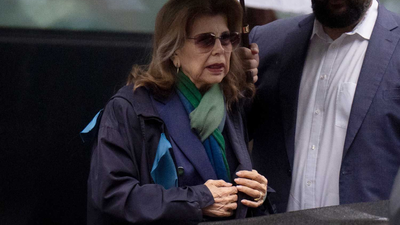
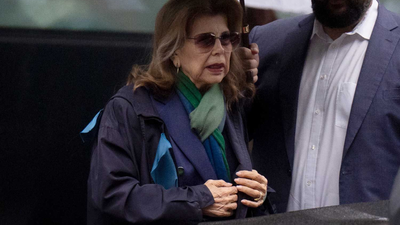
An engagement ring made specially for a Jordanian princess became the starting point of a criminal investigation after it appeared in a British auction catalogue in 2020. Princess Firyal Irshaid, now 81, told a London court that she had not authorised the sale of the ring or other pieces from her jewellery collection, which had remained at her Belgravia home while she was abroad during the Covid-19 pandemic. What began with a telephone call from a friend in the jewellery trade led her to examine catalogues from several earlier auctions and gather records to establish ownership. Her former housekeeper, Maria Virgelina Taborda Henao, denies stealing jewellery from the property.
Princess Firyal found her missing engagement ring on a UK auction catalogue
The discovery came in November 2020, when Pierre Jeannet, a friend of the princess and a partner at the high-end jewellery house JAR, contacted her about a piece he recognised. The ring had been created specifically for her engagement and was being used to feature the contents of an auction catalogue, the court heard.As reported by The Independent, Jeannet called Princess Firyal on 21 November to ask whether she was selling her jewellery. She said she was not. According to her evidence at Southwark Crown Court, he then explained that her engagement ring had appeared on the cover of a catalogue produced by Canterbury Auction Galleries.The ring was particularly identifiable because it had been made exclusively for her. The princess told jurors that no other example existed, making its appearance in the sale catalogue difficult to mistake for a similar piece.Once she realised what had happened, she began looking beyond that single item. Copies of catalogues covering sales held in March, May and August 2020 revealed further jewellery that she said belonged to her. She also contacted the auction house to challenge the sales, although she described its managing director, David Parker, as dismissive when she first explained her claim.
Documents and photographs were used to establish ownership
Princess Firyal said she had to assemble evidence from the records available to her in Jordan. The material included bills of sale, images reproduced in auction catalogues and photographs showing jewellery in her possession before it went missing.Among the photographs was one of the princess wearing a pair of earrings that she said had been stolen. Another showed a bracelet at her home. Such records became important in demonstrating that the items offered for sale were not simply pieces resembling jewellery in her collection, but objects she could identify as her own.The princess described collecting jewellery as a longstanding interest. She told the court that pieces were often left in open cupboards or on counters in her home, including items she had worn during the week. She said the collection was not kept under lock and key, leaving it accessible to people who entered the property.
The princess left London at the start of the pandemic
Princess Firyal had travelled away from Britain in mid-March 2020, as the coronavirus pandemic was disrupting international travel. She told the court that her son telephoned her and gave her just three hours to pack and reach the airport.She recalled that the flight was the last one leaving before Jordan closed its airport. With no family around her in Britain, she said, she was determined to leave in time. Her Belgravia property was subsequently left with Taborda Henao, who had worked for her for 11 years.The housekeeper, 71, is accused of exploiting her access to the residence to steal the jewellery. The court heard that security guards assigned to the property were not permitted to enter the house and were required to remain outside while on duty.During the early stages of the pandemic, the princess also agreed to allow Taborda Henao’s sister to stay at the property. The sister was later paid a salary, according to the evidence. Princess Firyal told jurors that she had initially found the arrangement unusual but accepted it. She was subsequently informed that the woman had become ill and left the house later that year.
Police recovered jewellery during a search in Fulham
The investigation also involves Taborda Henao’s nephew, Julian Ramirez, who prosecutors say played an important role in moving the allegedly stolen items towards their sale. According to the BBC, the court heard that £17,835 was transferred to the housekeeper by Ramirez between 23 June 2019 and 28 November 2020.Police later searched Taborda Henao’s home in Fulham, where they found a wedding ring belonging to the princess, a pair of earrings and a necklace made from jewelled metal, according to the evidence presented at trial.Ramirez is believed to have travelled to Colombia in October 2023 while on police bail. Princess Firyal told the court that she had not known his name until police informed her that he was connected to the consignment of her jewellery to the auction house.