








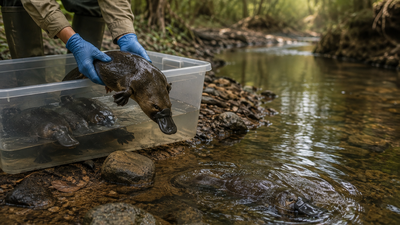
For five months, a group of platypuses lived far from the waterways they once called home. Australia’s severe drought had transformed their habitat into an increasingly dangerous place, prompting conservationists to remove seven platypuses and place them in temporary care. But captivity was never meant to be permanent. Once conditions improved, the platypuses were released back into the wild, raising an important question: after months away, would they still be able to navigate their old habitat, find food and settle back into their natural routines?According to a study published in the journal Marine and Freshwater Research, researchers investigated what happened after platypuses rescued from Tidbinbilla Nature Reserve near Canberra during the 2017-19 drought were returned to the wild. Five animals spent about five months in temporary captivity before being released at their original capture sites. By tracking their movements for up to 18 months, the researchers examined whether the animals could re-establish their home ranges and resume normal behaviour after their time away.
A desperate drought rescue
The severe drought placed the Tidbinbilla platypus population under enormous pressure. As water levels fell and conditions in their freshwater habitat worsened, the animals faced an increasingly difficult struggle for survival. Eight platypuses died during the drought, prompting conservationists to intervene and rescue seven platypuses.Seven platypuses were initially removed from the reserve, with five successfully maintained in captivity at Taronga Zoo for about five months. The decision was an emergency conservation measure, designed to protect the animals until environmental conditions improved enough for their return. However, rescuing wild animals is only part of the challenge. Conservationists also need to know whether animals that spend extended periods in captivity can successfully return to life in the wild.
Finding their way again
After the drought eased and conditions became suitable, the five platypuses were returned to the sites where they had originally been captured. Researchers then used acoustic telemetry to monitor their movements across the reserve. The results were encouraging. Within days of their release, the animals began using areas that formed part of their home ranges. Rather than showing prolonged confusion or wandering unpredictably, they quickly resumed patterns of movement associated with life in the wild.Four of the five platypuses remained within Tidbinbilla Nature Reserve for between 10 and 18 months after their return. This suggested that the animals had not simply survived the release but had successfully re-established themselves within the habitat.
Familiar patterns return
The study also revealed interesting differences in how the platypuses moved through their environment. Most of the females repeatedly returned to the same preferred ponds, indicating a strong association with particular areas of the reserve. The male tracked by researchers showed a wider-ranging pattern, consistent with the tendency of male platypuses to move across larger areas. The animals’ activity was associated with parts of the habitat containing particular aquatic invertebrates, including insects and gastropods. This suggests they quickly returned to productive foraging areas despite months away from their natural environment.Their ability to identify familiar and useful parts of the habitat was particularly significant. Long periods in captivity could potentially affect an animal’s behaviour or disrupt its connection with its former territory. In this case, however, the rescued platypuses appeared capable of returning to the routines needed for survival.
Why the findings matter
The research offers important insights for platypus conservation, particularly as droughts and other environmental pressures threaten freshwater ecosystems. Temporary captivity is not a guaranteed solution. Wild animals can face difficulties after release, including problems finding food, competing for territory or adapting to changes that occurred while they were away. Successful conservation therefore depends not only on keeping animals alive during an emergency but also on ensuring that they can return to suitable habitats.The Tidbinbilla rescue provides evidence that temporary removal can work as an emergency strategy for platypuses when conditions become too dangerous. The animals’ rapid return to familiar movement patterns suggests that captivity, when carefully managed and followed by an appropriate release, does not necessarily prevent them from re-establishing their place in the wild.
A hopeful conservation lesson
The drought that forced conservationists to intervene was a serious reminder of how vulnerable freshwater wildlife can be when environmental conditions change rapidly. Yet the return of the platypuses also provided a hopeful outcome. After months in captivity, the animals did not have to learn an entirely new way of life. Within days of being released, they began moving through the landscape, locating suitable areas and rebuilding the home ranges that had been interrupted by the drought.As Australia faces an increasingly uncertain climate, wildlife managers may need to consider emergency interventions more often. This study suggests that, for platypuses facing extreme environmental conditions, temporary rescue can provide more than short-term protection. If the habitat recovers and the animals can be returned safely, they may be capable of quickly reclaiming the rhythms and territories of their lives in the wild.