







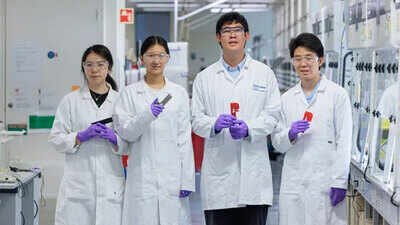
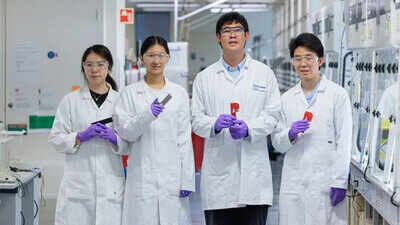
Four first-year university students have developed a low-cost device that could help health workers identify vaccines damaged during transportation, addressing a problem that can undermine immunisation programmes in regions with limited cold-chain infrastructure. The electricity-free gadget, which costs approximately $5 to make, records how many times a vaccine shipment has been exposed to freezing conditions.The student team, named Kalyb, won the undergraduate innovation programme Make-A-Difference! at Imperial College London, receiving a £7,000 prize. The group plans to test the device in Nigeria next April, where it hopes to assess how the technology performs in real-world vaccine transportation conditions.
Why detecting frozen vaccines matters
Vaccines are often transported and stored under carefully controlled temperature conditions to preserve their effectiveness. While maintaining the required cold chain is essential, freezing can also damage certain vaccines. The problem is particularly difficult to identify because a vaccine affected by freezing may look no different from one that has remained within the recommended temperature range.Kalyb’s device is designed to address this gap by recording the number of freeze events during transportation. Its electricity-free operation and low production cost could make it useful in settings where access to reliable power and sophisticated monitoring equipment is limited.Explaining the motivation behind the project, team member Yubo Gao told Imperial News that poor cold-chain infrastructure contributes to vaccine wastage around the world and can hinder immunisation efforts, particularly in resource-constrained regions.The team said its starting point was a practical question: how can a health worker establish whether a vaccine froze before reaching a clinic? Its proposed device aims to provide an indication that is not possible through visual inspection alone.
Four first-year students behind the innovation
Kalyb comprises Flynn Li, Kaiqi Song and Yubo Gao from the Department of Life Sciences, along with Bella Zheng from the Department of Physics. All four are first-year students.Their project was selected as the winner of Imperial’s Make-A-Difference! programme, an annual initiative that supports undergraduate teams in developing early-stage ideas into working proofs of concept. Organised by the university’s Faculty of Natural Sciences, the programme provides students with a funded laboratory placement, access to resources, financial support and mentorship.The teams work on their ideas during an eight-week summer placement before presenting their projects to a panel of judges. Entries are assessed on originality, potential societal impact and technical feasibility.Dr Thibault Bertrand, co-chair of the programme’s committee and associate professor in statistical mechanics, said this year’s finalists had demonstrated creativity and resilience. He highlighted Kalyb’s electricity-free vaccine freeze tracker for its potential global impact.
Women’s health device among other shortlisted projects
Team Eviso, which developed a low-cost device fitted to a toilet to monitor urinary biomarkers and provide insights into hormonal and metabolic health, finished as runner-up. The team includes Isla Binks, Eve Sharma, Buse Liv and Oyku Erciyes. Imperial News noted that Eviso was the programme’s first all-female team.Other finalists presented projects addressing challenges in healthcare, sustainability and public safety. These included biodegradable 3D-printing filament developed by EcoPrints, rapid urine tests for early kidney cancer screening by KidniCheck, and OneGarm, a wearable vest and app designed to support stroke survivors with rehabilitation and health monitoring.Primus presented a system intended to help firefighters locate people inside buildings during fires.
Programme has supported student startups since 2014
Imperial’s Make-A-Difference! programme has been running since 2014 and has helped student teams develop ideas into potential businesses and technologies. Previous winners include Multus Biotechnology, a cultivated-meat startup that later raised £7.9 million, and Matoha, which developed a device to identify plastics and textiles.The previous edition was won by ARA Search, formerly known as D-View, for a device trained using artificial intelligence to detect human presence in earthquake rubble through sound.The next edition of the competition is scheduled to launch on November 11, 2026, with students able to register for the programme’s launch event.