







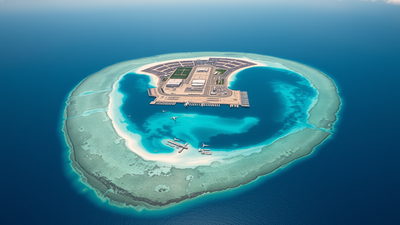
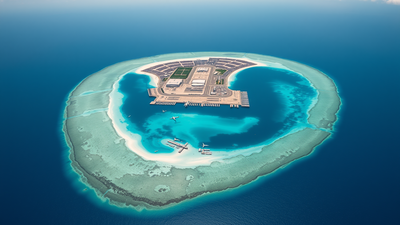
In the middle of the Indian Ocean lies Diego Garcia, a remote coral atoll that became one of the most strategically important military bases on earth. Long before its runways, warships and military operations existed, the island was home to an entire community, the Chagossians, whose ancestors had lived across the Chagos Archipelago for generations. Between 1967 and 1973, the United Kingdom and United States forcibly removed the islands’ entire population to make way for a joint military base, a decision that decades of legal battles, human rights findings and international court rulings have since described as a serious violation of international law.
How the deal to remove an entire population was struck
According to the International Court of Justice’s own summary of its 2019 advisory opinion, the United States approached the United Kingdom in 1964 expressing interest in establishing a military base on Diego Garcia, and the two governments subsequently agreed to remove the archipelago’s population entirely to clear the way for it. The court found that between 1967 and 1973, the UK either prevented the Chagossian population from returning to the islands or forcibly removed them, with the main forced removal from Diego Garcia itself taking place in July and September of 1971. According to a detailed report by Human Rights Watch, the UK falsely declared to the United Nations that the Chagos Archipelago had no permanent population, allowing it to avoid formally reporting its colonial administration of the islands even as an entire indigenous community was being displaced.
A community uprooted with little warning
The scale of the displacement was significant for such a small population. Roughly 1,500 to 2,000 Chagossians were removed from the archipelago, relocated primarily to Mauritius and the Seychelles, often with little preparation for the abrupt loss of their homeland. Human Rights Watch documented firsthand accounts from Chagossians describing the sudden realisation that they would never be allowed to return, with one islander, Louis Marcel Humbert, recalling his mother’s words after the family left on what was meant to be a temporary trip to Mauritius in 1967, that they would now have to live a very different life.
A legal battle stretching across five decades
The Chagossians’ fight to return to their homeland has played out across UK courts for decades. In 2008, Britain’s House of Lords, then the country’s highest court, overturned earlier High Court and Court of Appeal rulings that had granted islanders the right to return, and an immigration order first issued in 1971 continued to bar them from going back. The dispute eventually reached international bodies, culminating in the International Court of Justice‘s 2019 advisory opinion, which found by a vote of thirteen judges to one that the UK’s separation of the Chagos Archipelago from Mauritius in 1965 had been unlawful, and called on the UK to end its administration of the islands as rapidly as possible.
Why the UK initially resisted the international rulings
Despite the ICJ’s findings, the UK government initially maintained that the ruling was merely advisory rather than legally binding, and continued administering the territory. According to Human Rights Watch, the UK effectively ignored the 2019 ruling until November 2022, when it finally entered formal negotiations with Mauritius over the islands’ future. A separate ruling by the UN’s International Tribunal for the Law of the Sea in 2021 further reinforced that the UK held no valid claim to sovereignty over the islands, adding additional international pressure on London to resolve the dispute.
The 2025 treaty that finally resolved the sovereignty question
According to the UK House of Commons Library’s official briefing on the agreement, the UK and Mauritius signed a treaty on 22 May 2025 under which the UK agreed to cede full sovereignty of the Chagos Archipelago to Mauritius, while securing continued UK and US rights to operate the military base on Diego Garcia. Under the terms of the deal, the UK will lease back Diego Garcia for an initial period of 99 years, with the House of Lords Library noting that the agreement also includes security and financial provisions, including an annual payment from the UK to Mauritius. Mauritius will be free to pursue resettlement across the rest of the Chagos Archipelago, though not on Diego Garcia itself, where the military base will continue operating.
Why Diego Garcia remains so strategically important
Diego Garcia’s significance to the US and UK stems from its position roughly midway between Africa and Indonesia in the Indian Ocean, making it a valuable staging point for military operations across the region. The base has served as a launch point for bombing campaigns during conflicts in Iraq and Afghanistan, and continues to support surveillance and rapid deployment capabilities across the Indo-Pacific. This strategic value is precisely why, even as the UK formally surrendered sovereignty over the wider archipelago, both governments moved to guarantee the base’s continued operation for decades to come.
What the 2025 deal means, and does not mean, for the Chagossians themselves
While the treaty resolves the long-standing sovereignty dispute between the UK and Mauritius, it does not fully settle the concerns of the Chagossian community itself. According to Human Rights Watch, many Chagossians interviewed said they were not properly consulted before the 2025 agreement was announced, and while most said they personally wished to return to the islands, they were not seeking the closure of the military base itself, hoping instead to live alongside it on Diego Garcia as well as the archipelago’s other habitable islands. More than fifty years after their removal, the Chagossians’ right to return to Diego Garcia specifically remains unresolved even as sovereignty over the wider archipelago finally changes hands.