









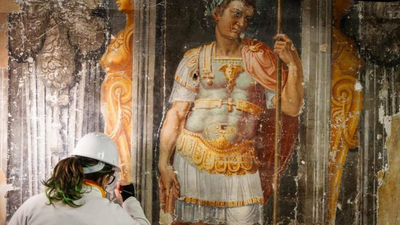
For nearly three centuries, layers of plain paint and plaster hid a remarkable secret inside one of Rome’s long-neglected Renaissance villas. Now, restorers peeling back those layers are bringing colourful scenes of gods, goddesses, soldiers and mythological figures back into view, as per a report by Smithsonian Magazine.The rediscovered artwork is inside Villa Silvestri Rivaldi, a sprawling 16th-century residence just a short distance from Rome’s Colosseum. The villa was acquired by Italy’s Lazio region for €25 million in 2024, and an extensive restoration is now revealing frescoes that had been deliberately covered after the property passed into the hands of a religious institution.The murals include nude and semi-nude figures from non-Christian mythology, which reportedly offended the nuns who occupied the villa from the 17th century. The paintings were subsequently plastered over, leaving the Renaissance artwork hidden for around 300 years. Today, conservators are carefully removing those later layers using techniques including laser cleaning and water-based methods. In some sections, the process has already revealed entire scenes that had disappeared from view for generations.
Frescoes hidden behind plain walls
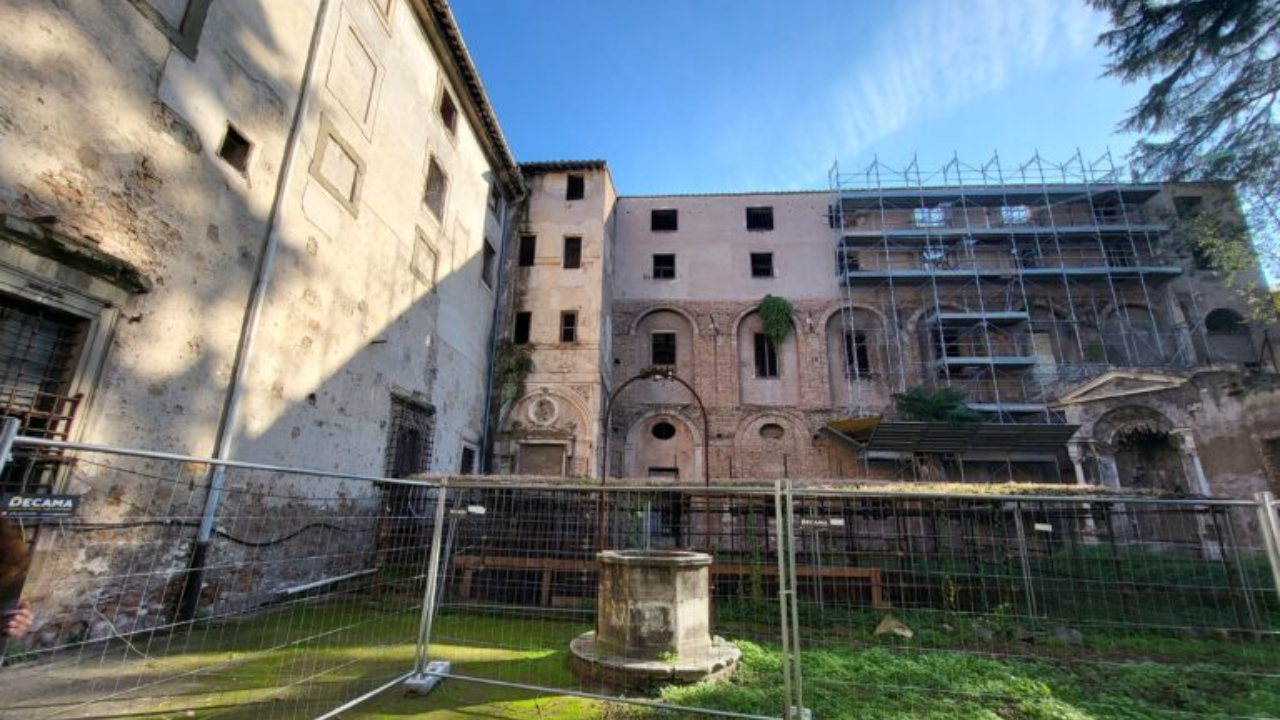
Its builder was Eurialo Silvestri, a chamberlain and close associate of Pope Paul III
Villa Silvestri Rivaldi was built between 1534 and 1547, when Rome was undergoing a major artistic and architectural transformation. Its builder was Eurialo Silvestri, a chamberlain and close associate of Pope Paul III, who hoped the grand residence would help strengthen his ambitions of becoming a cardinal.Although that ambition did not succeed, the villa became home to a succession of prominent figures and families, including members of the Medici and Colonna dynasties. Alessandro de’ Medici, who later became Pope Leo XI, was among those associated with the property.The villa was designed to reflect the wealth and status of its occupants. Its interiors featured elaborate decorations, coats of arms and mythological imagery, while its gardens once included a large nymphaeum with 12 fountains, shell mosaics, statues and orange trees.Its location, overlooking parts of ancient Rome, also influenced the themes chosen by the artists. Classical mythology and ancient Roman imagery were particularly suited to a residence built amid the ruins and monuments of the city.But the villa’s artistic character changed dramatically after 1660, when it became the property of the Conservatory of the Mendicant Spinsters. The religious institution operated a girls’ school and orphanage there and remained associated with the building for about three centuries.During that period, the nuns objected to the nude figures and other pagan imagery decorating the walls. Instead of allowing the controversial images to remain visible, the murals were covered. For centuries, the Renaissance paintings effectively disappeared behind the new surfaces.
A hidden Renaissance gallery re-emerges
The first serious attempts to uncover the paintings began more than two decades ago. Between 2002 and 2006, conservators carried out cleaning tests on parts of the walls after suspecting that older murals were hidden underneath.Those tests confirmed that significant artwork remained beneath the overpainting. But restoration could not proceed at the time because the villa was still owned by a religious order that did not have the funds required for the work, according to Paola Mezzadri, a conservator and restorer involved in the project.The situation changed after Lazio acquired the property in 2024.Restoration work has now moved into a more substantial phase, with teams stabilising the deteriorating building while simultaneously investigating and cleaning its historic decoration. The wider restoration project has been described as a roughly $40-million effort, including the property acquisition and work intended to give the complex a new public life.One of the most striking discoveries is in the Hall of Divinities. There, restorers have uncovered monumental figures of goddesses, depicted in vibrant oranges, yellows and greens. Some appear with flowing robes while others hold armour or weapons. The scenes offer a glimpse of the elaborate mythological decoration that once transformed the villa’s interiors.Researchers believe Prospero Fontana may have been responsible for at least some of the paintings. Art historians have also linked the decoration to Perino del Vaga, an important artist of the period and a pupil of Raphael’s circle. Drawings preserved at the British Library have helped researchers investigate the possible connection between Fontana and the frescoes.
More paintings still waiting to be uncovered
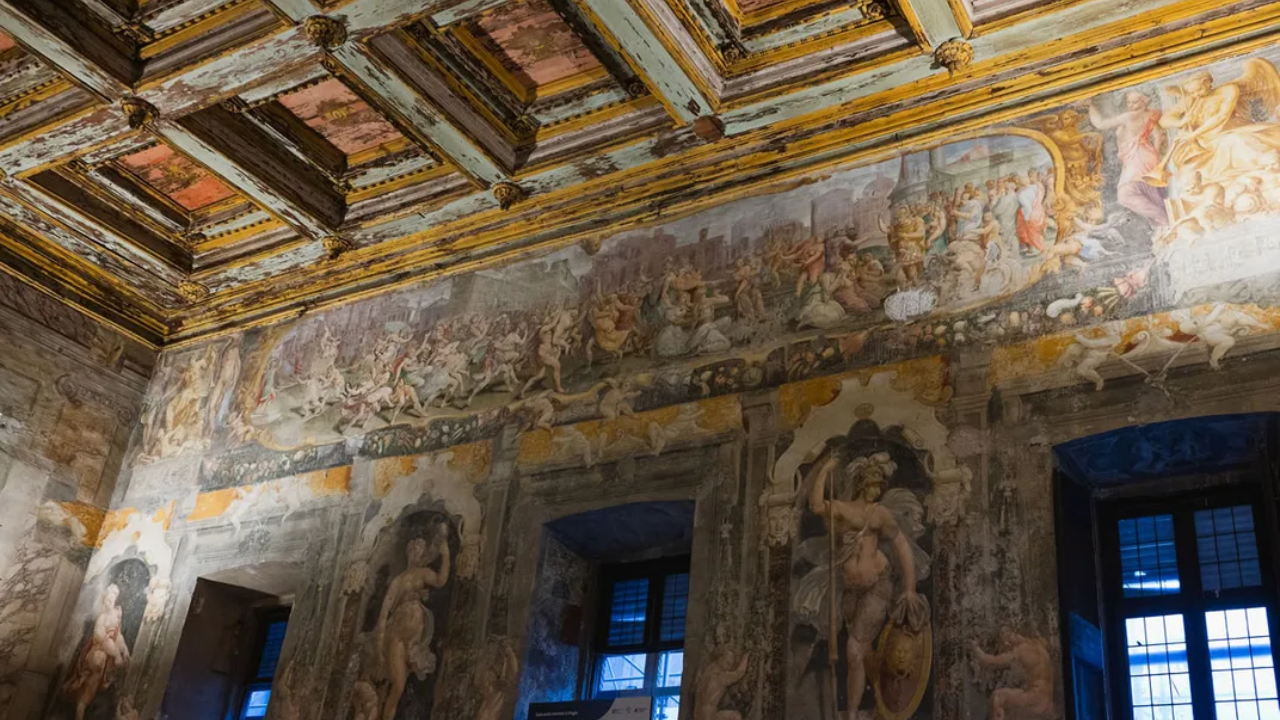
In the Hall of the Emperors, restorers are uncovering scenes showing soldiers, cavalry, battles and even a lion.
The Hall of Divinities is not the only part of the villa yielding surprises. In the Hall of the Emperors, restorers are uncovering scenes showing soldiers, cavalry, battles and even a lion. Portraits of Roman emperors, including Titus and Hadrian, have also emerged as layers covering the walls are removed. Another section, known as the Hall of Cupid and Psyche, has yet to be fully investigated.The work is painstaking because restorers have to distinguish between layers of later paint and the original artwork without damaging the fragile frescoes underneath. Modern techniques, including lasers and water-based cleaning methods, are being used to remove the overpaint while limiting the use of chemicals.The villa’s story also extends far beyond the Renaissance. After the nuns left around 1970, the complex went through several later uses and periods of neglect. It became a centre for community arts and political activism and was eventually occupied by squatters.Restorers have even found 20th-century graffiti alongside the centuries-old frescoes, creating an unusual record of the building’s successive lives.For now, there is no fixed date for the villa’s complete restoration or for its eventual public opening. Researchers say the scale of the work means discoveries are still being made as restoration progresses.What was once hidden behind plain walls is slowly becoming visible again: a Renaissance gallery of mythological scenes that survived centuries of changing tastes, religious objections, neglect and abandonment.And after roughly 300 years behind layers of paint and plaster, the figures that the nuns once wanted hidden are finally returning to the walls of Villa Silvestri Rivaldi.