









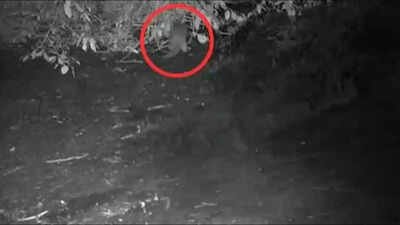
By the early 1990s, river otters became a rare sight in the Bronx section of the Bronx River. Wildlife enthusiasts were jumping in joy when something like a river otter was spotted on camera on June 23. The zoo officials later confirmed that it was indeed a North American river otter making its first appearance after a century in this side of the river.“When I first reviewed the images, I could hardly believe what I was seeing,” said Hawkins, a graduate of the Miami University of Ohio Advanced Inquiry Program hosted at the Bronx Zoo. “Knowing this may be the first documented river otter in the Bronx in generations was an incredible moment.”Hawkins captured the image while conducting long-term camera-trap monitoring of wildlife along the river overseen by the WCS’s Bronx-based Education Department. Craig Piper, director of the Bronx Zoo and an interim vice president with WCS’s Zoos & Aquarium, called it a “win for both wildlife and people.”“There are moments in conservation that remind us why this work matters, and this is one of them,” Piper said in a statement. “Thanks to a broad coalition of public and private partners, we can celebrate the return of an otter as a result of decades of restoration work to provide cleaner water and healthier habitat.”
Why did river otters disappear from New York’s waterways?
River otters historically inhabited every watershed across New York State, but by the early to mid-20th century, they had vanished entirely from central and western New York, remaining only in remote, protected pockets like the Adirondacks and Catskills.During the 18th, 19th, and early 20th centuries, river otters were heavily trapped for their thick, waterproof fur, which fetched high prices in the commercial fur trade. With no bag limits or closed seasons, populations were rapidly overharvested.As apex predators in aquatic ecosystems, otters are extremely sensitive to water contamination. Industrial discharge, agricultural runoff, and heavy metals (like mercury and PCBs) accumulated up the food chain—a process known as biomagnification. Ingesting contaminated fish caused health issues, organ failure, and widespread sterility among otters.Agricultural land clearing, river damming, and expanding urban development destroyed shoreline vegetation (riparian corridors) and wetlands vital for otter dens and foraging grounds.Spotting of one otter does not indicate big populationIn 2007, beavers returned to the river for the first time in more than 200 years, according to wildlife officials.While researchers caution that a single observation of an otter does not necessarily indicate a resident population, the discovery shows the Bronx River is increasingly capable of supporting native wildlife that has been absent for generations. “This isn’t simply the story of one animal. It’s the story of an urban river coming back to life,” Piper said. “Every improvement in water quality, every acre of restored habitat, every community volunteer who has cared for this river has helped make a moment like this possible. We hope it’s the first of many.”According to New York’s Department of Environmental Conservation, the North American river can be identified by a stout body, short legs, tapered tail, and dense, short, glossy fur. Their eyes, ears, and nose are located atop their heads so they can see, hear, and smell while most of their body remains in the water.Fur color can range from light brown to black, with a lighter, grayish colored chin and throat. Males are generally larger than females, 44 inches and 38 inches, respectively. Body weight ranges from 10 to 30 pounds.