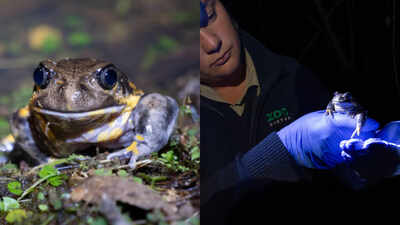










The mystery behind the collapse of various civilisations has troubled scientists to this day. The fall of the Indus Valley Civilisation is still not certain, the most we have are multiple theories around it. Similar is the case with the tale behind evolution, decline and extinction of a few animal species that disappeared in mysterious circumstances within a very short period. The curiosity around these organisms have led the scientists to keep studying their lives even today. The discovery of new species in the current times indicate how nature has a way to stay concealed from humans. One such 50-year-old mystery was unfolded by the scientists about frogs in Brazil’s Atlantic Forest. The population of these frogs declined dramatically between 1979 and 1982 but until now, nobody knew why it happened.The scientists struggled to explain why frogs began disappearing from Brazil’s Atlantic Forest which is actually one of the world’s richest regions for amphibian diversity. The findings published in Molecular Ecology have uncovered evidence that has linked these disappearances to a deadly fungal disease. The study was conducted by researchers at the Center for Conservation Genomics at the Smithsonian’s National Zoo and Conservation Biology Institute (NZCBI) and Pennsylvania State University (PSU).
Who’s behind the decline?
Long after the frogs started to decline, a fungus believed to have originated in Asia was formally identified and described in 1999. This microscopic fungus named Batrachochytrium dendrobatidis caused the disease chytridiomycosis, often called chytrid, which is said to be the cause behind the declining frog populations. The pathogen spread in the world during the 1970s and 1980s which led to the beginning of extinction of hundreds of amphibian species around the world. The absence of knowledge about the existence of the pathogen and its late discovery led to difficulty in determining whether it was responsible for these events.
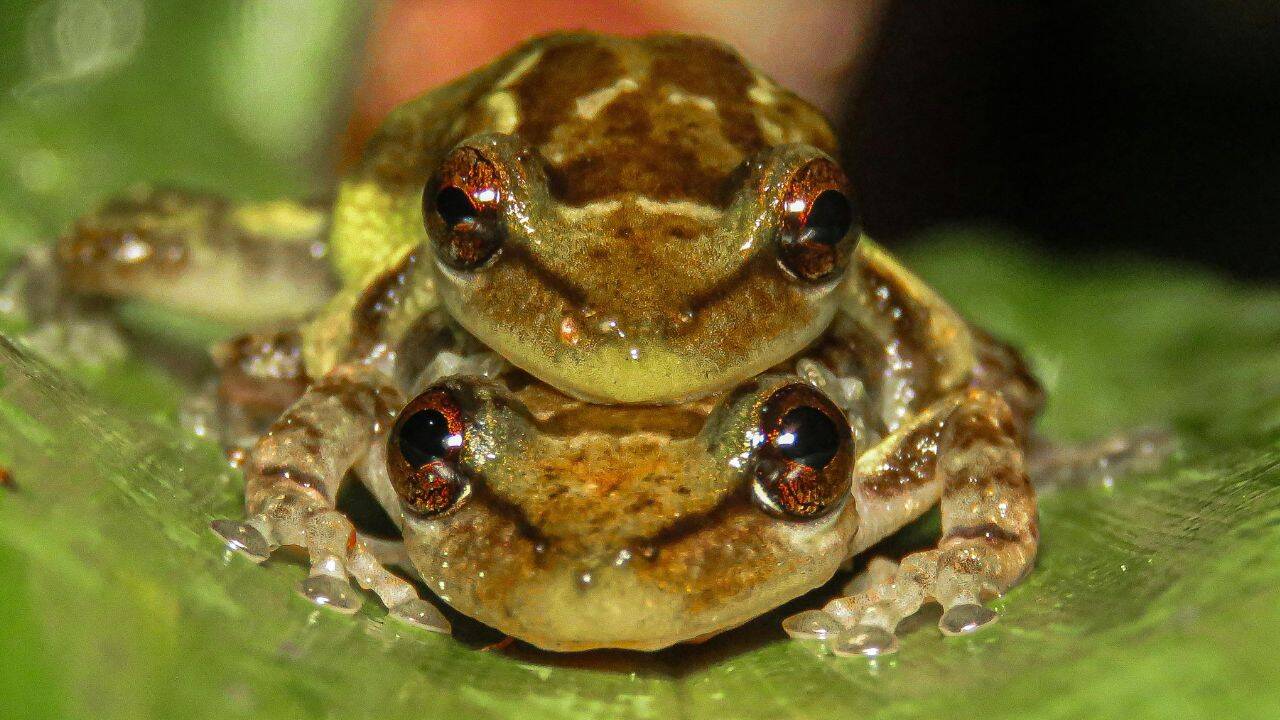
(Image Credit: Canva)
Before the discovery of the fungus, some researchers suggested that environmental factors such as climate change or unusually extreme weather might have triggered the declines.Jack Boyette, an NZCBI graduate fellow and doctoral candidate at PSU who led the research told the Science Direct that “While environmental factors could have played a role, our findings most directly implicate the chytrid fungus, revealing that regional invasion of the pathogen coincided with these unexplained amphibian disappearances.”The sample for the research were the preserved frogs housed in The Smithsonian’s National Museum of Natural History. These preserved specimens offered an opportunity to examine the conditions before and after the disappearance events. It helped them track the arrival and spread of the fungus in the forest. More than 370 preserved frogs from 17 species were analysed during the study which aimed to search for spread of chytrid infection and the frequency of its spread.
Interesting patterns
The blame was not easily implied to the pathogen when interesting patterns emerged after research. It was revealed that chytrid infection was not observed in specimens collected before 1979. However, in samples from the 1980s more than half tested positive for the fungus. The intriguing fact was that the species which showed the presence of the fungus were the ones whose populations did not decline drastically. Rather, the ones which did not show detectable signs of infection were the ones that suffered the most severe declines.This contradiction is explained by the scientists by concluding that the frogs that were naturally capable of tolerating the infection were able to survive even when the fungus attacked. While others that were more vulnerable could not adapt and hence, few or no infected individuals could ever be collected. Thus, due to the absence of exposure to the fungus and the disease before, chytrid spread rapidly bringing devastating effects for the amphibian species.The latest surveys at Brazil’s Boracéia Biological Station offer a rare glimmer of hope for amphibians. Between 2022 and 2024, researchers from the University of São Paulo revisited the site six times to compare its present-day frog population with historical museum records. Of the 17 species documented in the collection, 12 were found during the new surveys, while the remaining five could not be located. The results suggest that most local amphibian populations have recovered from the devastating declines of the early 1980s, when the chytrid fungus swept through the region. Interestingly, the fungus is still present, but some frog species may have gradually developed greater tolerance to the infection, allowing them to survive despite continued exposure.However, the findings of this discovery are being cautioned to be applied to this particular location. A generalisation of the results is not advisable and cannot automatically explain other disappearances of amphibian populations. Scientists are continuing the investigation into understanding the specifics around the discovery. Researchers are now examining DNA from preserved museum specimens to understand why certain species were more vulnerable while others managed to survive.