





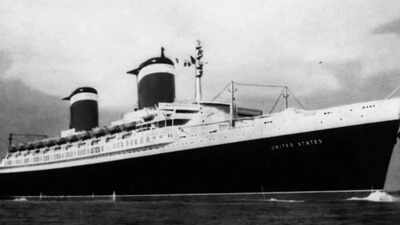
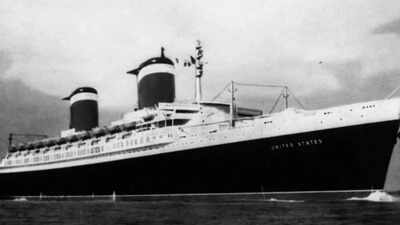
A historic US ocean liner, once the fastest passenger ship in the world, was deliberately sunk in the Gulf of Mexico on Wednesday to create what is expected to become the world’s largest artificial reef.The 990-foot SS United States, which is 108 feet longer than the Titanic, was taken underwater in a controlled operation off the coast of Florida. The $13.5 million project is aimed at turning the former luxury liner into a major destination for divers and fishing enthusiasts, while creating a marine habitat for species such as tuna, marlin and swordfish.The sinking took longer than expected, with much of the ship still visible above the water hours after the operation began. The vessel finally leaned to one side and submerged at around 9 pm local time.“She is an amazing lady who will not lay down without a fight,” Coleen O’Malley, president of Coleen Marine, the company overseeing the sinking, said before the ship disappeared beneath the surface, as quoted by Associated Press. “Much like the amazing nation she was named after.”Officials said the process took longer partly because crews had to fill 128 fuel and lubricant tanks with water to ensure the ship would settle evenly on the ocean floor. “She’s a big ship,” said Nick Tomecek, a spokesperson for Okaloosa County, which helped organise the project.
How was the ship sunk?
The sinking was carried out without explosives, which officials said could not be used because of federal environmental and explosives regulations. Instead, crews opened the ship’s seawater intake system to allow water to flood its hull.Workers had also cut 10-foot-by-10-foot openings in the decks and removed more than 400 portholes in preparation for the operation. The ship is expected to rest in around 180 feet of water, with its top deck approximately 60 feet below the surface, making it accessible to divers.The site is around 25 miles southwest of Destin, Florida, in an area that already has more than 500 artificial reefs.The previous largest artificial reef in the region was the USS Oriskany, a 911-foot aircraft carrier deliberately sunk off Pensacola in 2006. Officials said experienced divers could potentially visit both wrecks in a single day.“We’re trying to be the best diving destination in the world,” Tomecek said.
Why was the SS United States famous?
The ship was a technological marvel when it made its maiden voyage in 1952. Built by more than 3,000 workers in Virginia, it carried around 1,700 passengers on its first Atlantic crossing, including Margaret Truman, daughter of then US President Harry Truman.During that voyage, it averaged nearly 41 mph (66 kph), breaking the speed record held by Britain’s RMS Queen Mary since 1938. The record was set despite the ship encountering a gale with winds reaching 69 mph.At 990 feet, the liner was longer than the Titanic, which sank after hitting an iceberg during its maiden voyage in 1912. Over its career, the SS United States crossed the Atlantic more than 800 times and carried prominent passengers, including Hollywood stars Grace Kelly and Elizabeth Taylor, and presidents Harry Truman, Dwight Eisenhower and John F. Kennedy. A young Bill Clinton also travelled aboard the ship in 1968 on his way to Oxford University.Passengers were once served elaborate meals, including caviar, roast duckling and smoked ox tongue.“She really embodies and expresses this country’s best,” said Susan Gibbs, the granddaughter of the ship’s designer. “She represents pride and resilience and strength and beauty.”The SS United States was decommissioned in 1969. Later efforts to convert it into a hotel or put it to other commercial uses failed, and it remained docked in Philadelphia from 1996 until recently.The reef project was intended to preserve the vessel rather than see it dismantled for scrap. As part of the preparations, its two 65-foot smokestacks were removed and are expected to become the centrepiece of a museum dedicated to the ship.