








Kate Walsh is using her platform as an actor and ocean advocate to push for stronger protection of the world’s seas, backing the global goal of conserving at least 30% of ocean areas by 2030. Private Practice”, a spin-off of “Grey’s Anatomy” star, has worked with Oceana for years, with her interest in marine conservation rooted in her childhood in northern California. She has travelled with the organisation to support ocean campaigns and has spoken out against threats including offshore drilling. The 30×30 target was agreed by countries in 2022, but the world is now struggling to expand protection quickly enough, with only about 10% of the ocean officially protected or conserved.
Kate Walsh has supported ocean conservation for more than a decade
Walsh’s connection with ocean conservation began long before the current 30×30 campaign. According to Oceana, she grew up in northern California and spent considerable time at the beach, even imagining as a child that she might become a marine biologist. Her work with Oceana began with a 2009 trip to the US Virgin Islands, where she swam with sea turtles and appeared in a public service announcement highlighting threats to the animals. She later travelled to Belize to support efforts to protect its barrier reef and joined campaigns against offshore drilling.
Why the 30% ocean protection target matters
The 30×30 target was adopted under the Kunming-Montreal Global Biodiversity Framework in 2022, committing countries to conserve at least 30% of the world’s land, freshwater and ocean by 2030. The goal is intended to protect biodiversity while strengthening ecosystems that support people and coastal communities. Oceans cover more than 70% of Earth’s surface and play a major role in regulating the climate, supporting fisheries and providing habitats for marine life. Oceana has also urged world leaders to deliver on the 30% ocean commitment by 2030.

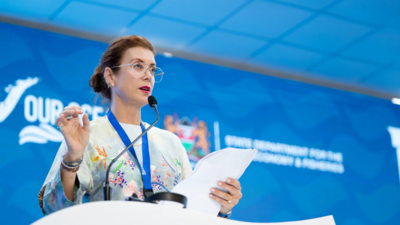
Kate Walsh arrives at Jomvu Kuu Women in Fisheries. Image Credit: Franz Mahr/Oceana
Only 10% of the world’s ocean is currently protected
The latest figures from the UN show just how far the world still has to go. The UN says 10.01% of the global ocean was designated as protected or conserved as of April 2026, meaning coverage must roughly triple in the remaining years before 2030. The milestone came after the world missed an earlier commitment to protect 10% of marine areas by 2020. While millions of square kilometres have been added to protected areas in recent years, the pace remains insufficient to reach the 30% target without a major acceleration.
The biggest problem is that protection does not always mean effective protection
Simply designating an area as protected does not guarantee that marine life is actually safeguarded. A 2026 Ocean Protection Gap Report found that while around 10% of the global ocean is designated as protected or conserved, only about 3.5% is assessed as effectively protected. Destructive activities can continue in some areas counted towards conservation targets, making management, enforcement and monitoring crucial. The report also found that existing national commitments would bring marine protection to only around 12% by 2030 if fully delivered, leaving a substantial gap to the 30% ambition.
High seas remain one of the hardest areas to protect
A major challenge lies beyond national borders. The high seas account for more than 60% of the ocean, yet only about 1.66% is covered by protected or conserved areas. The UN-backed Agreement on Marine Biological Diversity of Areas Beyond National Jurisdiction, commonly known as the High Seas Treaty, entered into force in January 2026 and provides a framework for establishing protected areas in international waters. Conservation groups see the treaty as an important opportunity to accelerate progress towards 30×30, particularly because so much of the ocean lies outside individual countries’ jurisdiction.
Kate Walsh is calling for faster action before 2030
Walsh’s advocacy comes as governments face growing pressure to turn the 30×30 pledge into measurable conservation on the water. Her work with Oceana has included campaigns focused on marine habitats, sea turtles, coral reefs and offshore drilling, reflecting a broader effort to make ocean protection a public issue. The challenge now extends beyond announcing new protected areas, governments need to increase their ambitions, properly manage existing sites and secure the financing required for long-term conservation. With only four years remaining until 2030, the gap between the 30% goal and current protection levels remains substantial.