







A Scottish biotech company is trying to solve a problem at the heart of the global omega-3 supply chain: the fact that most omega-3 fatty acids used in pet food, aquaculture feed and human supplements still come from wild-caught fish, even though fish do not actually produce these fatty acids themselves. MiAlgae, founded in Edinburgh in 2016, has developed a fermentation process that grows omega-3-rich microalgae directly, feeding the algae nutrient-rich liquid byproducts from Scotch whisky production rather than relying on wild fish stocks at all. The company is now scaling up from a demonstration site to full commercial production, with backing from both the UK and Scottish governments, as it tries to chip away at a supply chain that has long depended on stripping omega-3s out of the ocean food web.
Why fish were never really the source of omega-3s to begin with
The starting insight behind MiAlgae’s approach is fairly simple once explained. According to Douglas Martin, the company’s founder and chief executive, fish do not naturally produce omega-3 fatty acids themselves; they accumulate them by eating microalgae, meaning the algae were always the actual source all along. Farmed fish are frequently fed wild-caught forage fish specifically to pass these fatty acids up the food chain before eventually reaching consumers, a process MiAlgae has described as inefficient and extractive, since it requires catching large volumes of wild fish simply to concentrate a compound that smaller organisms produced in the first place.By cultivating the algae directly and extracting omega-3s from it without ever routing the process through a fish, MiAlgae aims to bypass several inefficient steps in the traditional supply chain entirely. According to the Scottish Government, the company’s process is estimated to save roughly 30 tonnes of fish for every tonne of algae produced, a ratio that reflects just how much wild-caught biomass is normally required to concentrate a comparatively small quantity of usable omega-3 oil.
Why whisky waste turned out to be the key ingredient
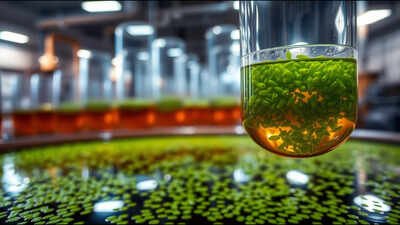
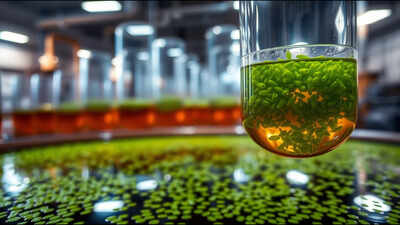
Growing algae at any meaningful scale has traditionally been expensive, since feeding algae on high-grade nutrient sources makes the resulting product too costly to compete with cheap wild fish oil on price. MiAlgae’s solution was to instead feed its algae on liquid byproducts from Scotch whisky distilleries, an industrial waste stream that is abundant, low cost and, crucially, already concentrated in Scotland’s Central Belt, close to where the company operates.According to MiAlgae’s own account of its process, whisky production generates a liquid byproduct with roughly 8 per cent alcohol content, sometimes described as a beer, from which distillers first extract the alcohol before the remaining nutrient-rich liquid becomes available. That leftover liquid, along with other supplementary ingredients, is fed into large stainless steel fermentation tanks where a small starting culture of algae cells is allowed to grow and multiply, in a process the company has compared directly to brewing.
How the company is scaling from demonstration to commercial production
MiAlgae’s approach has progressed from proof of concept to serious industrial investment over the past several years. The company successfully launched a demonstrator site in 2023 based at Heriot-Watt University facilities in Edinburgh, validating its core fermentation process before pursuing full commercialisation. That validation has since translated into significant government backing, with the UK and Scottish governments jointly committing £3 million toward MiAlgae’s new commercial-scale manufacturing facility at Grangemouth, according to a UK government announcement, forming part of a wider effort to transform the former oil refinery town into a hub for low-carbon technology and green jobs.According to the Scottish Government, this funding is expected to support roughly 310 jobs over the next five years and contribute an estimated £53 million to the Scottish economy over the same period, while the new Grangemouth facility is designed to increase MiAlgae’s production capacity more than tenfold compared to its existing operations.
What MiAlgae’s product is actually used for today
For now, MiAlgae’s primary market is pet food rather than human supplements or fish farming, though the company has aquaculture customers in its pipeline as well. According to Euronews, the finished product is dried algae, bagged and shipped directly to aquafeed and pet food manufacturers as a drop-in substitute for wild fish-based omega-3 ingredients, allowing existing manufacturers to swap ingredients without needing to redesign their broader production processes.Even with its new Grangemouth facility coming online, Martin has been candid that MiAlgae’s current output remains modest relative to total global demand for omega-3s, describing the company’s planned production volume as a good start but still a drop in the bucket within the broader omega-3 market, underlining just how large the gap remains between current algae based supply and the scale still dominated by wild caught fish oil.
Why this approach matters for pressure on wild fish stocks
Global demand for omega-3 fatty acids continues to grow steadily, driven by well-documented health benefits for heart, joint, skin and cognitive function in both humans and pets, but that demand has historically been met largely by harvesting wild fish stocks that are already under mounting pressure from overfishing. By building a supply chain that draws on an existing industrial waste stream rather than the ocean food web, MiAlgae represents one of a small but growing number of companies attempting to decouple the global omega-3 supply from wild fisheries altogether.Whether approaches like this can scale quickly enough to meaningfully shift an industry still overwhelmingly reliant on fish oil remains an open question, but MiAlgae’s progression from a university-backed demonstration project to a government-funded commercial facility offers a concrete example of how industrial byproducts, in this case one closely tied to Scotland’s whisky industry, can be redirected toward solving an entirely different environmental problem.