




![Sigma Full Movie Collection: ‘Sigma’ box office collection day 1 [LIVE]: Vijay’s Jason Sajay’s directorial debut with Sundeep Kishan off to decent theatrical run | Tamil Movie News](https://bekhabarnewss.in/wp-content/uploads/2026/10/sigma-150x150.jpg "Sigma Full Movie Collection: ‘Sigma’ box office collection day 1 [LIVE]: Vijay’s Jason Sajay’s directorial debut with Sundeep Kishan off to decent theatrical run | Tamil Movie News")




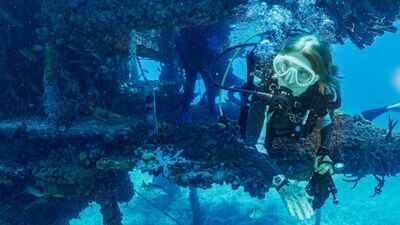
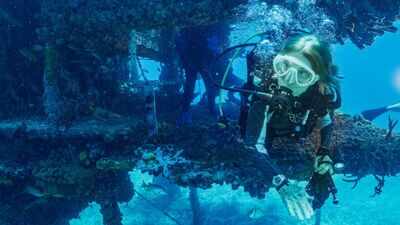
The sea can feel distant even to people who live hundreds of miles from a coastline. It sits beyond the horizon, beneath ships and far below the surface, largely hidden from ordinary view. Sylvia Earle spent much of her life trying to make that hidden world less remote. Born in New Jersey in 1935, she grew from a child fascinated by wild plants and animals into a marine biologist, deep-sea explorer, inventor and conservationist. Her career unfolded alongside major changes in underwater technology, allowing her to spend thousands of hours beneath the surface. She lived in an underwater habitat, explored the deep sea in submersibles and became the first woman to serve as chief scientist of the US National Oceanic and Atmospheric Administration.
Sylvia Earle’s childhood love of nature led her to marine science
Sylvia Earle was born on August 30, 1935, in Gibbstown, New Jersey. Her early surroundings were not especially exotic. Her family lived on a small farm near Camden, where she spent time outside exploring woods and paying attention to the plants and animals around her.Her parents had not attended university, but they shared an interest in nature. They encouraged their daughter to treat unfamiliar creatures with curiosity rather than fear. When she was 13, the family moved to Clearwater, Florida, placing her close to the Gulf of Mexico. Earle began spending more time studying the coast and its wildlife, and the ocean gradually became the natural world she most wanted to understand. Earle attended Florida State University and supported herself in part through laboratory work.
Sylvia Earle took her marine biology research beyond the laboratory
Earle chose botany as her speciality, concentrating on marine plants and the role vegetation plays within an ecosystem. She later completed postgraduate study at Duke University, earning a master’s degree and, in 1966, a doctorate.Her doctoral research examined the brown algae of the eastern Gulf of Mexico. Earle was interested not merely in identifying organisms but in understanding the communities in which they existed. Her scientific career was already developing while she was raising a family. In 1964, when her children were two and four, she spent six weeks aboard a National Science Foundation expedition in the Indian Ocean. After completing her doctorate, Earle worked as a research fellow at Harvard before becoming resident director of the Cape Haze Marine Laboratory in Florida. In 1968, she descended roughly 100 feet in the Bahamas aboard the submersible Deep Diver. She was four months pregnant at the time.
The underwater laboratory that put her in the public eye
By the end of the 1960s, Earle had already accumulated more than 1,000 hours underwater. She applied to take part in Tektite, an ambitious project that placed scientists in an underwater habitat off the Virgin Islands.The project had several purposes. Scientists could study marine environments while living beneath the surface for extended periods, while NASA was also interested in what the experience might reveal about people living and working in isolated environments. NOAA’s historical records describe Tektite II as an important stage in the development of underwater habitats and saturation diving.In 1970, Earle led an all-female team of five scientists in Mission 6. The women spent two weeks in the underwater habitat, around 50 feet below the surface near St John in the US Virgin Islands. NOAA records the group as the first all-female saturation team associated with the programme.Life inside the habitat was not quite the austere experiment that might be imagined. There were bedrooms, a kitchen, a shower, a television and laboratory equipment. The surrounding ocean, however, was the main attraction. Earle later described spending long stretches outside, watching fish and other marine creatures move through the changing light. The Tektite II mission attracted considerable attention, and the scientists suddenly found themselves being discussed outside specialist circles. There were public appearances, a White House reception and a ticker-tape parade.
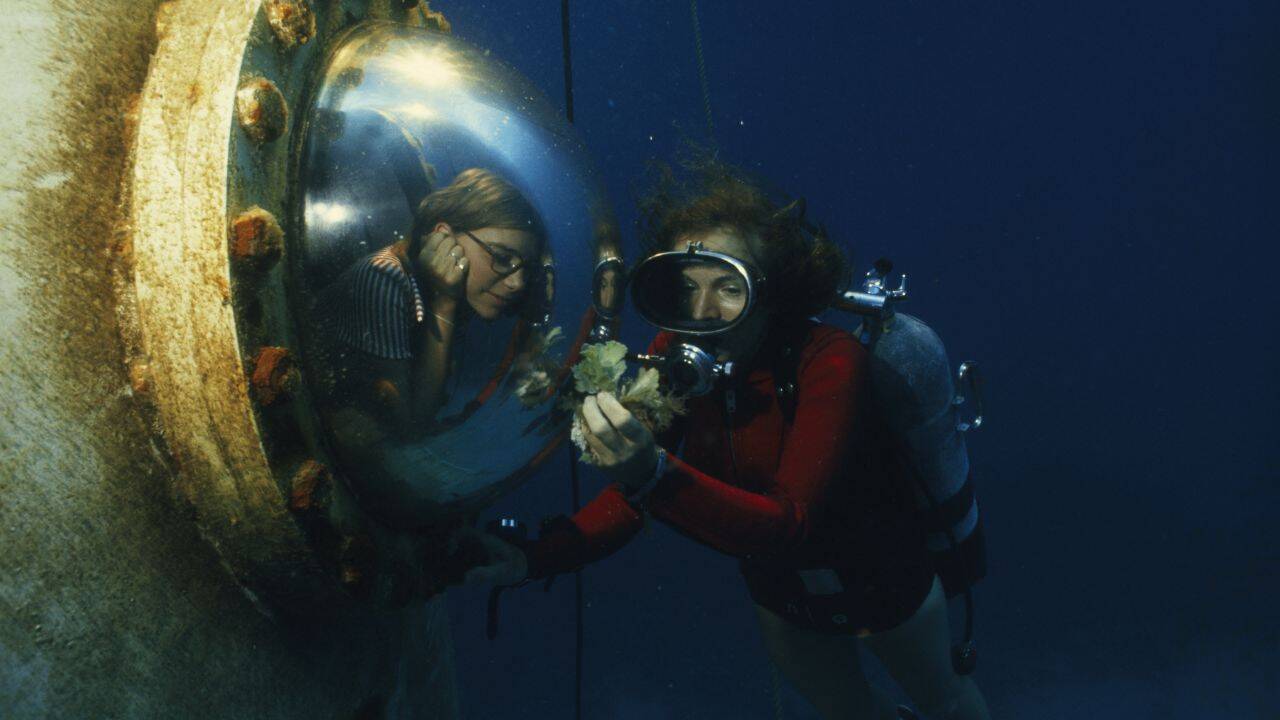
PC: National Geographic
The dive that took her 1,250 feet down
As reported by Academy of Achievement, one of Earle’s most unusual expeditions came in 1979, when she descended to 1,250 feet beneath the surface near Oahu, Hawaii. She was wearing a Jim suit, a rigid, pressurised diving suit designed to maintain roughly one-atmosphere pressure around the diver. Rather than remaining attached to the submersible, Earle left the vessel and walked across the sea floor.For about two and a half hours, she moved independently at a depth that was extraordinary for a human being at the time. A communications line connected her to the submersible, but there was no ordinary physical connection between herself and the surface.She later wrote about the experience in Exploring the Deep Frontier, published in 1980. The expedition illustrated something that had become increasingly important in her career: the machinery used to reach the ocean was not simply transportation. It determined what scientists could see, touch and investigate.
Sylvia Earle turned ocean exploration into underwater technology
Earle’s interest in technology eventually became a business venture. In the 1980s, she and engineer Graham Hawkes established Deep Ocean Engineering and Deep Ocean Technologies.The companies worked on remotely operated and human-occupied underwater vehicles, including Deep Rover and Deep Flight. The idea was straightforward enough: if researchers could not safely or practically reach certain depths themselves, machines could extend their reach.Deep Rover became an important example of that approach. Developed with collaborators including Can-Dive and supported by Canadian government funding, it was launched in Halifax in 1984. Scientific dives followed, including work around Monterey Canyon in California. Earle’s career had come full circle in an unusual way. The young scientist who had wanted to see marine life directly was now helping develop the equipment that could make deeper observation possible.
A government role brought the condition of the sea into sharper focus
In the early 1990s, Earle stepped away temporarily from her companies to serve as chief scientist of the National Oceanic and Atmospheric Administration.She was involved in monitoring the health of US waters and also reported on environmental damage associated with the burning of Kuwaiti oil fields during the Gulf War. Her appointment was significant in another respect: Earle became the first woman to serve as NOAA’s chief scientist.
Sylvia Earle turned ocean exploration into a global conservation mission
Earle later established the Sylvia Earle Alliance and Mission Blue, an organisation centred on ocean protection. The idea of identifying important marine areas and giving them stronger protection became one of the defining features of her conservation work.In 2009, she received the TED Prize, using the platform to call for a worldwide network of protected marine areas. She refers to these places as “Hope Spots” — areas considered important to the health of the ocean and worthy of focused conservation efforts.Her work has continued well beyond the period when most people would consider an exploration career complete. In 2016, at 81, she returned to the water to study deep coral reefs near Oahu. By then, she had logged more than 7,000 hours underwater and led more than 80 expeditions, according to the American Academy of Achievement.She has also held the position of Explorer-in-Residence at the National Geographic Society and was involved in the Google Ocean Advisory Council, helping provide scientific oversight for ocean content in Google Earth.