







![Mirzapur: The Movie Full Movie Collection: ‘Mirzapur: The Movie’ box office collection Day 2 [LIVE]: Pankaj Tripathi, Ravi Kishan, and Ali Fazal starrer is set to cross Rs 45 crore on second day | Hindi Movie News](https://bekhabarnewss.in/wp-content/uploads/2026/09/mirzapur-the-movie-box-office-collection-day-2-live-pankaj-tripathi-ravi-kishan-and-ali-fazal-starrer-is-set-to-cross-rs-45-crore-on-second-day-150x150.jpg "Mirzapur: The Movie Full Movie Collection: ‘Mirzapur: The Movie’ box office collection Day 2 [LIVE]: Pankaj Tripathi, Ravi Kishan, and Ali Fazal starrer is set to cross Rs 45 crore on second day | Hindi Movie News")
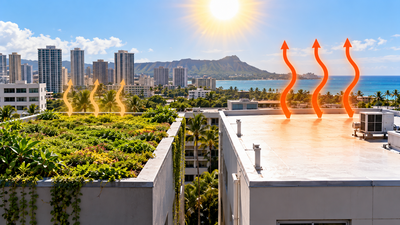
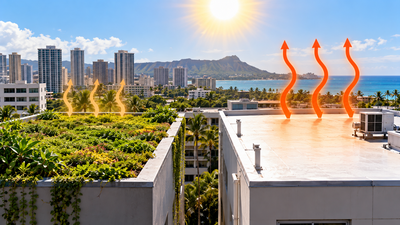
In 2018, a University of Hawaii study in Honolulu found that a planted green roof could stay noticeably cooler than a conventional white roof, particularly during the hottest part of the day. The research compared an existing white rooftop with a green roof covered in sedum plants, recording temperatures at the roof surface and in the air above it over 36 consecutive days. The results showed a clear difference: the green roof’s average daytime surface temperature was 4.1°F lower than that of the white roof, while its peak temperature was 18.5°F lower. The cooling effect was also detected in the air immediately above the roof, where temperatures 2 ft above the green surface averaged 3.4°F lower during the day. The findings suggest that vegetation can help limit rooftop heat and moderate nearby air temperatures, offering another possible way to tackle Honolulu’s urban heat island effect in cities and dense neighbourhoods.
How much cooler was the green roof than the white roof
The comparison showed that the green roof remained cooler than the white roof, particularly during daylight hours. According to a 2018 project report by University of Hawai’i graduate student Elizabeth Dionne, the white roof had an average daytime surface temperature of 86.7°F (30.4°C), while the green roof averaged 82.6°F (28.1°C). This represented a 4.1°F difference, while over the full 24-hour period the average temperatures were 82°F for the white roof and 80°F for the green roof.The difference became much more striking when peak temperatures were examined. The white roof reached a peak of 113°F, compared with 94.5°F on the green roof, giving a difference of 18.5°F. The report also found that the white roof experienced an average daily temperature fluctuation of 24.9°F, whereas the green roof fluctuated by only 14.1°F. In other words, the planted roof not only reached a lower peak but also experienced less dramatic changes in temperature throughout the day.
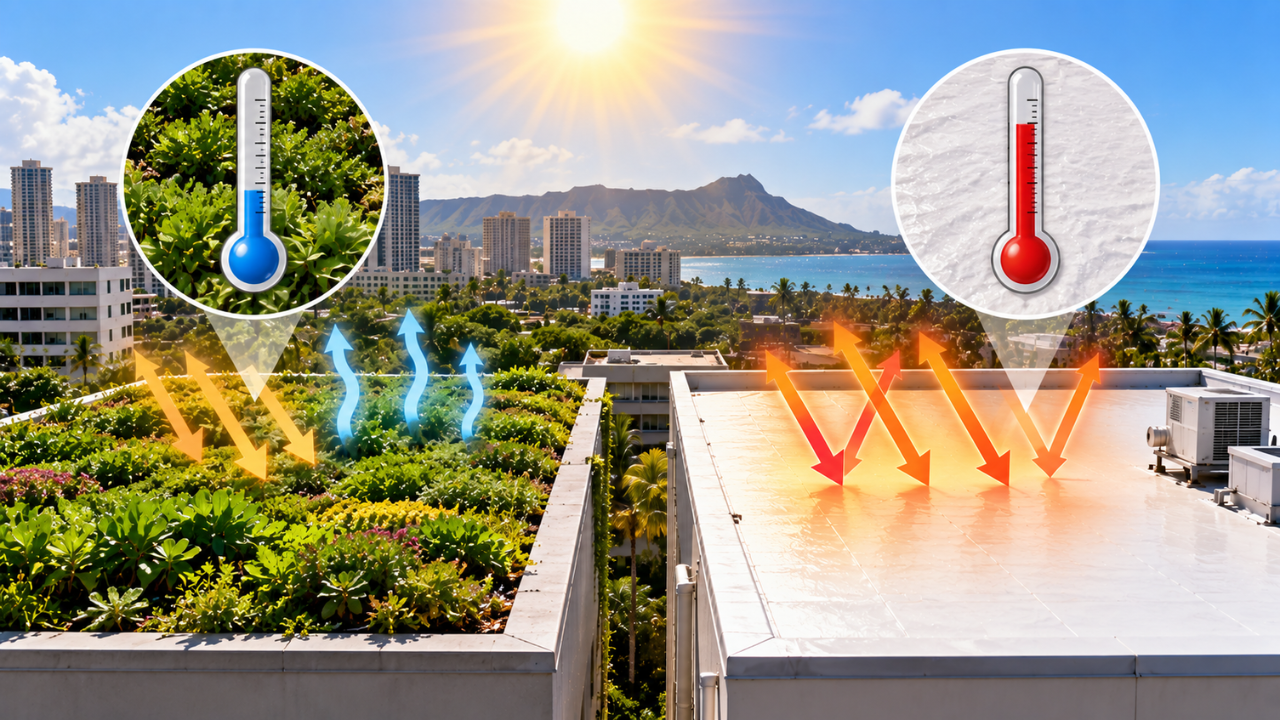
Image AI generated
How the green roof reduced heat
Several features of the green roof contributed to its cooling effect. Plants release water through evapotranspiration, a process in which water taken up by the roots is released through the leaves. The report explains that evaporation from the leaves has a cooling effect on the surrounding air. The vegetation and growing medium also helped change how heat was absorbed and transferred through the roof.The timing of the daily heat peak provided another indication that the green roof responded differently to sunlight. The white roof reached its highest temperatures between 12:30 and 13:00, while the green roof reached its peak between 14:00 and 15:00. According to the report, this one- to three-hour delay showed that the green roof had “thermal inertia”. Dionne linked this delayed response to the insulating properties of the green roof soil, which could help reduce the amount of heat transferred into a building.
The green roof cooled nearby air during the day
The study not only found cooler temperatures on the roof surface. The air immediately above the green roof was also cooler during the daytime. At 2 ft above the roof, the green roof recorded an average daytime temperature of 82.2°F, compared with 85.6°F above the white roof, a difference of 3.4°F. Over 24 hours, the difference at this height was 2.5°F.However, the cooling effect became much less noticeable higher above the roof. At 4 ft, the average daytime temperatures were almost identical: 82.9°F above the green roof and 82.8°F above the white roof. The researchers also found no discernible difference between the roofs at night in the main surface measurements. Overall, the report concluded that green roofs could provide a measurable reduction in daytime surface and nearby air temperatures, while noting that further research using more vegetation and different or deeper growing media would be needed to explore their full potential.