






Beneath the extremely dry surface of Chile’s Atacama Desert, scientists discovered a functional community of microorganisms that challenges what we thought possible for life. While the ground above remains one of Earth’s harshest environments, a ‘hidden oasis’ lies about two meters down, protected from high solar irradiance and complete dryness. This underground community mainly consists of unique bacteria that obtain moisture crucial for survival from minerals. Researchers used cutting-edge DNA sequencing and geochemical techniques to make this finding. Their work shows life can thrive without any connection to the surface. This revelation not only changes our view on where life can exist on Earth but also offers valuable insights for searching for similar forms of life on Mars or other barren planets.
Scientists discover secret underground life 2 meters beneath Chile’s Atacama Desert
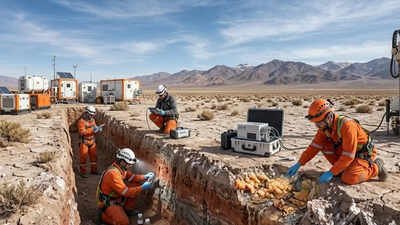
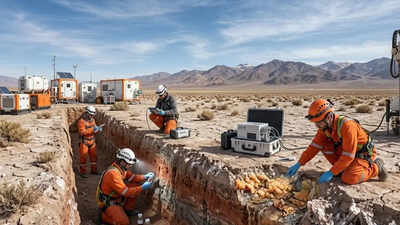
As noted in the journal PNAS Nexus, in the Yungay Valley, a team of scientists uncovered a wide variety of microbes living two meters below the surface. This area is the driest part of the Atacama Desert. Surface organisms depend on rare rainfall, but these underground microbes don’t rely on the atmosphere at all. Researchers used advanced molecular tools to show that these bacteria aren’t just inactive spores. Instead, they form a metabolically active and functioning ecosystem that thrives in constant darkness.
How gypsum pores sustain life for oasis
The survival of this hidden oasis is made possible by the presence of vesicular gypsum. This mineral has tiny pores that capture bits of water, serving as a storage site for microbes. According to the journal PNAS Nexus, Actinobacteriota bacteria, which are extremotolerant taxa, make up most of this community. They learned how to use the mineral-bound moisture, letting them live in places once thought barren.
Why scientists are looking beneath the Martian surface
This finding gives us a clear example on Earth for exploring Mars. Mars has harsh conditions with deadly radiation and freezing temperatures, so scientists think that any life there would probably exist below the surface, like what we see in the Atacama oasis. Discovering habitable spaces two meters beneath Earth’s most Mars-like area indicates a paradigm shift. Future planetary missions should focus on subsurface sampling to search for signs of life beyond our planet.
Team used salt and water chemistry to trace ancient life
The research team took steps to rule out surface contamination as the cause of their findings. They used both ‘Genomics’ and ‘Geochemistry’ methods for this purpose. As noted in the journal PNAS Nexus, by examining salt levels and determining the age of water trapped in minerals, they concluded that these microbes had been present in the soil for geological timescales. Their presence was not influenced by current surface climate conditions.