









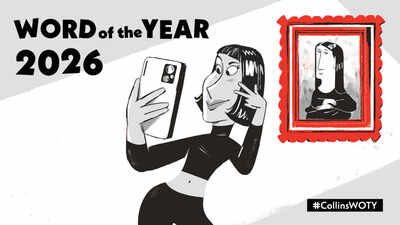
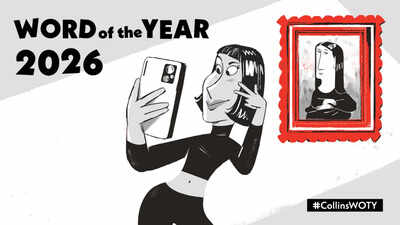
From gym-floor comparisons to viral social media conversations, ‘mogging’ has travelled a long way. Collins Dictionary’s choice reflects how a generation raised on internet culture is changing the way people speak, compare and express themselves.There was a time when being the best-dressed person at a party, having the most impressive physique in the gym or simply commanding attention in a room was enough to establish one’s place in the social pecking order. Today, the internet has found a much shorter way of describing the experience of being outshone. It is called ‘mogging’, and the expression has become so popular that it has earned one of the year’s most recognised linguistic distinctions.Collins English Dictionary has selected ‘mogging’ as its Word of the Year for 2026, drawing attention to the extraordinary journey of a piece of internet slang that has moved from niche online circles into mainstream conversations. Its popularity has been particularly pronounced among Gen Z and Gen Alpha, for whom social media is not merely a platform for communication but also a powerful source of everyday vocabulary.The scale of its popularity is reflected in usage figures. According to the Associated Press, the term witnessed a 210% increase in usage this year. The announcement was made on November 3, offering another indication of how quickly expressions born in digital communities can find acceptance in wider English usage.But what makes this particular word interesting is not just its popularity. It is the way its meaning has expanded, transforming a term once associated with physical dominance into an expression that can describe almost any situation involving one person or thing outshining another.
From the gym to the internet’s vocabulary: The evolution of mogging
The story of mogging begins in a rather different setting from the social media feeds where it is now commonly encountered.Its linguistic roots are linked to AMOG, an abbreviation for ‘alpha male of the group’. The expression began circulating around 2016, initially finding an audience in bodybuilding communities. It was used to describe the physically dominant man in a group, particularly someone whose physique made others appear less imposing by comparison.The term gradually found its way into online manosphere spaces, where discussions about masculinity, physical appearance and social hierarchies helped popularise it. Over time, the original association with muscularity and physical dominance began to loosen.The internet gave the word a much wider playground. What was once largely used to compare physical attributes became a convenient way to describe superiority in almost any context. A person could mog another through their appearance, confidence, performance or fashion choices. Eventually, even objects and experiences entered the conversation.This evolution is central to understanding why the expression has caught on. Internet language rarely remains confined to the circumstances in which it originates. Users borrow, reshape and repurpose words until they acquire meanings that extend far beyond their original communities.
More than physical appearance: What does mogging actually describe?
In its present usage, mogging essentially means outshining or outperforming someone or something. Collins Dictionary recognises the expression in this broader sense.Imagine two people arriving at an event. Both have spent considerable time getting ready, but one effortlessly attracts attention because of their appearance and confidence. In internet terminology, that person is mogging the other.The same expression can be applied to a student who performs exceptionally well in an examination, an athlete who delivers a remarkable performance, or a new technological product that makes its predecessor seem outdated.Its appeal also comes from its flexibility. Unlike conventional expressions such as “outperforming,” “overshadowing,” or “surpassing,” “mogging” carries a distinctly internet-driven tone. It can be used to make a serious comparison, but it is equally suited to exaggeration, humour and friendly teasing.That is perhaps why it has become particularly popular in informal online conversations. It allows users to communicate an entire comparison through a single word.
How mogging has entered everyday conversations
The expression’s growing popularity can be understood through the situations in which people use it. Its meaning is not restricted to a particular age group, activity or setting.Consider a few examples:
- Fashion and personal style: When a friend turns up in an exceptionally stylish outfit, someone might jokingly remark, “You’re mogging everyone with that look.”
- Social gatherings: A person who effortlessly becomes the centre of attention could be described as mogging the room.
- Fitness and sports: When a gym partner lifts heavier weights or an athlete delivers a superior performance, the person outperforming others is said to be mogging them.
- Entertainment and technology: A newly released video game that surpasses an older title in popularity or performance can be described as mogging its predecessor.
- Food and creativity: Even a simple comparison between two homemade dishes can invite the expression. A sibling’s quick dessert outshining an elaborate cake becomes another opportunity to use the word.
The common thread running through these examples is comparison. Something or someone stands out so distinctly that everything else appears less impressive in contrast.
From ghost jobs to P(doom): What Collins Dictionary’s shortlist says about 2026
The selection of mogging was not an isolated reflection of internet culture. The other expressions on Collins Dictionary’s 2026 shortlist reveal a much wider range of social and technological concerns.Several terms draw attention to changing workplace realities. ‘Ghost job’, for instance, describes a vacancy advertised by an organisation despite there being no genuine intention to fill the position. The expression reflects a growing concern among job seekers navigating online recruitment platforms.Technology, particularly artificial intelligence, also finds representation through ‘P(doom)’. The term refers to an estimate of the probability of a catastrophic outcome, especially in discussions about the potential risks associated with AI.Climate-related vocabulary features through ‘firewave’, describing a prolonged or intense period of extreme heat. ‘Carspreading’ draws attention to the growing amount of urban space occupied by cars, while ‘hydration break’ refers to a pause for drinking water, particularly during physical activity or hot weather.The shortlist also captures lighter aspects of contemporary culture. ‘Friendslop’ describes deliberately silly or low-quality content circulated among friends for amusement. ‘Fricy’ combines fruity and spicy flavours, while ‘bixie’ refers to a hairstyle that brings together elements of the bob and pixie cuts.Taken together, these expressions offer a glimpse into the conversations shaping contemporary society. Employment uncertainty, climate concerns, artificial intelligence, changing lifestyles and internet humour are all finding their way into the language people use.
Why the rise of internet slang matters
The popularity of mogging reflects a fundamental change in the way new words enter mainstream language. Dictionaries have traditionally documented expressions after they have established themselves through sustained usage. Today, social media can accelerate that journey considerably.A phrase that begins within a small online community can quickly become recognisable across countries and age groups. Memes, short-form videos, influencers and digital conversations give such expressions an audience that traditional channels of communication could rarely reach at the same speed.More importantly, younger generations are not simply adopting existing vocabulary. They are actively reshaping it, giving familiar words new meanings and creating expressions that capture experiences in ways conventional language sometimes cannot.Mogging is a case in point. Its journey from bodybuilding terminology to a widely understood expression of comparison demonstrates how internet communities can influence the evolution of English.And perhaps that is the most interesting part of its recognition as Word of the Year. In an age where attention is constantly being competed for, even the act of outshining someone has acquired its own vocabulary. The next time someone’s effortless entrance makes everyone else’s carefully planned appearance seem less impressive, the internet has already supplied the description. They are mogging.