








Beneath parks, schoolyards, parking areas and other public spaces, New York is planning to create underground storage capable of holding stormwater before it overwhelms the sewer network. According to NYC Gov, the $95 million Homecrest project is part of a wider shift in how the city prepares for increasingly intense rainfall, using everyday public spaces as part of the drainage system rather than relying entirely on pipes and sewers.The project will cover roughly 350 acres around some of the neighbourhood’s most flood-prone streets and is designed for storms that can drop more than two inches of rain in an hour. Above ground, much may look unchanged. But during a sudden downpour, those familiar spaces could quietly become part of a hidden system designed to hold millions of gallons of water back from flooded streets and Coney Island Creek.
New York’s Homecrest plan aims to capture stormwater before flooding
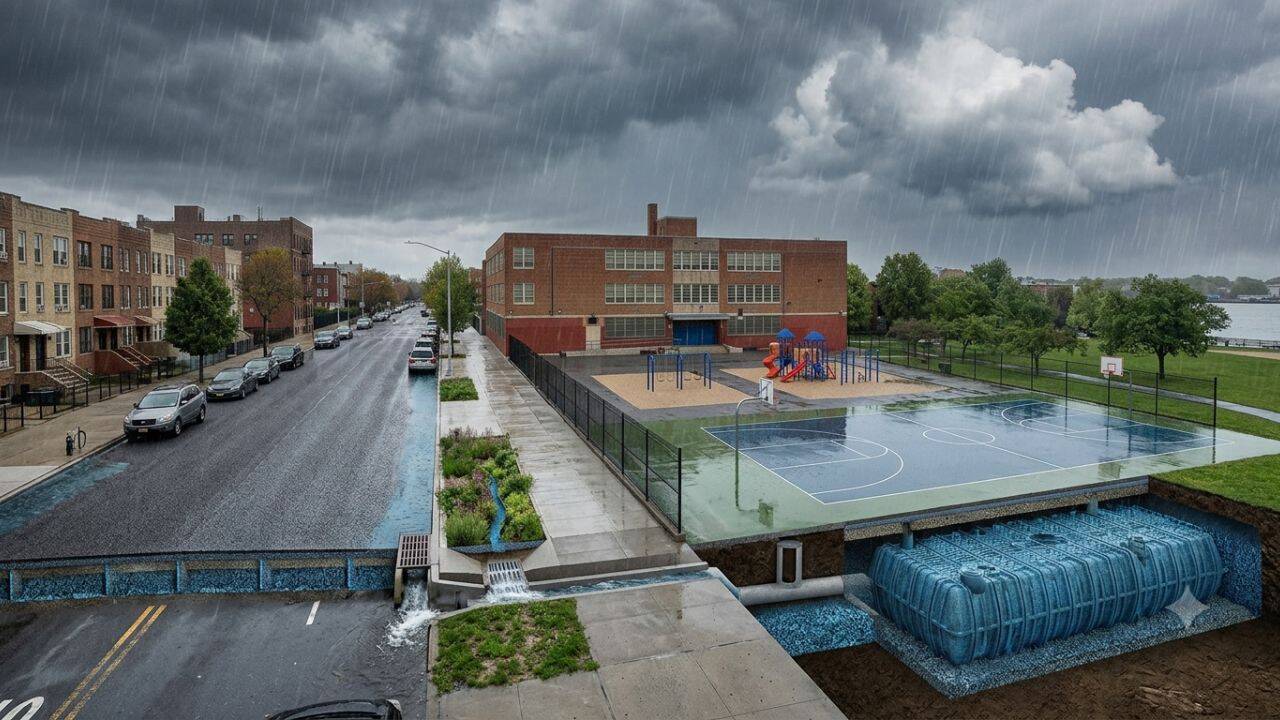
The plan centres on a simple change in how rainwater is handled. Instead of sending every drop towards the existing sewer network as quickly as possible, some of it will be caught locally and held underground.That matters during short, intense storms, when the volume arriving on streets can rise very quickly. The Homecrest scheme is being designed around downpours capable of delivering more than two inches of rain in an hour. Those events can put considerable strain on drainage infrastructure, particularly in low-lying parts of southern Brooklyn.According to NYC Gov, the city says the project will cover about 350 acres, with work focused on known flooding trouble spots around Kings Highway, Coney Island Avenue and several of the surrounding avenues, including P, R, S, T, U and V.
The quiet infrastructure designed to hold back heavy rain
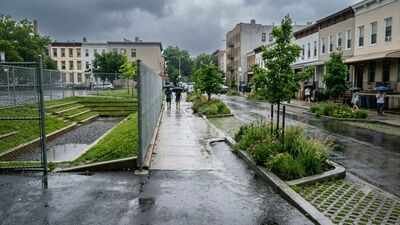
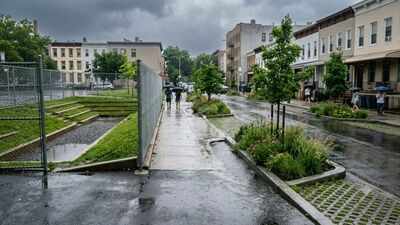
The city is working with its parks, transport and schools departments to identify public sites that can accommodate underground tanks. Traffic triangles, athletic courts, schoolyards and parking areas are among the places being assessed.The idea is to make use of land that already serves the neighbourhood without turning it into a conventional drainage facility. Water can be collected during a storm, stored below ground and dealt with later, after the immediate pressure on the drainage system has eased.Porous pavement forms another part of the scheme. Rather than allowing rain to sheet across an entirely sealed surface, permeable sections can let water move through the pavement and into systems beneath it.For residents, that could mean infrastructure that is easy to overlook on a dry day but performs a very different job when the rain arrives.
The hidden effort to slow down stormwater during heavy rain
Reportedly, DEP estimates that the completed Homecrest project will manage about 30 million gallons of stormwater annually.That figure is not the amount of water that will simply disappear. The purpose is to capture and temporarily store runoff so that less reaches the sewer network at the most difficult point of a storm.There is a second concern beyond flooded roads and overloaded drains. Rainwater flowing over streets can pick up oil, rubbish and other pollutants before reaching local waterways. In Homecrest, the project is also intended to reduce the amount of polluted runoff entering Coney Island Creek.
How New York is redesigning its response to extreme rainfall
New York began its Cloudburst Management Program in 2023, with the same broad principle being tested in several flood-prone neighbourhoods.Projects are under way or being advanced in places including Parkchester in the Bronx, Brownsville and East New York in Brooklyn, East Harlem in Manhattan, and Corona, Jamaica, Kissena and St. Albans in Queens.The approach reflects a shift away from relying solely on traditional underground sewer capacity. New infrastructure can still involve pipes and drains, but the city is also looking at streets, parks and other public land as part of the stormwater system.Homecrest is one of the larger commitments under that programme, with $95 million in DEP funding allocated to the project.
The growing pressure on New York’s ageing drainage network
The timing of the investment is tied to a practical problem facing the city’s drainage network. Short bursts of very heavy rain can overwhelm systems that may cope perfectly well with more moderate rainfall spread over a longer period.The Homecrest project is being designed specifically for those cloudburst conditions. Rather than trying to move all the water away immediately, the system is intended to slow it down and create somewhere for it to go.That approach is particularly relevant in southern Brooklyn, where residents and local officials have repeatedly raised concerns about flooding during major storms. The memory of Hurricane Sandy also remains part of the area’s experience with extreme weather.The city has described the investment as part of a broader effort to strengthen neighbourhoods against increasingly intense rainfall while protecting waterways from untreated runoff.
Protecting Coney Island Creek
Flood management is not the only environmental objective behind the project. During intense rainfall, runoff can move quickly from roads and other hard surfaces into the sewer network or nearby waterways.Capturing some of that water before it reaches those routes can reduce the amount of contaminated runoff entering Coney Island Creek. The city says this will help improve water quality and support its obligations under the federal Clean Water Act.That makes the project less about simply keeping particular streets dry. It is also about controlling what happens to rainwater after it hits the ground.