









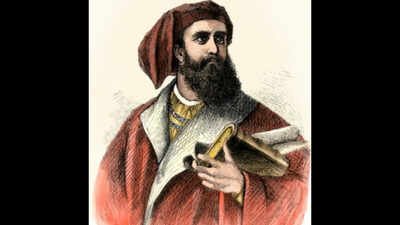
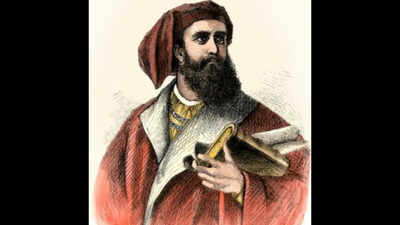
Marco Polo was a Venetian merchant, traveler, and writer born in 1254. In the late thirteenth century, when most Europeans spent their entire lives inside a small cluster of neighboring villages, Marco Polo set out on an extraordinary 24-year journey across Asia alongside his father and uncle. He traveled thousands of miles along the trade network known as the Silk Road, crossing harsh deserts and high mountain ranges until he reached China, which was then ruled by the Mongol Emperor Kublai Khan.It is said that on his deathbed in 1324, when his family, friends, and priests begged him to repent for his fabrications and confess that he had exaggerated his book so his soul could enter heaven peacefully, he said. “I did not write half of what I saw, for I knew I would not be believed.”
Tales and legends of Marco Polo
Marco Polo did not just visit Asia; he lived there for seventeen years. Kublai Khan was impressed by his intelligence and ability to speak several languages, so he employed Marco Polo as a diplomat and government official. This position allowed him to travel extensively through regions of the world that no European had ever documented. When he finally returned home to Venice in 1295, he brought back wealth, artifacts, and stories that sounded like pure fantasy to the local population.A few years after returning home, Marco Polo was captured during a naval war between Venice and Genoa and landed in prison. While locked up, he dictated his travel memories to a fellow inmate, a writer named Rustichello da Pisa. Together, they produced a book titled The Travels of Marco Polo. The book introduced Europe to paper money, black rocks that burned like wood (coal), advanced postal networks, massive cities, and exotic animals.The response was not of appreciation but overwhelming disbelief. Medieval Europeans had no point of reference for such concepts. They thought paper money was a ridiculous idea because value was supposed to come from precious metals like gold or silver. They could not imagine burning black rocks for fuel or living in cities with populations in the millions. Readers assumed Marco Polo was making up wild tall tales to make himself look important. They even mockingly gave his book the nickname Il Milione, suggesting it contained a million lies.Marco Polo never admitted to having exaggerated anything in his book. But his last words to his detractors teach us many lessonsFirst, it teaches us that reality is often much larger than human imagination. People naturally evaluate new information using only their own limited experiences. When medieval Europeans dismissed Marco Polo, they were not necessarily foolish; they were simply trapped inside the boundaries of what they knew. If something falls completely outside our personal worldview, our instinct is to deny it rather than expand our understanding. Marco Polo’s words serve as a reminder that the world is filled with truths that may initially sound impossible simply because we have never seen them ourselves.Second, the quote highlights the reality of self-censorship. Marco Polo understood his audience very well. He knew that if he included every single detail of his journey, people would reject his entire account out of hand. To keep his book somewhat believable, he intentionally left out some of his most startling observations and scaled back his descriptions. Innovators, researchers, and witnesses often face this exact dilemma. When presenting ground-breaking ideas or unfamiliar truths, they often have to hold back parts of the story to ensure the core message gets accepted.Third, the quote shows that truth often takes time to be vindicated. Marco Polo died with many people still treating him as a fraud. Yet, as the centuries passed, other travelers, geographers, and historians followed his routes. They confirmed that his descriptions of Chinese customs, Asian geography, and trade networks were remarkably accurate. Centuries later, explorers like Christopher Columbus studied Marco Polo’s writings to plan their own voyages. History proved Marco Polo right, showing that public opinion in the present moment is not always the ultimate judge of truth.Ultimately, Marco Polo’s last words remind us to approach the unknown with curiosity instead of instant doubt. Whether in history, science, or daily life, keeping an open mind prevents us from making the same mistake as the people who stood beside Marco Polo’s bed, refusing to believe the world could be grander than what they already knew.