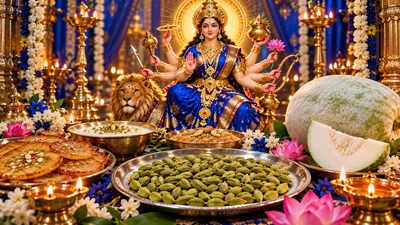








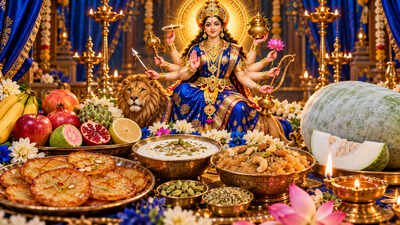
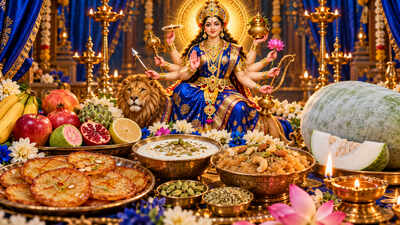
Wednesday’s prasad is easier to plan than most. On 14 October 2026, the Chaturthi tithi (lunar day) of Shardiya Navratri, devotees worship Maa Kushmanda, whose preferred offerings are well known in devotional tradition. The colour of the day is royal blue, and the list of ingredients for the kitchen is relatively short.
Chaturthi and the goddess who turns towards creation
By Chaturthi, devotees have already worshipped Shailputri, Brahmacharini, and Chandraghanta. Tradition now presents the Goddess in a creative aspect. Having taken charge of her household, she is associated with the desire to bring forth new life and creation, and this symbolism is reflected in the offerings prepared in her honour.Day 4 is not only about worship; it is also about aligning your meal and offerings with the form of the Goddess being revered. On Maa Kushmanda’s day, the focus is on what is considered dear to her and what symbolically supports the energy of the day—the spiritual energy that tradition associates with creativity.
Curd and halwa, along with two favoured seasonings
Curd and halwa are among the offerings traditionally associated with Maa Kushmanda. Halwa is a sweet dish typically made by roasting semolina or flour in ghee. She is also said to favour green cardamom and fennel, known as saunf. These ingredients can be added to sweet dishes and are particularly suitable for curd-based preparations and halwa.If you’re fasting and your household avoids grains, many families prepare halwa using kuttu (buckwheat) or singhara (water chestnut) flour instead. Follow your family’s customary fasting practices.A small diya (oil lamp) beside the offering plate is a fitting addition to the day’s worship. Maa Kushmanda is associated with creation, energy, and light, and even a small flame can challenge deep darkness. Light the diya before placing the prasad, and let the offering be simple, sweet, and prepared with a calm mind rather than in a rush.Crushing a few cardamom pods just before adding them to the halwa takes only half a minute and fills the kitchen with their beautiful aroma.
Why malpua is singled out
Malpua, a fried pancake soaked in sugar syrup, is another recommended offering alongside halwa. It is particularly mentioned in some devotional traditions in connection with prayers and remedies related to childbirth, reflecting the Goddess’s association with creation and new life.If you’re observing the day with this intention, you may include malpua in your offerings. However, such practices should be understood as expressions of devotion and belief, not as guarantees of any particular outcome.
The gourd known as a pumpkin, but isn’t quite one
One of the offerings associated with Maa Kushmanda is the Kushmanda fruit. It is commonly referred to as a pumpkin, but it is actually the ash gourd, also known as winter melon. In many contexts, it is called petha, while kuhra is a regional name used in parts of eastern Uttar Pradesh and Bihar.Tradition also describes its juice as the “fruit of yogis” and associates drinking it with spiritual energy and enhanced creativity. These ideas belong to devotional belief and should not be interpreted as established medical claims.If you’re fasting, you can round out the day’s meals with seasonal fruits such as:
- Guava
- Pomegranate
- Apple
- Custard apple (sitaphal)
- Papaya
- Banana or sweet lime
In parts of South India, an ash gourd is hung above the entrances of large houses under construction as a traditional way of warding off the evil eye. During the weeks of Sharad Navratri, you may spot one there—a pale, round shape swaying above a half-built doorway.