








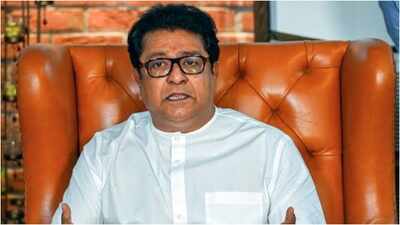
Nana Patekar‘s death has left the entertainment world, and the political circles that admired his work, in mourning. Among those who remembered him was Maharashtra Navnirman Sena (MNS) chief Raj Thackeray, who described Patekar as an artist who captured the anger, despair, frustration and helplessness experienced by the common man. His words reflect what many viewers felt about Patekar’s work: that his gritty, intense characters spoke for ordinary people who struggle with the realities around them.
Raj Thackeray on Nana Patekar’s connection with Mumbai
In a post on X, Raj looked back on Patekar’s deep connection with Mumbai and Hindi cinema, noting that the actor’s work stayed closely tied to the city’s social and economic realities. He wrote, “Senior actor Nana Patekar has passed away. Hindi cinema’s world means Mumbai—this is an unshakable equation. When one comes to Mumbai, it’s this city’s theater scene, the world of commercial cinema here, the middle class and lower middle class that arrives daily from some hut or chawl somewhere in this city, attempting to carve out their existence; then, gradually, the working class that has been getting obliterated in this very city and across the country arrives; from that emerges the underworld universe born out of social despair; it’s an era where social harmony unravels before your eyes; ahead lies the expansion of this middle class’s aspirations after liberalization, and the politics revolving around all of it. At every one of these stages, Nana Patekar appeared—sometimes through plays, sometimes through films. From Hameedabai Ki Kotthi to Parinda to Krantiveer to Ab Tak Chhappan right up to Natsamrat, Nana Patekar kept showing up at every turn. He kept standing on stage or screen as that ordinary man, carrying somewhere within him the unease of each of these phases.”He added, “In the heart of the ordinary man, there’s a constant simmering of anger, humiliation, powerlessness, despair, revulsion toward immoral things, disillusionment with the system, class conflict—all of it smolders inside. Sometimes it spills out through petty quarrels or domestic scuffles; otherwise, it just keeps smoldering. This smoldering, this pressure building up inside like a pressure cooker, rattling away—that’s what falls to his lot. Watching Nana’s acting, it always felt like you were peering into the emotional pressure cooker of ordinary lives. And then, sometimes through Nana or the Angry Young Man Amitabh Bachchan, those two-fisted moments on screen would release the steam from that human pressure cooker. As I always say, just as singers like Lata Didi, Asha Tai, Kishore Kumar, Rafi Sahab, and so on—composers, film and play producers, directors, artists—have soothed Indian hearts for at least 60-70 years, similarly, if Nana or Bachchan Sahab hadn’t forcefully vented that inner steam on screen, this country would have descended into chaos every month.”See More: National Award winnig actor Nana Patekar passes away at 75“Watching Nana’s acting always reminded me of Hollywood’s Morgan Freeman. Be it their looks or their persona, neither fits into the mold of the typical Bollywood or Hollywood actor of their time. After seeing Morgan Freeman, you often feel like this man has embraced the flow of time with wisdom, patience, and an acceptance that’s truly internalized. With Nana’s acting, though, I’d sense anger, restlessness, and a despair buried so deep. Morgan Freeman makes you feel like a man who’s seen a lot; Nana, like a man who’s endured a hell of a lot and now it’s enough. These are the two extremes of human form. Nana could bring the second extreme to the screen with such conviction—that’s what made him a great artist. In the 2000s decade, instead of fair, plump, sharply defined, smooth-talking actors, the story took center stage on the cinematic canvas, and an era began where actors who told those stories and drew audiences in held sway. And the first hero of this era was 100% Nana. The current trend of character actors you see today? Nana paved the way for it”, Raj also wrote.The politician concluded, “But despite all this, his temperament was forthright; he’d speak his mind, he was outspoken (actually, it’s wrong of me to call anyone outspoken—never mind). Because of this, even when Nana wanted film roles, producers and directors would sidestep him. Did it harm Nana? Who knows—he was carefree about it. But it 100% harmed Hindi cinema and its audiences. Nawazuddin Siddiqui or Irrfan Khan (who’s no longer with us) are fine artists, no doubt, but if Nana had adjusted a few things, I wonder if these and some other artists would have gotten the opportunities they did. Nana didn’t just do aggressive or intense acting; through *Welcome*, he showed the world he could nail comedic roles with equal power! Nana is gone, but the man he brought to life on screen is still all around us. His anger is there, his unease is there, his humiliation is there, his struggle is there, and so is that occasional surge of strength to take on the circumstances. Perhaps that’s why, in bidding Nana farewell, we’re not just saying goodbye to a great actor—we’re losing a face for the countless emotions that have piled up in the heart of the ordinary man in our society. A heartfelt tribute to Nana Patekar from Maharashtra Navnirman Sena”.
Nana Patekar passed away on October 8
On October 8, Nana was taken to the hospital at about 4.30 am, and doctors declared him dead by 5.20 am. According to the Manipal Hospital doctor, cardiac massage carried out for 45 minutes to an hour failed to revive him.See More: Nana Patekar passes away: PM Modi hails veteran star’s contribution to Hindi and Marathi cinema