




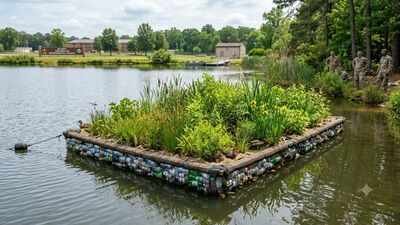
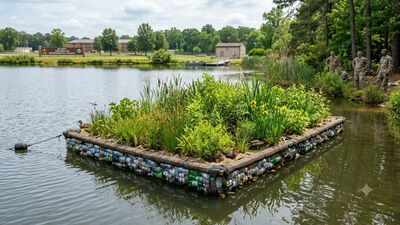
At a military vehicle wash facility in Texas, an unusual structure is sitting on the surface of a catchment basin. It is only 11 by 8 feet, but its purpose extends beyond simply floating. Known as the U.S.S. Eddy, the prototype was built from corrugated pipes packed with recycled plastic bottles, covered with layers of screening and coconut fibre, then planted with native aquatic vegetation. The idea came from staff at Fort Cavazos who were looking for a way to improve water quality while making use of a basin already attracting fish, turtles, frogs, waterfowl and other wildlife. The floating platform was launched in March 2024, as reported by The US Army.
How a military wash basin became a testing ground for a floating wetland
The basin serves a practical military purpose. Tracked vehicles are cleaned with high-pressure water that removes dirt, oil, fluids and other material from their surfaces. Rather than flowing straight away, the wastewater enters the catchment basin, where heavier sediment can settle before the water is recycled for further use.That system leaves the basin holding water containing much finer contaminants as well. The floating island was designed to work within that existing setup rather than replace it.Fort Cavazos’ Directorate of Plans, Training, Mobilization and Security, or DPTMS, developed the project with its Adaptive and Integrative Management Team. The intention was to introduce a biological element into the treatment process, using plants and their growing environment as a natural filter.The setting also offered another reason to experiment. Wildlife was already using the area.
Inside the unusual design of the U.S.S. Eddy
The U.S.S Eddy does not resemble a conventional piece of water-treatment equipment. Its base consists of corrugated pipes filled with discarded plastic bottles. Polyester screen cloth and a coconut liner were added above that framework, creating a surface capable of supporting plants.Native horsetails, pennywort and sedges were selected for the planting layer. Rather than simply placing greenery on a floating platform, the design is intended to create a small living system in which the plants can interact with the water around them.
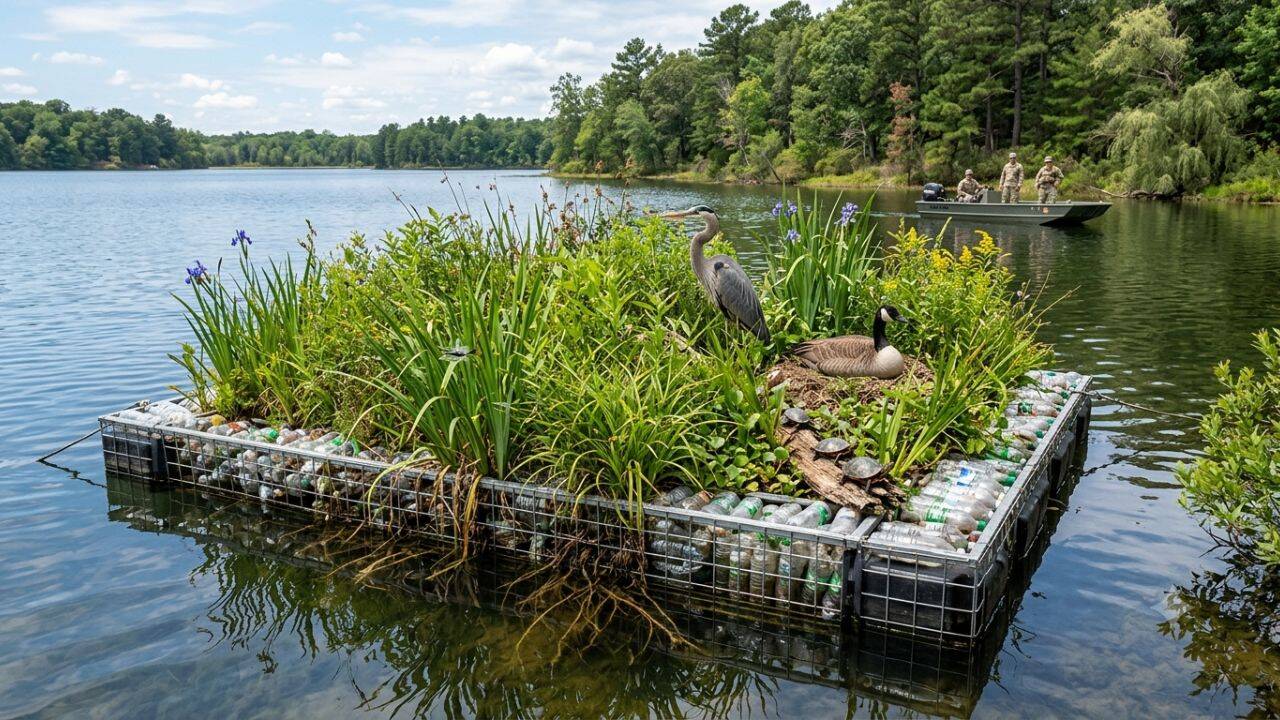
The arrangement gives the island several functions at once. As the vegetation grows, the structure can provide places for wildlife to rest and feed while the plants and their surrounding material contribute to filtration and nutrient cycling.For the people involved in the project, that combination was important. The aim was not just to make the basin’s water cleaner. It was also to add habitat to a site that wildlife was already visiting.
How the floating island uses plants to filter water naturally
The floating platform was intended to act in much the same way as a small wetland. Water passes around the plant roots and through the material supporting them, creating opportunities for contaminants and excess nutrients to be captured or processed.The project team said the island was particularly aimed at fine, emulsified contaminants in the basin. It was also expected to help reduce algae and improve the quality of the recycled water through natural processes rather than relying entirely on mechanical treatment.That makes the plants more than decoration. Their roots, growth and interaction with the water are central to how the prototype is supposed to work.There is also a practical wildlife benefit. The basin already supports waterfowl, crawfish, fish, turtles and frogs, while coyotes and raccoons have also been observed around the area. The floating structure gives some of those animals another place to shelter or find food.
What happens next for Fort Cavazos’ floating island experiment
The March 2024 launch was treated as a trial rather than a finished solution. DPTMS and the AIM Team planned to monitor the island over time, looking at how well the design performed and whether parts of it could be changed.That monitoring could cover everything from the performance of the plants to the durability and efficiency of the floating framework. Lessons from the prototype are intended to guide later versions.The longer-term proposal is considerably larger than the first experiment. Fort Cavazos said it hoped eventually to assemble and launch as many as 20 floating islands.For now, the U.S.S. Eddy remains a relatively small structure on a military catchment basin. Its construction, however, combines several simple elements: waste plastic, recycled water, native plants and a platform designed to support wildlife.The experiment is also taking place in a working facility rather than a purpose-built conservation area. That makes the basin itself part of the test, as the team watches how a floating wetland performs alongside the everyday demands of washing military vehicles.